
By Scooter M. · Last updated September 14, 2026
Mud & Mat earns a commission when you buy through the links on this page, at no extra cost to you. It does not change what we recommend, and we publish a skip-this verdict on products we could otherwise earn from. Full disclosure.
A wet sneaker is a different problem from a snow boot and buying the same product for both is why entryway trays disappoint. Sneakers arrive damp rather than dripping, there are more of them, and the thing they most need is airflow so they dry before tomorrow.
That points at a shallower tray, more of them, and a position with air moving over it - which is close to the opposite of what a deep snow tray is optimized for.
Quick picks
Ranked against the criteria below. Tap a row to jump to the full write-up; the price button goes straight to Amazon.
| # | Product | Best for | Score | Price |
|---|---|---|---|---|
| 1 |  Kingrol Small Shoe Trays, 4-Pack Four individual trays published at 16.5 by 12.6 inches with a 1.18-inch lip | One pair per tray | 7.4/10 | $17.99 - View on Amazon #ad affiliate link · Price as of October 18, 2026 |
| 2 |  Kempf Large Rubber Boot Tray, 16 x 32 in Recycled rubber with raised edges and a ridged base, so boots sit above the meltwater instead of in it | Wet boots and snow melt | 8.6/10 | $24.95 - View on Amazon #ad affiliate link · Price as of October 18, 2026 |
| 3 |  Superio Rubber Boot & Shoe Tray, 34 x 14 x 2 in Two full inches of side wall Our skip-this pick | Deep sides | 8.2/10 | $49.50 - View on Amazon #ad affiliate link · Price as of October 18, 2026 |
| 4 |  Simple Houseware 3-Tier Shoe Rack 11.2 x 26.8 x 20.9 inches, nine to sixteen pairs, a metal frame and nothing else | The cheapest thing that works | 7.6/10 | $21.87 - View on Amazon #ad affiliate link · Price as of October 18, 2026 |
One pair per tray
Kingrol Small Shoe Trays, 4-Pack
Four individual trays published at 16.5 by 12.6 inches with a 1.18-inch lip - the modular option, and the one sized so a full adult pair sits inside a single tray.
The modular argument is better than it sounds. A single long tray means every pair of boots shares one shallow pool of dirty meltwater, and the last pair in gets the water from the first three. One tray per pair keeps each pair's mess to itself, and it lets you carry one tray to the sink instead of relocating the whole row.
Length is what separates this set from the smaller multi-packs. Kingrol publishes 16.5 by 12.6 inches per tray and states one pair per tray, and at that length an adult pair sits with the heels inside the lip rather than hanging over the end. That reads like a detail until you watch a large boot bridge two undersized trays and drip into the join.
The base is the part worth paying attention to. Kingrol publishes a raised diamond pattern and says what it is for: traction under the shoe, air moving beneath the sole, and the footwear held clear of whatever has drained out of it. That is the construction detail that decides whether a tray dries shoes or merely contains them, and most trays at this price do not mention it at all.
Two honest constraints. The lip is published at 1.18 inches, which is right for rain and wrong for a hard winter - this is a shoe tray, not slush containment, and a snow region needs depth instead. And light plastic slides: everybody levers a shoe off with the other foot, that force goes sideways, and a tray that is not placed against a wall or a skirting board will travel. There is no published thickness or weight to set against that. If your household takes boots off standing up in the middle of the hall, buy a heavier rubber tray and a bench to sit on instead.
What works
- At 16.5 inches long it takes a full adult pair without overhang, which the smaller multi-packs do not
- One tray per pair means one pair's meltwater does not soak the next pair
- The raised pattern holds the sole above whatever has drained out of it, which is what dries a shoe
What does not
- Lightweight plastic slides when you lever a shoe off with the other foot
- A 1.18-inch lip is shallow next to a dedicated snow tray
- Kingrol publishes no thickness, weight or load figure - thick plastic is the whole durability claim
Wet boots and snow melt
Kempf Large Rubber Boot Tray, 16 x 32 in
Recycled rubber with raised edges and a ridged base, so boots sit above the meltwater instead of in it - the detail that separates a boot tray from a puddle.
The whole argument for a boot tray over a mat is containment: a mat spreads meltwater across its own surface and eventually onto your floor, while a tray holds it inside a raised edge until you tip it out. That is the entire product, and the Kempf tray does the two things that make it work.
First, the raised perimeter. Snow melt from two pairs of winter boots is a genuinely surprising volume of dirty water, and without an edge it goes onto the floor within an hour. Second, and more important, the ridged base. Boots sitting flat in their own meltwater do not dry - they sit in a shallow pool and stay wet until morning. Ridges hold the sole above the water line so the boot dries while the water pools below it.
Recycled rubber matters here for a reason people underrate: weight. Getting a wet boot off involves levering against it, and a light plastic tray slides across the floor and tips its contents out. A heavy rubber tray stays where you put it.
The honest limitation is capacity. Sixteen by thirty-two inches is two adult pairs, or one adult pair and two children's. A four-person household in a snow region needs two trays or a longer one - and this is exactly the point where a tray stops being enough and a bench with shoe storage starts being the better answer, because you also need somewhere to sit while the boots come off.
What works
- Ridged base is the feature that matters - boots dry instead of standing in their own melt
- Recycled rubber is heavy enough to stay put when a boot is levered off
- Genuinely multi-purpose, so it does not become clutter in summer
What does not
- 16 x 32 inches holds two adult pairs, not a family's worth
- Contained water has to be tipped out - it does not evaporate quickly in a cold hallway
- Rubber can mark a light-colored floor if grit gets underneath; sweep beneath it
Deep sides
Superio Rubber Boot & Shoe Tray, 34 x 14 x 2 in
Two full inches of side wall - the deepest containment here, and the right tray when what arrives at your door is slush rather than damp.
Skip this one
Skip this one for everyday shoes. Two inches of wall is exactly right for snow and slush and it is over-specified here, and the depth carries a real cost: a two-inch lip is a trip hazard, so the tray has to sit out of the walking line, which is awkward for footwear people take on and off in a hurry several times a day. It is also a two-hand carry to empty. For damp sneakers you want something shallow you can lift one-handed, or an open rack that actually ventilates. Buy this tray when what arrives at your door is slush - our [boot tray roundup](/boot-trays/best-boot-trays-entryway) is where it wins.
Wall depth is the specification that decides whether a boot tray works in a snow region, and this one publishes two inches. That is roughly double the shallow trays, and the difference shows up on exactly the days you bought a tray for - the day four boots come in caked in slush and road salt and each of them carries most of a cup of water.
The length helps too. At thirty-four inches it will take three adult pairs lined up, or two pairs plus a dog bowl, which is a common real-world arrangement in a back hallway. The fourteen-inch depth front to back is the constraint: adult winter boots are often longer than fourteen inches, so expect toes or heels to overhang the wall.
Deep walls have a cost that is easy to miss in a product photo. This is a tray you place boots into deliberately, not one you step onto. Two inches is enough of a lip to catch a toe, so it does not belong in a walking line - put it against the wall beside the door, not across the threshold.
One practical note about emptying it. A full two-inch tray of meltwater is heavy and the rubber flexes, which means carrying it to a sink is a two-hand job that ends badly at least once. If you can position it near an outside door, tip it onto the step instead. If your slush problem is mostly a salt problem, read our take on keeping dirt out of the house - salt is what actually damages the floor, and the tray is only half the answer.
What works
- A 2-inch wall holds a genuinely large volume of slush without overflowing
- Longer than most trays at 34 inches, so it takes three pairs at a squeeze
- Rated for outdoor use, so it can live on a covered porch instead of in the hall
What does not
- Deep walls make it awkward to step into and out of - it is a parking spot, not a standing mat
- Only 14 inches deep front to back, so large boots overhang
- A full tray of water is heavy and awkward to carry to a drain
The cheapest thing that works
Simple Houseware 3-Tier Shoe Rack
11.2 x 26.8 x 20.9 inches, nine to sixteen pairs, a metal frame and nothing else - the honest minimum, and often all a small entry actually needs.
There is a version of this problem that does not need furniture, and this is the product for it. A metal frame, three tiers, nine to sixteen pairs depending on what you own, and a published footprint of 11.2 by 26.8 by 20.9 inches. It costs a fraction of the cabinets above and in a small entry it is frequently sufficient.
The height is quietly its best feature. At under twenty-one inches it slides beneath a window sill, beneath a wall-mounted coat rail, or under a console table - the places in an entryway that are otherwise dead space. Tall storage buys capacity; short storage buys the ability to put it somewhere.
Metal and open means it tolerates a wet hallway indefinitely. Nothing swells, nothing traps damp, and a hose or a wipe is the whole maintenance routine. That is a real advantage over anything made of engineered wood in the splash zone of a back door.
Two honest limits. Wire shelves let narrow children's shoes tip and fall through, which is irritating daily rather than occasionally - the grid variant handles that better. And the top is not a seat: it is not rated, it is not padded, and it will bend. If you want somewhere to sit while boots come off, that is a bench, and it is a genuinely different product.
What works
- Cheap enough to be a non-decision, and it does the basic job properly
- Under 21 inches tall, so it fits under a window or a coat rail
- Metal and open, so damp shoes dry and nothing swells
What does not
- Wire shelves let small shoes tip through - not ideal for children's shoes
- The flat top is not a seat and is not rated as one
- No concealment at all
How we picked
- Modularity over size. One tray per pair keeps each pair's water to itself. In a single long tray, the last pair in sits in the water from the first three.
- Published dimensions per tray, not per pack. A multi-pack listing that quotes one overall figure tells you nothing about what fits in a single tray. Kingrol publishes 16.5 by 12.6 by 1.18 inches for each tray, which is the number you measure an alcove or a bench shelf against.
- Shallow enough to step around. A two-inch wall is a trip hazard in a walking line. For everyday shoes, around an inch is the right compromise.
- Whether the shoes can dry. A tray with no airflow around it keeps shoes damp. This is where an open rack often beats a tray for shoes that are damp rather than soaked.
- Ease of emptying. A tray small enough to lift and tip with one hand gets emptied. A large one does not.
We have not physically tested these products. We do not own them, we have no lab, and we do not accept free product. Everything above is compiled from published manufacturer specifications, published care guidance and live retailer data - and we tell you which is which on every claim. How we pick.
The case for several small trays
It sounds fussier than one long tray and in practice it is less work. Each pair sits in its own tray, so nobody's shoes end up in someone else's meltwater. When one needs emptying you lift one tray rather than relocating the whole row. And you can add trays as the household grows instead of replacing the product.
Kingrol sells these as a set of four for exactly this reason, at published dimensions of 16.5 by 12.6 by 1.18 inches per tray. The listing states one pair per tray, and at 16.5 inches an adult pair fits without the heels hanging over the end - but it is still one pair, so do not plan on two sharing one.
The weight problem with plastic
Lightweight plastic slides. Everybody takes shoes off by levering with the other foot, that force goes sideways, and a light tray on a hard floor travels across the room and tips.
Two fixes, both cheap. Put the trays hard against a wall so there is nowhere for them to slide to, or set them on a rubber-backed mat that grips the floor. If neither is possible in your entry, buy a heavier rubber tray and accept the two-hand emptying.
When a rack beats a tray
If the shoes are damp rather than genuinely wet, an open metal rack does the job better than a tray, because air reaches all sides and the shoes actually dry. A tray contains water; a rack ventilates. Those are different needs, and a household with a lot of sneakers usually has the second one.
The combination that covers both is a tray at the door for the genuinely wet arrivals and an open rack a step further in for everything else - see best entryway shoe racks.
In a tight entry the binding constraint is not capacity but depth, because the tray is competing with the space you need to walk past it. Best narrow boot trays does that arithmetic against a real hallway width.
What we did not do
We have not dried shoes on these trays. The dimensions and materials above are manufacturer-published and cited; the reasoning about airflow and drying follows from the geometry rather than from a measurement we took. How we pick.
Questions people ask
What is the difference between a shoe tray and a boot tray?
How many shoes fit on a shoe tray?
Do wet shoes dry on a tray?
Why does my shoe tray slide across the floor?
Sources
Next stage
Stage 4: store
Wet shoes need a tray; dry shoes need a rack. The pile by the door is what happens when only one of those exists.
Keep goingAbout the author
Scooter M.
An enthusiast who is genuinely into this. I read the manuals, compile the published specs, and do the math on door clearances. No lab coat, no test bench, and nothing here is a product I have used - which is exactly why every claim carries a source.
Published by Slate Mill Group, with the Mud & Mat team. Published August 31, 2026; last updated September 14, 2026. Editorial policy.
Read next
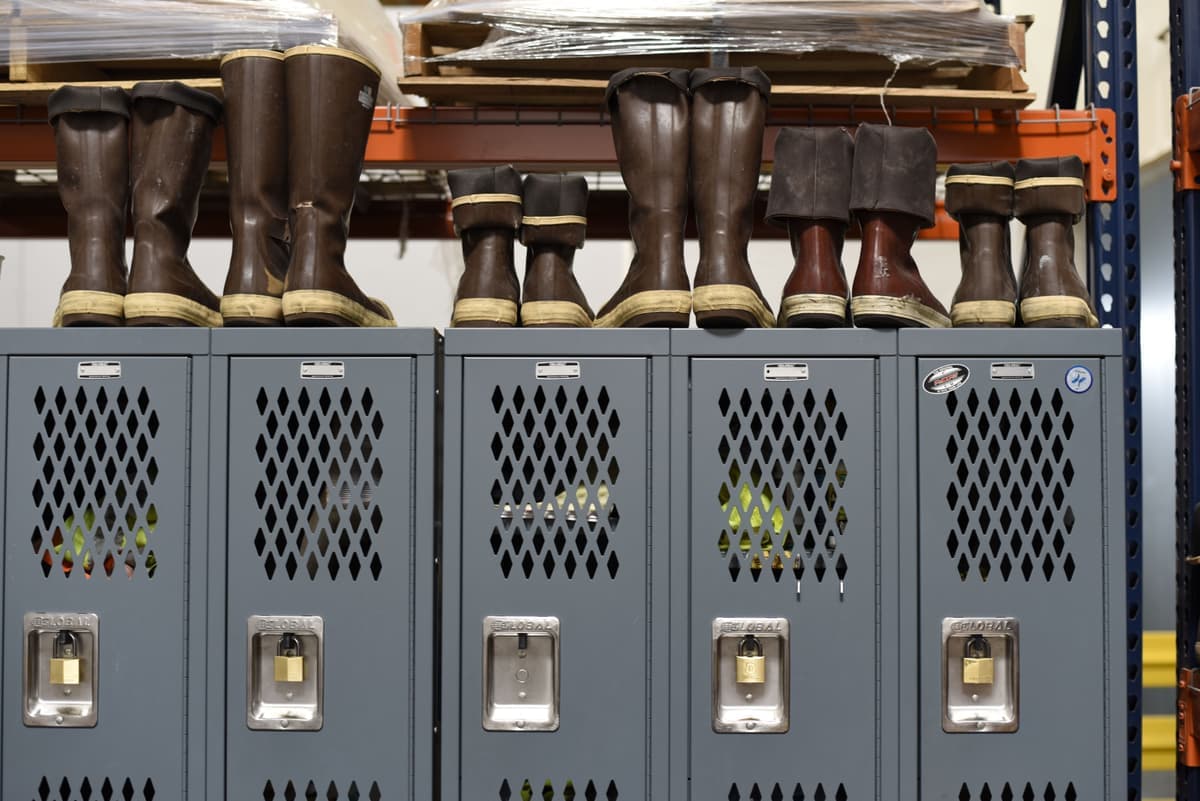
Best Boot Tray
Best boot trays for entryways
Wall depth, a ridged base and enough weight to stay put - the three things that separate a tray from a puddle.
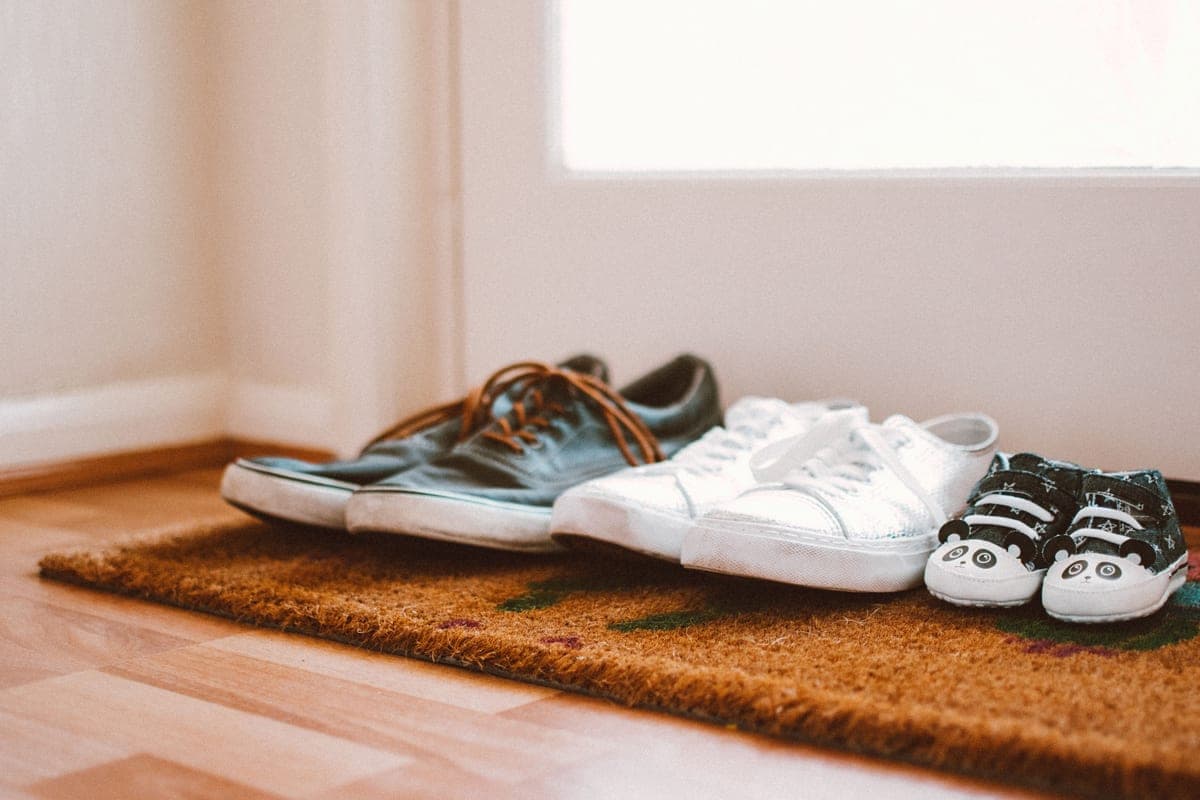
Tray or Mat
Boot tray vs mat
Not alternatives - sequential. The mat handles the walk-in, the tray handles the eight hours after.
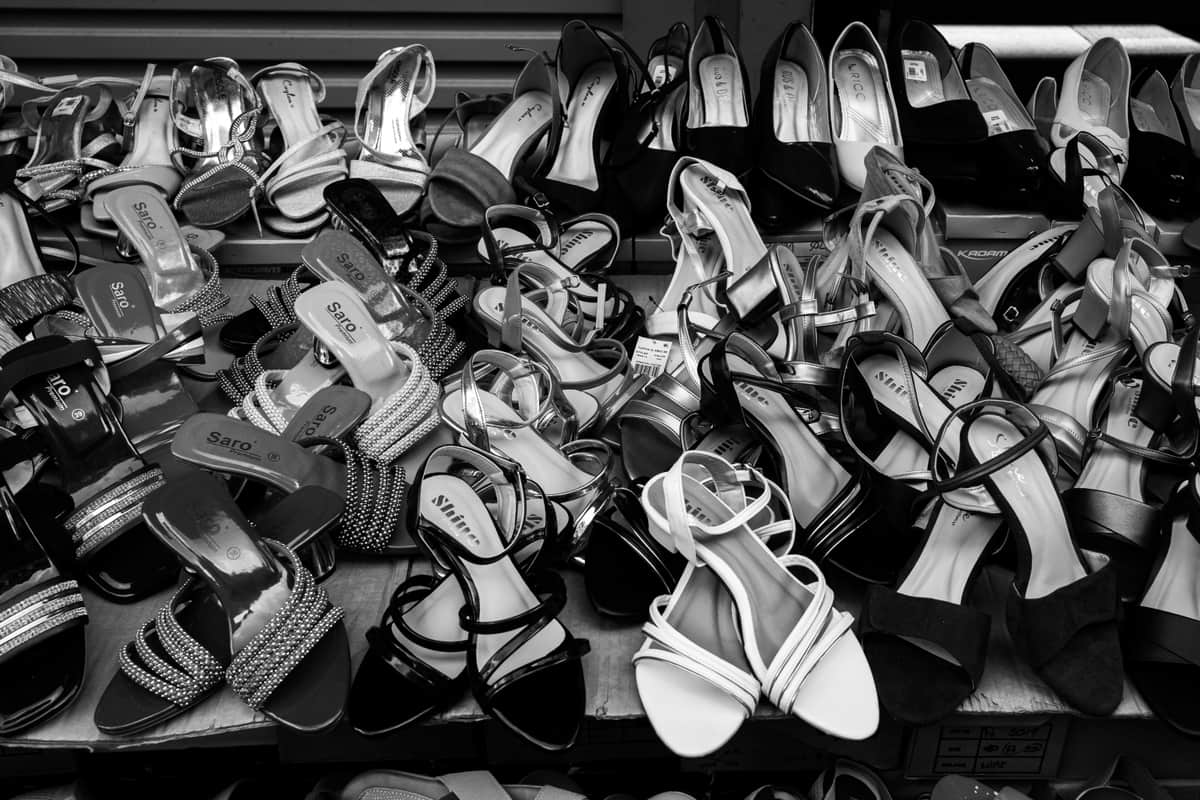
Best Shoe Rack
Best entryway shoe racks
Depth in inches, pairs per foot of wall, and whether shoes can dry - ranked for a hallway you still need to walk down.
Start Here
How to keep dirt out of the house
The whole entry as a procedure rather than a shopping list - what to change first and why.