Most households own one door mat, put it in the wrong place, and conclude that door mats do not work. They do work. They just do two completely different jobs, and one mat cannot do both.
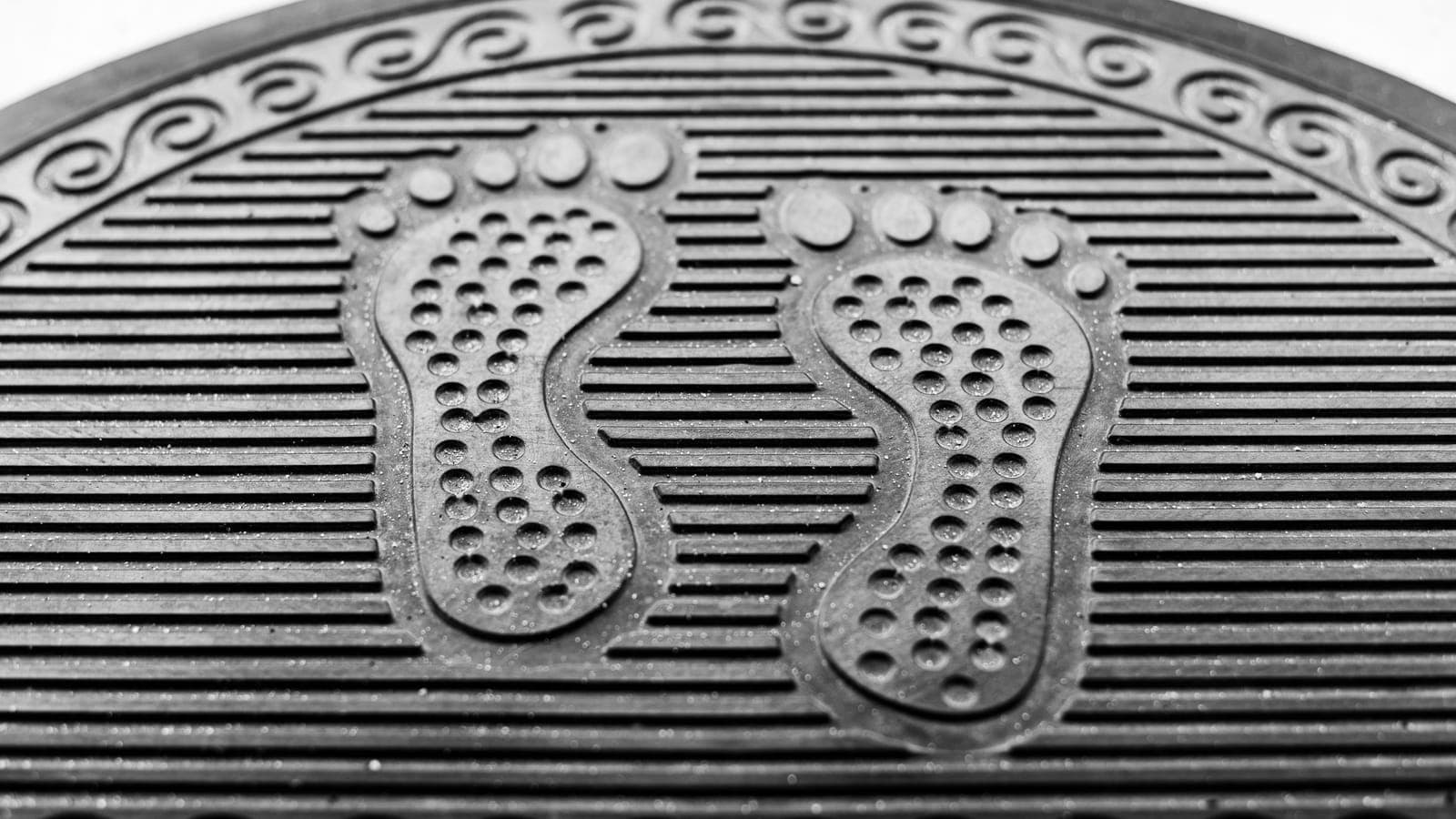
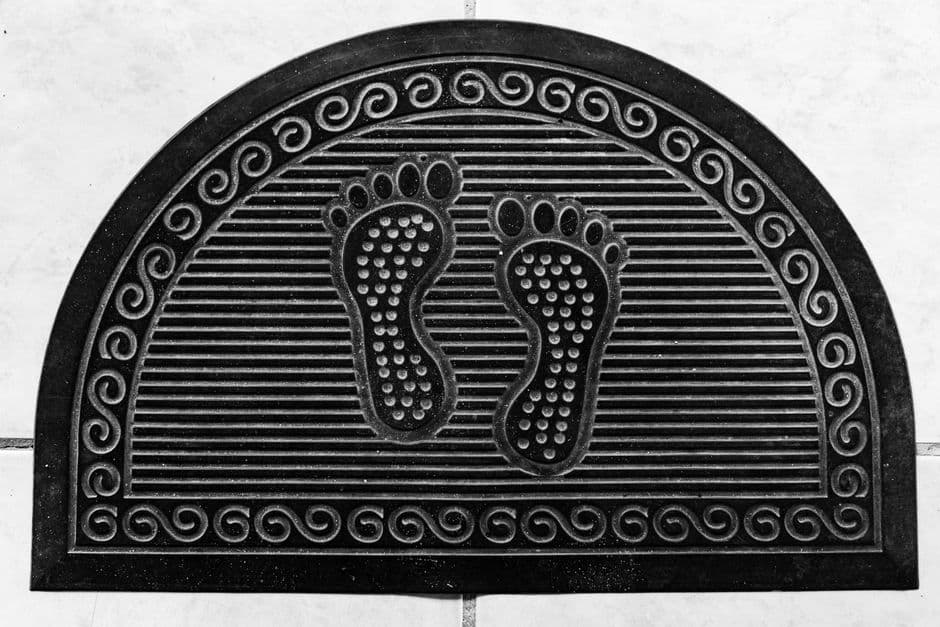
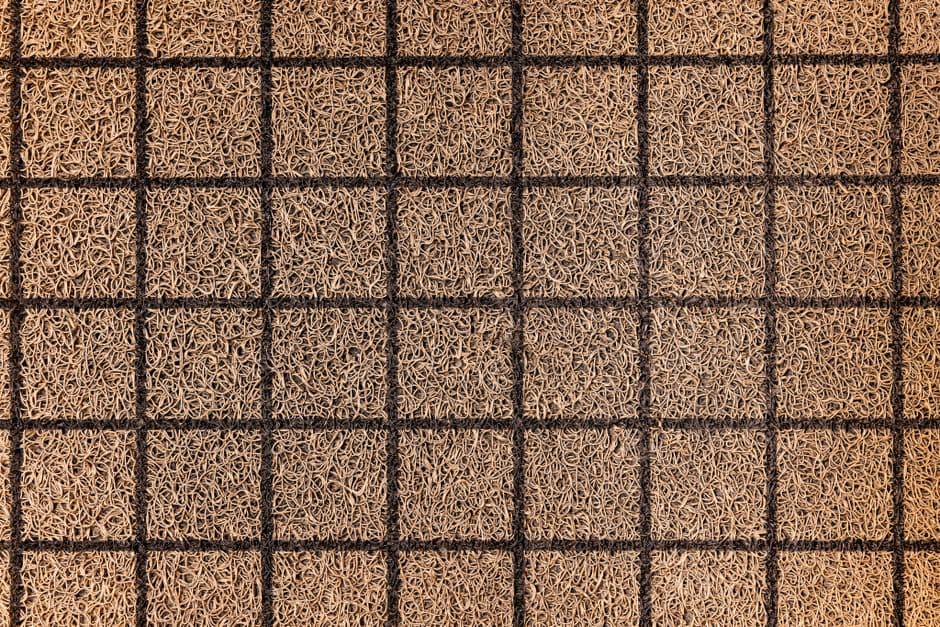
Outside the door the job is scraping: getting solid material - dried mud, grit, gravel dust, salt crystals - mechanically off the tread of a boot. That needs a stiff surface. Coconut fiber does it best; a molded rubber scraper does it nearly as well and lasts longer in an exposed position. Neither of them absorbs anything meaningful, and neither of them is supposed to.
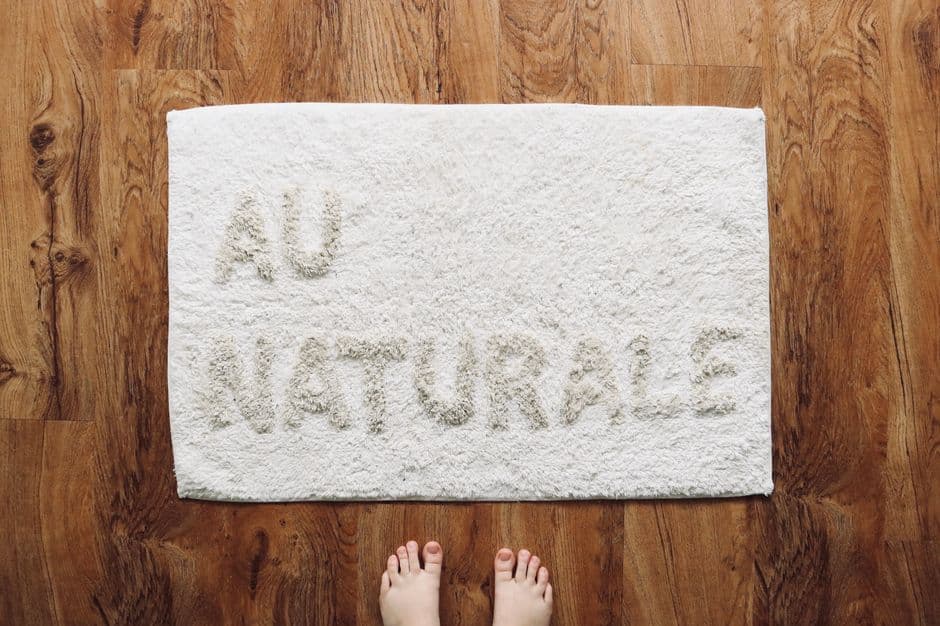
Inside the door the job is absorbing: taking the water that is still on the sole once the solids are gone, before it gets onto a floor. That needs the opposite surface - dense soft fiber, chenille or a heavy microfiber pile, something that pulls water rather than pushing it around. Put a coir mat there and it will scratch your floor and hold none of the water. Put a chenille mat outside and within a month you own a permanently saturated sponge.
The order matters more than the mat
Commercial buildings have known this for decades, and they size entrances in feet of walk-off rather than in mats. The standard approach is a three-zone system - a scraper outside, a scraper-wiper immediately inside, and a finishing wiper past that - and industry guidance puts a full system at roughly ten to fifteen feet of total walk-off distance, at which point it stops the large majority of tracked-in soil before it reaches the floor.
No house has fifteen feet of hallway to give up, and that is fine. The principle scales down cleanly. Two mats in the right order beat one expensive mat every time, and the reason is simply that each mat gets to do the job its material is good at. We have written the full version of this argument in layered entryway defense.
The specification nobody publishes
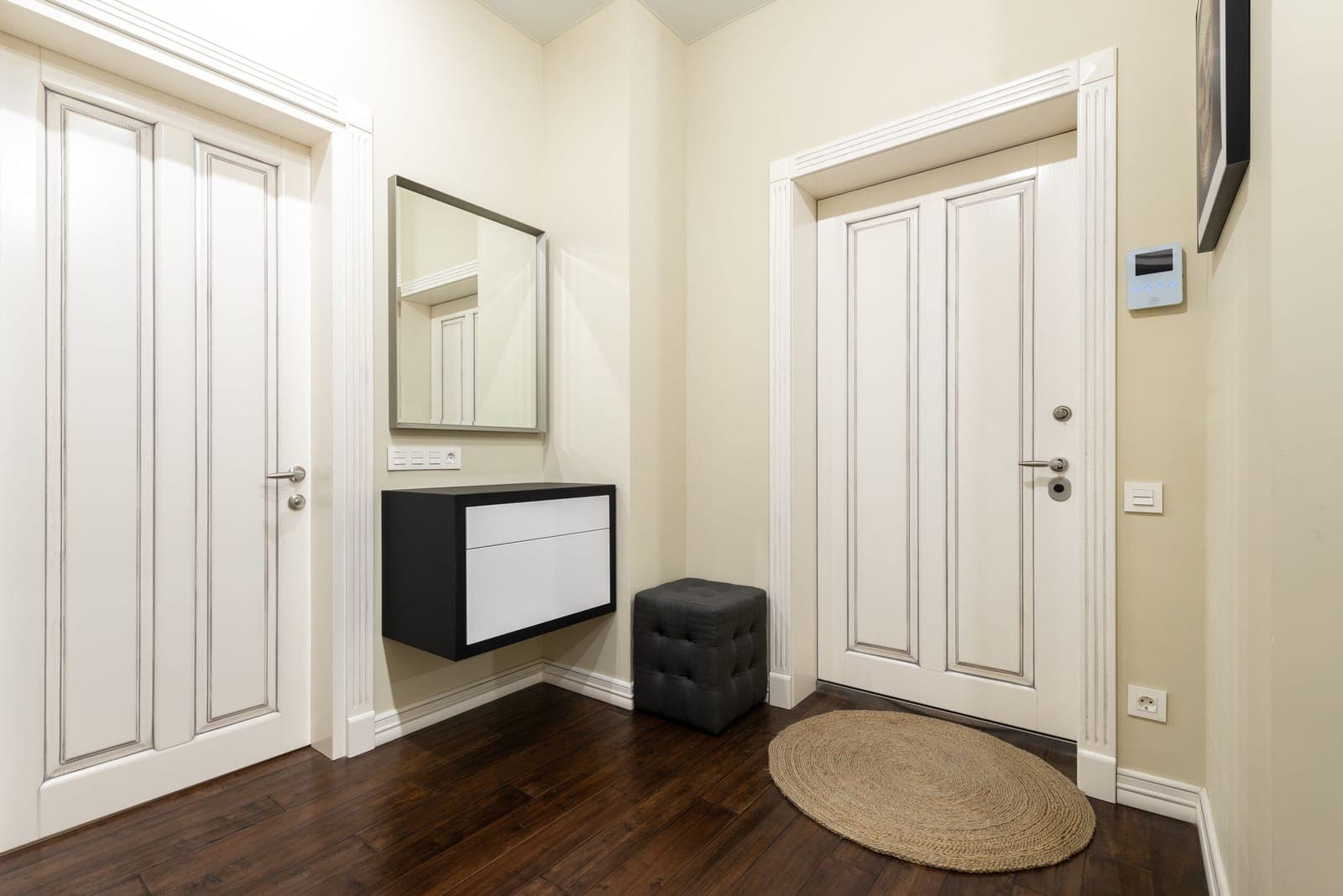
Here is the thing that turns a good mat into a returned mat: thickness. A standard interior door is hung with roughly half an inch to three-quarters of an inch of clearance above the finished floor, and fire-rated doors are limited to three-quarters of an inch under NFPA 80. A one-inch coir mat or a one-inch chenille pile does not fit under that gap. It catches, it drags, and eventually the door wins.
Almost no mat brand publishes a thickness. Of the mats we compiled for this hub, only OLANLY (0.4 inches), Kempf (1 and 2 inches), WaterHog (3/8 inch with a gripper backing, closer to 1/4 inch smooth) and Gorilla Grip (0.28 inches on its woven indoor mat, 0.3 inches on the WeatherMAX, nothing at all on its chenille) state a figure. That is the gap our door clearance guide exists to fill - we put the published numbers next to the real door gap so you can answer the question before you buy rather than after.
How to choose within this stage
Work from the failure you are actually having. If the mess arriving at your door is solid - garden soil, dried clay, gravel, sand off a beach path - the binding constraint is scraping and you want coir or a rubber scraper outside. If the mess is wet - rain, snow melt, a dog that swims - the binding constraint is absorbency and you want a chenille absorber inside. If it is both, which for most households it is, you want one of each and the dirt-trapper roundup covers the mats that split the difference.
The second axis, and the one this site weights most heavily, is cleanability. A mat stops working the moment it is full, and a mat you cannot realistically clean is a mat that is permanently full. Machine washability sounds like the answer and mostly is - but check the size against your machine, check the care label for the fabric-softener warning that kills microfiber, and shake the grit out before it goes in the drum. Our doormat cleaning guide covers the procedure by material.
Third: buy two. Every washable mat spends part of its life in the laundry, and a household with one mat is a household that eventually stops washing it. Two cheap mats in rotation outperform one expensive mat that never gets cleaned, and that is not a compromise - it is how the product is supposed to be owned.
Is the premium mat worth it?
The question that follows the buy-two argument is whether the expensive mat is worth being the one you buy once. The two brands people cross-shop hardest here are WaterHog, a commercial entrance-matting specification sold in domestic sizes, and Gorilla Grip, a consumer catalog that sells three quite different mats under one name. Both publish enough to be compared properly, and the comparison is not the one most people expect: WaterHog vs Gorilla Grip converts both makers' water-capacity claims into the same unit and shows what the premium actually buys - which turns out to be durability and outdoor tolerance rather than capacity.
One mat or two?
The question underneath everything on this hub is whether an entry needs a mat outside and a mat inside, or whether one good mat covers it. It is worth answering properly rather than in a FAQ line, because the second question people ask - what indoor/outdoor on a listing actually means - has a different answer from the first. Indoor vs outdoor door mats takes both in order, names the mat to buy if you genuinely only buy one, and sets out the two ways a single-mat entry fails.
Two problems that change the answer
Cleanability is where most of this hub ends up, and if you have settled on washing rather than hosing, the binding constraint becomes your washing machine rather than the mat - best washable entryway rugs ranks the washable options on published sizes against a real drum, care labels and which backing survives the cycle. The other reversal is sand: it is dry, fine and non-adhesive, so absorbency does nothing and deep pile becomes a trap you cannot empty. Best doormats for sand explains what works instead.
The positions this hub does not cover with one mat
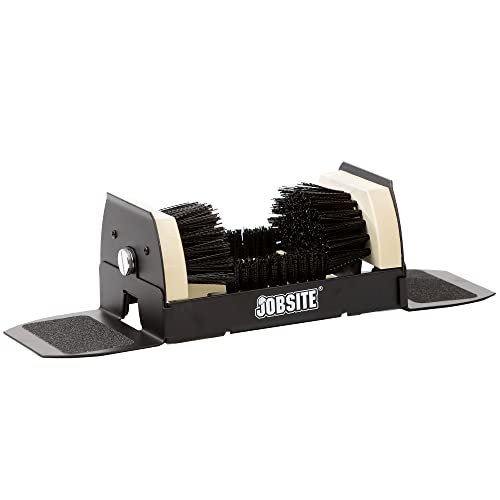
Three door-mat problems need their own answer rather than a bigger version of the standard one. A mudroom is a room rather than a doorway, so it is bought on area and washability instead of thickness - the mudroom mat picks explain why the low-profile mat we normally lead with is the wrong buy there. A hallway needs distance rather than depth, which is what the entryway runner roundup is about. And once mud is genuinely caked into a tread, no mat of any material will shift it, which is where boot scraper mats and brushes take over.
The mat that removes snow instead of collecting it
Every other mat on this hub is a collector: it takes dirt or water off a boot and holds it until you shake it, wash it or tip it out. A heated mat is the exception - the snow that lands on it becomes water that runs away, and there is nothing left to clean. It is also bought on numbers this hub never otherwise uses, namely a published melt rate in inches per hour and a published amp draw, and roughly half the category publishes neither. Best snow melting mats ranks five of them on what their own listings state, and explains why a landing and a flight of steps are genuinely different products. It is an addition to the layers below rather than a replacement for them: a boot that has stood on a warm wet surface arrives wetter, not drier.
How the materials actually behave
Compiled from published manufacturer specifications and the physical properties of each fiber. This is the comparison the category does not publish, and it is the decision that determines whether the mat you buy works.
A genuine double or French front door is the one entry where buying for width rather than length is correct, because both leaves get used and the whole opening is walked through. Best double door mats covers the 36 by 60 inch class, where a mat's own published weight - 2 to 6 pounds at identical size - is what decides whether it lies flat. And if you want the detail on the commercial mat that keeps appearing at the top of these pages, our WaterHog mat review goes through the two backings, the published fabric weight and why it cannot go in a washing machine.
The material that does not care about the weather
Coir rots, chenille has to be washed and every fiber mat eventually flattens. Solid rubber does none of that, which is why it is the buy-once answer for an exposed position - and unlike a fabric mat it does not compress under a door, so its thickness is a hard yes or no. Best rubber door mats ranks them on published thickness, which runs from 0.20 to 0.62 inches across the mats we cover, on published weight, and on which of the three drainage geometries - holes, open weave or ridges - actually lets water leave the mat.
Before the mat, if there are steps
Every mat on this hub assumes somebody has already reached the door. Where a flight of steps comes first, that approach is the one part of an entry that can injure rather than inconvenience - and it is sold on pack size and the word non-slip rather than on the measurement that decides it. Best outdoor stair treads ranks them against a real step of 10 to 11 inches, where published depths run from 4 inches to 10, and sets out which tread covers the nose of the step and how each is meant to stay fixed through a freeze.
Questions people ask
+Do I need both an indoor and an outdoor door mat?
For most households, yes - and it is the single highest-value change you can make. The two mats do different jobs: the outdoor mat scrapes solid dirt off the tread, the indoor mat absorbs the water that is left. One mat has to compromise on both. Commercial buildings run three zones for exactly this reason. The full version, including which mat to buy if you only buy one, is in indoor vs outdoor door mats.
+What is the best outdoor door mat material?
Coconut coir if the mess is dry and solid, because stiff fiber scrapes mechanically. Molded rubber if the position is fully exposed to weather, because coir is organic and rots when it stays wet. Both shed water rather than absorbing it, which is correct for an outdoor position - see our material comparison.
+Will a door mat fit under my door?
Measure the gap first. A standard interior door is hung with about half an inch to three-quarters of an inch of clearance. A 0.4-inch mat clears both; a 1-inch coir or chenille mat clears neither. Our door clearance guide lists the published thicknesses against the real gap.
+Are heated snow melting mats worth it?
In a climate where the step is genuinely covered for months, yes - they are the only mat that removes snow rather than collecting it. Buy on the published melt rate, which runs from 2 to 3 inches an hour, and on the published amp draw, because linked mats add up fast on one outdoor circuit. The ranked picks are in best snow melting mats.
+How often should a door mat be washed?
Shake or vacuum weekly; wash when it stops absorbing rather than on a schedule. A chenille mat that has gone flat and slick is full, not worn out. Never use fabric softener - it coats microfiber and permanently reduces how much water the mat can take up.