By Scooter M. · Last updated September 21, 2026
Mud & Mat earns a commission when you buy through the links on this page, at no extra cost to you. It does not change what we recommend, and we publish a skip-this verdict on products we could otherwise earn from. Full disclosure.
WaterHog is worth it if you value published specifications and a mat that survives outdoors, and not if you want something you can throw in the washing machine. It publishes a 3/8 inch thickness with the gripper backing, closer to 1/4 inch with the smooth backing, a 24 ounce per square yard PET fabric and a stated capacity of up to a gallon of water per square yard. It is hosed clean, not washed, and it costs meaningfully more than the chenille mats beside it.
Almost every door mat sold to households is specified by adjective. Absorbent, heavy duty, non-slip, low profile - words with no numbers behind them. WaterHog comes from the commercial matting trade, where mats are bought on specification sheets by facilities managers, and the domestic versions Bungalow Flooring sells carry the same published construction data with them.
That is the real reason it appears at the top of several pages on this site. It is not that a commercial mat is automatically better than a consumer one; it is that when a maker publishes thickness, fabric weight and water capacity, you can work out in advance whether the mat suits your door and your weather. This review is about what those numbers mean and who they suit.
What you are actually buying
The Classic construction is a bi-level mat: raised ribs form the walking surface, and the channels between them sit lower. Grit and water that come off a boot fall into the channels and stay below the level your next step lands on, instead of being ground back into the sole. That geometry is the whole reason commercial entrances use this pattern rather than a flat pile.
The fabric is PET - recycled polyester - published at 24 ounces per square yard. Fabric weight is the same measure this site uses for dog towels in GSM, and the same logic applies: more fabric per unit area means more surface to hold water and more material to wear through before the backing shows. Twenty-four ounces a square yard is a commercial specification rather than a domestic one.
The edges are beveled on all sides, which does two jobs. It reduces the lip a toe can catch on a mat this thick, and it discourages the corners from lifting - the failure that ends most large mats. The mats are made in the USA, which the listing states and which is uncommon in this category.
The two backings, and which one your floor needs
This is the single most consequential choice and the listings make it easy to miss. WaterHog Classic is published at 3/8 of an inch thick with the gripper backing, and closer to a quarter of an inch with the smooth backing intended for hard floors. That is a difference of an eighth of an inch, and an eighth of an inch is exactly the margin that decides whether an interior door clears a mat.
The gripper backing is the one with a molded pattern underneath, designed to hold on carpet and rough surfaces. The smooth backing lies flat against tile, wood or vinyl. Choose by the floor the mat lands on, then check the resulting thickness against your door, rather than the other way round.
Our door clearance guide sets published pile heights against the standard undercut a door is hung with, and WaterHog sits at the thick end of what an interior door tolerates. If the mat is going outside a door that opens inward, thickness stops mattering and you can buy on grip alone.
What a gallon per square yard means in practice
WaterHog's published water figure is up to one gallon per square yard. It is a maker's figure with no test method attached, so treat it as a comparative claim rather than a measurement - but it is a useful one, because it is expressed per unit area and can therefore be scaled to the mat you are actually buying.
A 23 by 36 inch mat is 828 square inches, which is about 0.64 square yards - so a little under two thirds of a gallon on the maker's own figure. A 35 by 59 inch mat is roughly 1.6 square yards, so about a gallon and a half. Those numbers are arithmetic from the published claim rather than anything we measured, and they are worth doing because they turn a marketing line into a sense of scale.
What that tells you is that a mat is a buffer, not a drain. Two thirds of a gallon is a lot of rain and not much of a snowmelt evening with four people arriving at once. That is the point at which the mat stops being the answer and a boot tray with a raised wall starts being one.
Cleaning: a hose, not a machine
This is the honest downside and it disqualifies the mat for some households outright. WaterHog is hosed and air dried. It is not intended for a domestic washing machine, and at 3/8 of an inch of dense PET on a rubber backing it would be an unpleasant thing to attempt.
For a house with an outside tap, a driveway and somewhere to stand a mat on edge for a few hours, that is a five-minute job and arguably easier than laundering a chenille mat. For an apartment with no outdoor space, it is a genuine problem, and our washable rug roundup exists for exactly that reader. The general trade is set out in washable versus hoseable mats.
The flip side is durability. A mat that is never put through a hot wash cycle keeps its backing longer, and PET does not mat down the way a soft chenille pile does after twenty washes. The cleaning method and the lifespan are the same decision looked at from two ends.
Sizes, and which one an entry actually wants
The domestic line publishes 23 by 36 inches, 35 by 59 inches and a 22 by 59 inch runner, with larger sizes again in the commercial ranges. Our mat sizing guide argues for length over width, because walk-off distance is what removes dirt and width beyond the walking line is mat nobody steps on.
Applied here, the 22 by 59 inch runner is the interesting size and the one most households overlook. It gives nearly five feet of walk-off in a strip narrow enough for a hallway, which is more useful in a corridor than the 35 by 59 that most people default to. The 23 by 36 is the doorway-shaped default and catches roughly one footfall per person.
Who should not buy it
- No outdoor tap or hard standing. The cleaning routine is a hose. Without one, buy a washable mat instead and accept a shorter life.
- A door with very little clearance. At a published 3/8 inch with the gripper backing this is thick. Measure first, or put it outside the swing.
- You want something soft underfoot. This is a traffic surface. Bare feet on a bi-level PET mat is a functional experience rather than a pleasant one.
- Budget is the binding constraint. It costs meaningfully more than the chenille mats it sits beside, and a cheaper mat in the right position beats an expensive one in the wrong one.
- You need it to absorb rather than scrape. WaterHog does both and leads with the scrape. For a purely indoor second-position mat, a chenille absorber takes up more water per dollar.
Quick picks
Ranked against the criteria below. Tap a row to jump to the full write-up; the price button goes straight to Amazon.
| # | Product | Best for | Score | Price |
|---|---|---|---|---|
| 1 | 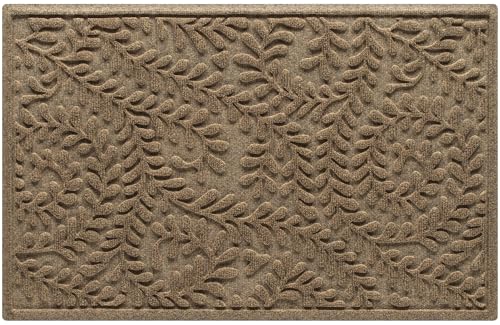 WaterHog Indoor/Outdoor Door Mat (Boxwood) The domestic version of the mat that has been in commercial lobbies for decades: published 3/8-inch construction, 24 oz per square yard PET, and made in the USA. | The commercial-grade option | 8.9/10 | $44.95 - View on Amazon #ad affiliate link · Price as of October 18, 2026 |
The commercial-grade option
WaterHog Indoor/Outdoor Door Mat (Boxwood)
The domestic version of the mat that has been in commercial lobbies for decades: published 3/8-inch construction, 24 oz per square yard PET, and made in the USA.
WaterHog is the mat you have already walked on hundreds of times without noticing - it is the standard entrance mat in commercial lobbies, and Bungalow Flooring sells domestic-sized versions of the same construction. Buying it is buying a specification rather than a look.
That specification is the most complete on this page. The Classic construction is published at three-eighths of an inch thick with a gripper backing, or closer to a quarter inch with the smooth backing intended for hard floors, using a 24 ounce per square yard PET fabric. Two numbers - thickness and fabric weight - are two more than most of this category publishes, and together they tell you almost everything: how much it holds, and whether your door will clear it.
The construction detail that matters is bi-level. The raised ridges hold the walking surface up while grit falls into the channels below, so the dirt you scrape off is not the dirt you then walk back over. That is why commercial buildings use it in the second zone of an entry system, and it works the same way at a domestic front door.
The honest downside is cleaning. This is not a mat you put in a washing machine. It hoses down well and it dries reasonably fast, but that is an outdoor job on a dry day rather than a laundry-day job. If the appeal of a mat for you is that it goes in the wash, buy chenille - see best absorbent chenille mats. If the appeal is that it will still be flat and still be working in five years, buy this.
What works
- Published thickness and published fabric weight - the most complete spec sheet here
- Bi-level construction traps grit below the walking surface instead of on it
- Beveled edges reduce the trip hazard and stop the corners curling
What does not
- Not machine washable - cleaning is a hose and a drying rack
- Costs meaningfully more than the chenille mats it sits beside
- Stiffer underfoot than an absorbent mat; it is built for traffic, not comfort
The verdict, and where the comparison lives
WaterHog earns its place by publishing what everything else leaves out. Thickness by backing type, fabric weight per square yard, water capacity per square yard, edge treatment and country of manufacture is a complete enough picture to buy from without touching the product - which on a site that ranks on published specifications is close to the highest compliment available.
It is not the right mat for every door. It is the right mat for an exposed position, a household that will hose it, and a buyer who wants to know what they are getting before it arrives. If the question you actually have is whether the premium is worth it against the obvious consumer alternative, that is a different question and we answer it head to head in WaterHog vs Gorilla Grip.
Questions people ask
Are WaterHog mats worth the money?
How thick is a WaterHog mat?
Can you put a WaterHog mat in the washing machine?
Can a WaterHog mat be used outside?
What size WaterHog mat should I buy?
How much water does a WaterHog mat hold?
Sources
Next stage
Stage 3 - contain
A bi-level mat holds grit below the surface. Standing meltwater still needs a tray.
Keep goingAbout the author
Scooter M.
An enthusiast who is genuinely into this. I read the manuals, compile the published specs, and do the math on door clearances. No lab coat, no test bench, and nothing here is a product I have used - which is exactly why every claim carries a source.
Published by Slate Mill Group, with the Mud & Mat team. Published September 21, 2026; last updated September 21, 2026. Editorial policy.
Read next
Premium or Budget
WaterHog vs Gorilla Grip
The commercial-grade mat against the Amazon best-seller, on published specs only - and what the extra money actually buys.

Material Decision
Coir vs chenille vs rubber door mats
The material table this category never publishes - scraping, absorbency, weather and cleaning, side by side.

Door Clearance Data
Low-profile mats and door clearance
Published mat thicknesses against the real door undercut - the arithmetic nobody else prints.
Best Dirt Trapper
Best dirt trapper door mats
Trapping is a construction property, not a marketing word - here is which mats actually get grit below the walking surface.
Head to Head
WaterHog vs Muddy Mat
Published 3/8in against a stated 1in - the clearance decision that settles this before absorbency does.