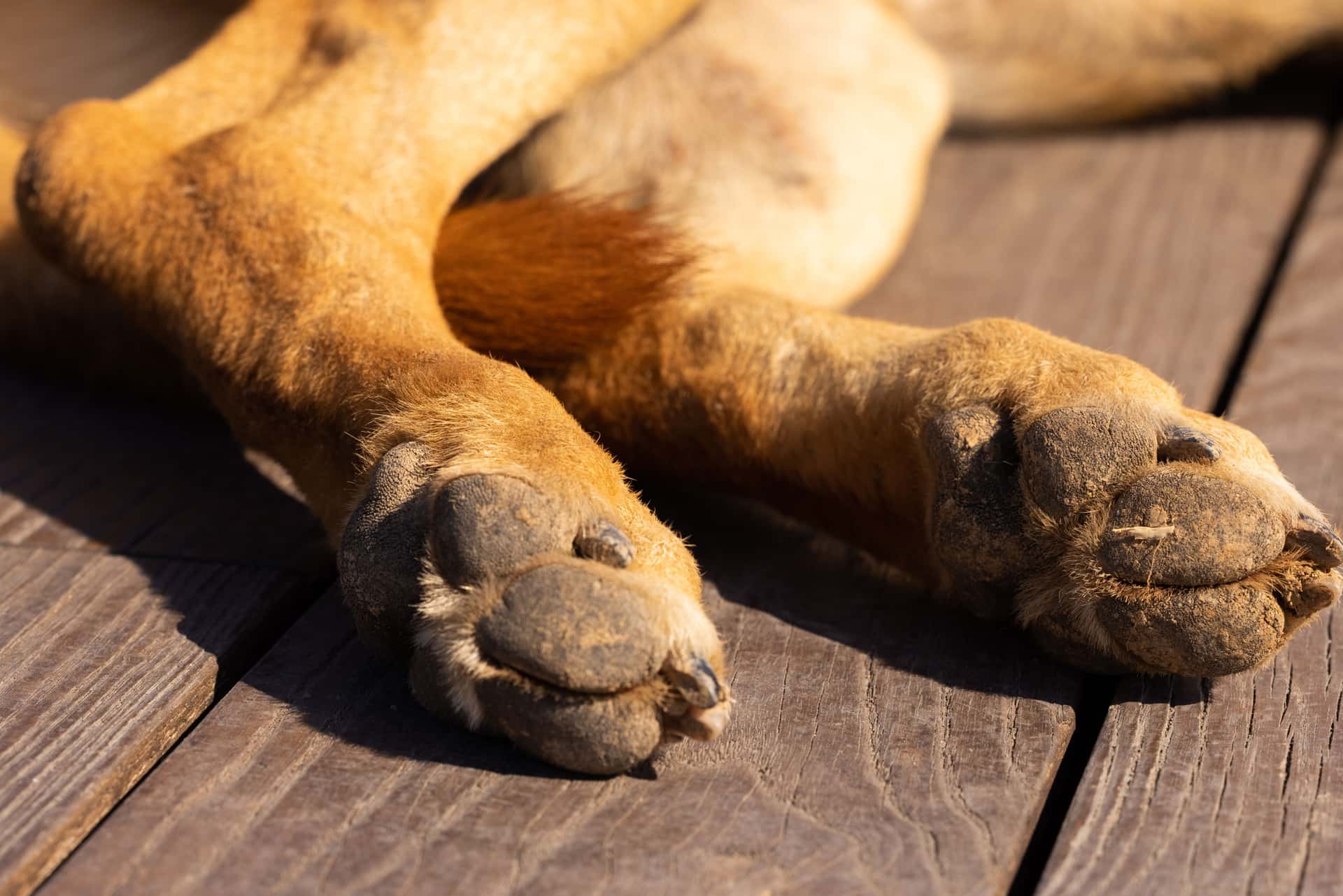
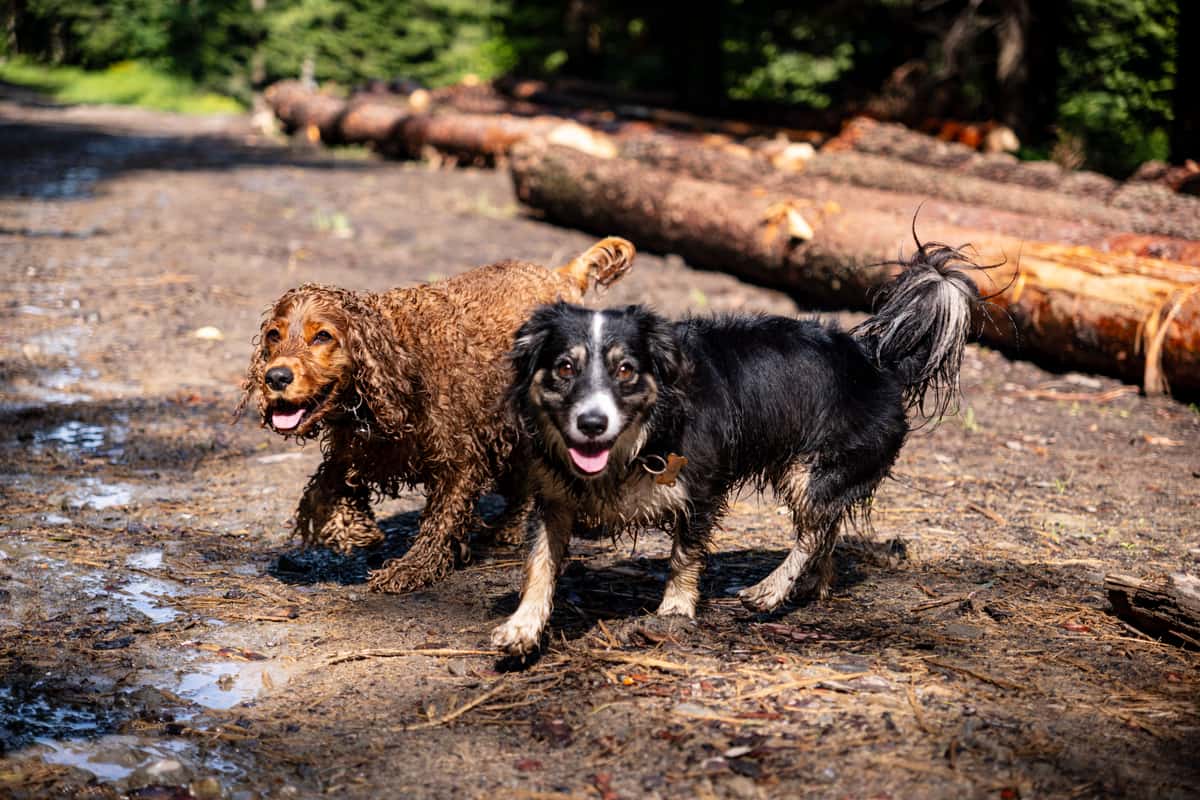
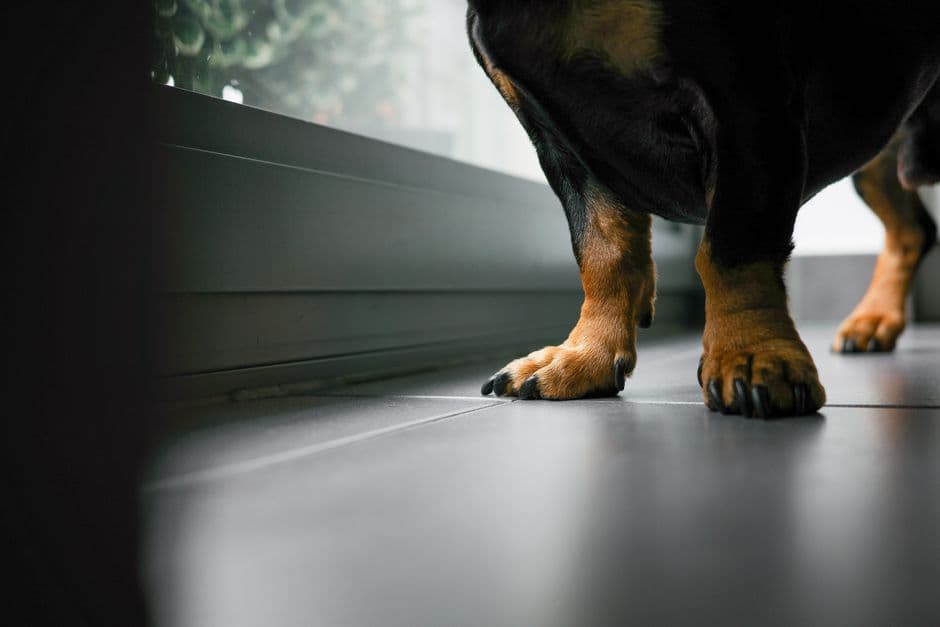
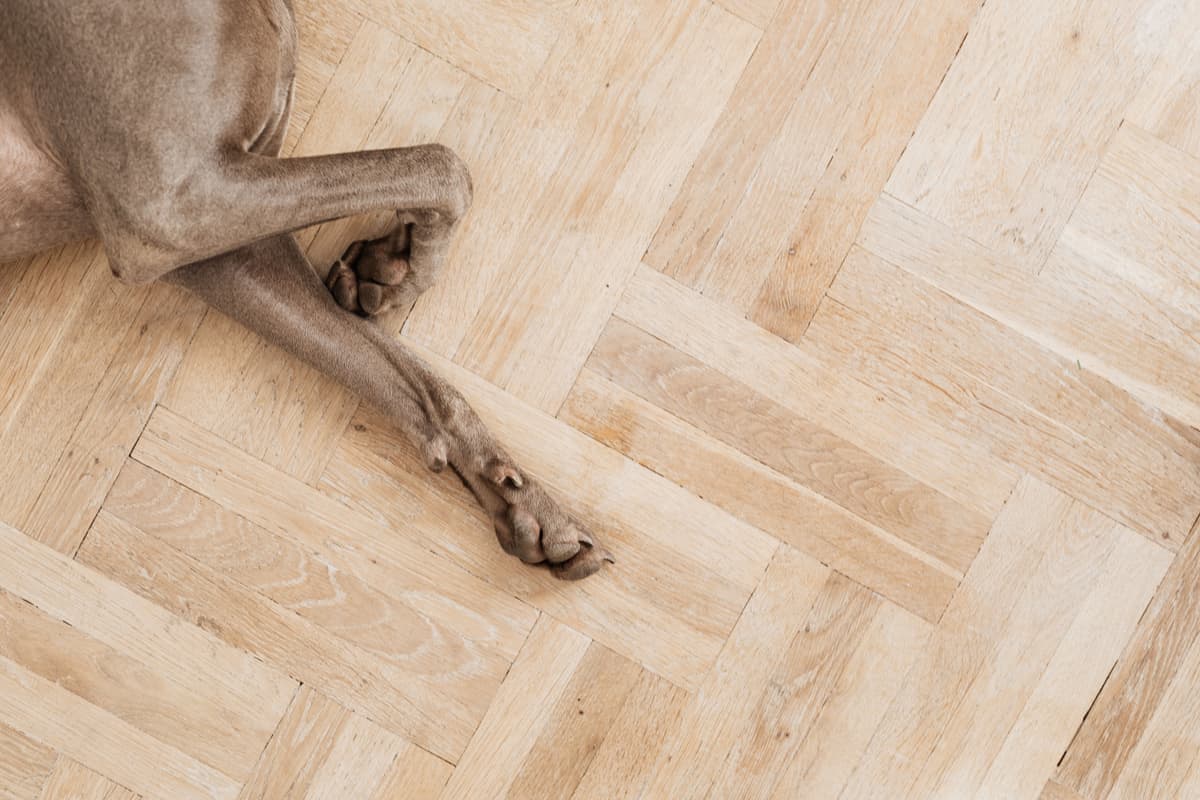
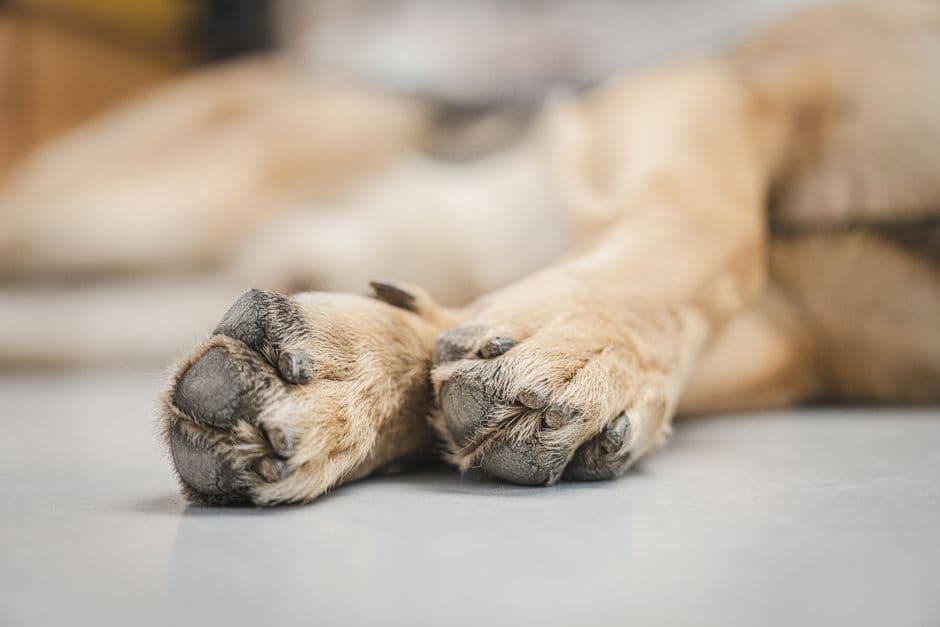
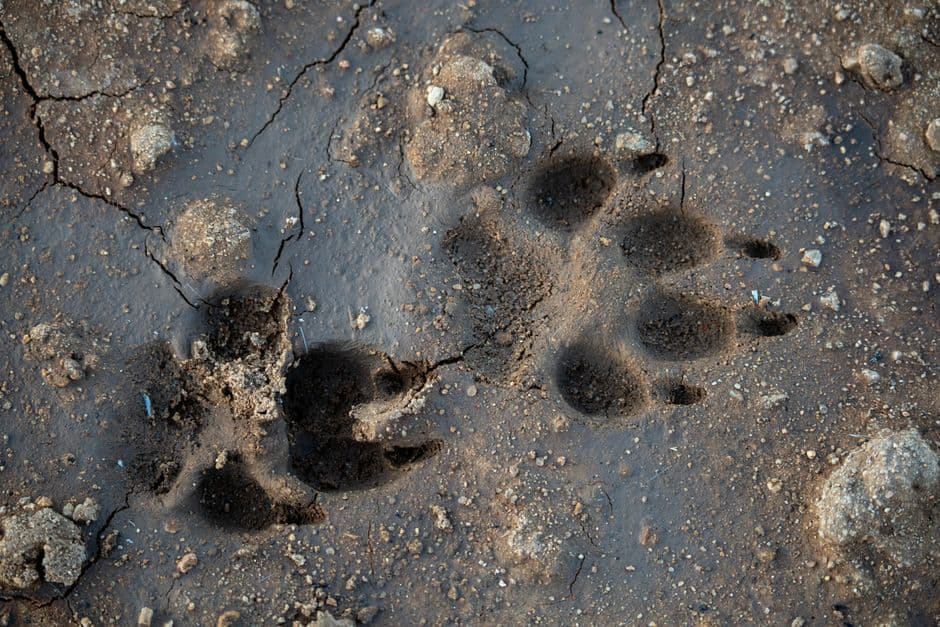
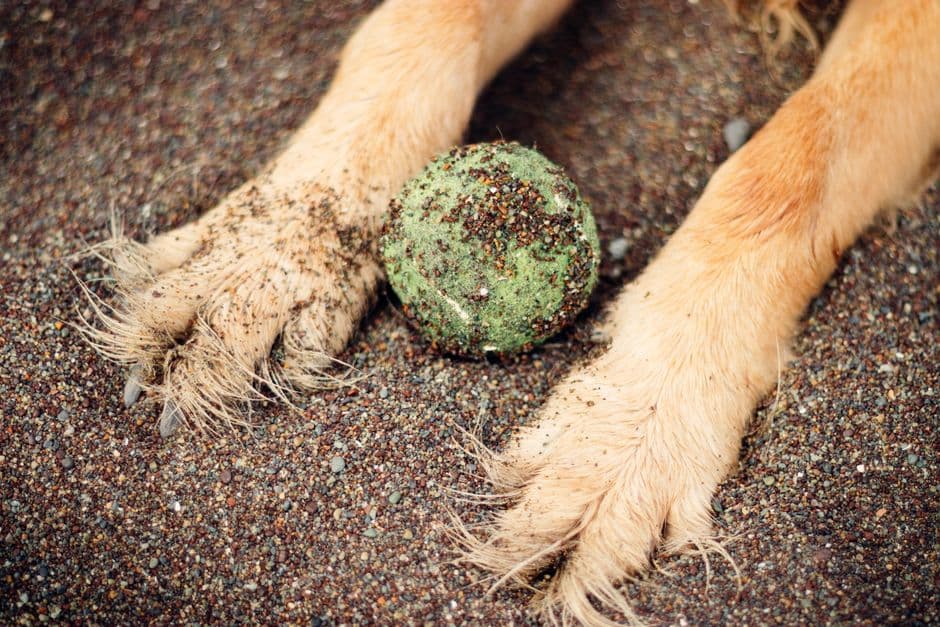
A dog is a harder problem than a person and it is worth being precise about why. A person has two contact points, wipes them deliberately, and stops at the door. A dog has four, does not wipe, does not stop, and carries water in the fur between the pads as well as on them. By the time a dog is three strides into a hallway, most of what it brought in is already on your floor.
That changes what a mat has to be. For shoes, the useful spec is scraping. For paws, it is capacity and depth - how much water the mat can hold and how far into the pile a paw actually sinks. A thin mat that works fine for shoes will do almost nothing for a wet dog, because the paw never reaches enough fiber to be dried by it.
The three specs that matter, and who publishes them
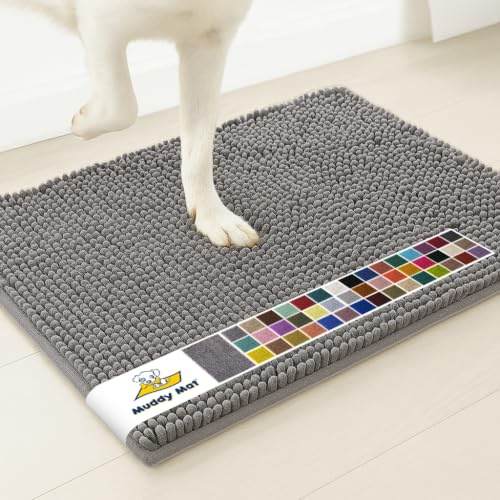
Pile depth decides whether the paw is enveloped or just touched. Muddy Mat and Soggy Doggy both publish roughly one inch of chenille, which is the depth at which a paw is genuinely surrounded by fiber. That inch is also why neither mat fits under a door - a decision we cover in detail below.
Density in grams per square meter is the more honest measure of absorbency than depth alone, because a deep sparse pile holds less than a shallow dense one. Dog Gone Smart is the only brand in our set that publishes a GSM figure - 3000 - and it states that competing mats sit in the 900 to 1500 range. Treat the competitor figure as their framing rather than an independent test; treat the 3000 on their own product as a specification you can hold them to.
Drying time is the spec nobody shops on and everybody should. A mat that is still damp at four in the afternoon does nothing for the second walk of the day. In a two-dog household this single property decides whether one mat covers you or you need two in rotation - and two in rotation is very often the correct answer regardless.
Placement beats product
The most common mistake in this category is buying the deepest mat available and putting it in the door swing. A one-inch pile against a half-inch to three-quarter-inch door undercut does not fit. Soggy Doggy is unusually honest about this and states outright that the noodles compress if the mat sits a few inches from the frame. What follows is not a compromise - it is the right layout: a thin mat at the swing, the deep mat immediately past it, where the door no longer applies.
Length matters more than width for paws. Paw prints are not a doorway problem, they are a first-four-strides problem, and a 28-inch mat gets you one stride of a dog's gait. The runner sizes - 60 by 24 inches, or the 36 by 60 extra-large - are the ones that actually intercept the prints, and they are why we weight size range in the scoring.
What a paw mat cannot do
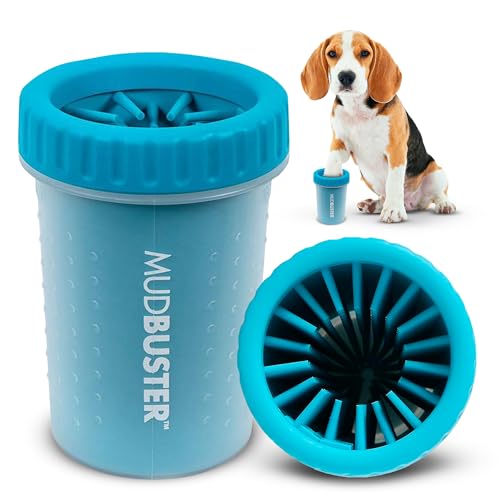
It cannot get mud out from between the pads. A mat dries the bottom of a paw; it does not clean inside one. If your dog is coming back from a genuinely muddy field rather than a wet sidewalk, a mat is the second step and a paw cleaning mat or a rinse is the first.
And it does not solve the floor problem on its own. Standing water is what damages a hardwood floor, and a saturated mat sitting on wood is itself a source of standing water. Lift and dry the mat rather than leaving it in place to wick into the boards - the full version of this is in mats and hardwood floors and dog mats and hardwood floors.
The two things a mat cannot do
A mat contacts the bottom of a paw and it works under the dog's own weight, and those two facts set its limits. It never reaches the channel between the pads where wet clay compacts - that needs bristles, and the paw washers are ranked on published paw-width sizing rather than breed. And it cannot apply pressure to the places that are actually wet, which a person with a towel can: best dog drying towels ranks those on published density, because exactly one of them states a GSM figure and the rest quote adjectives.
Wet and muddy are two different purchases
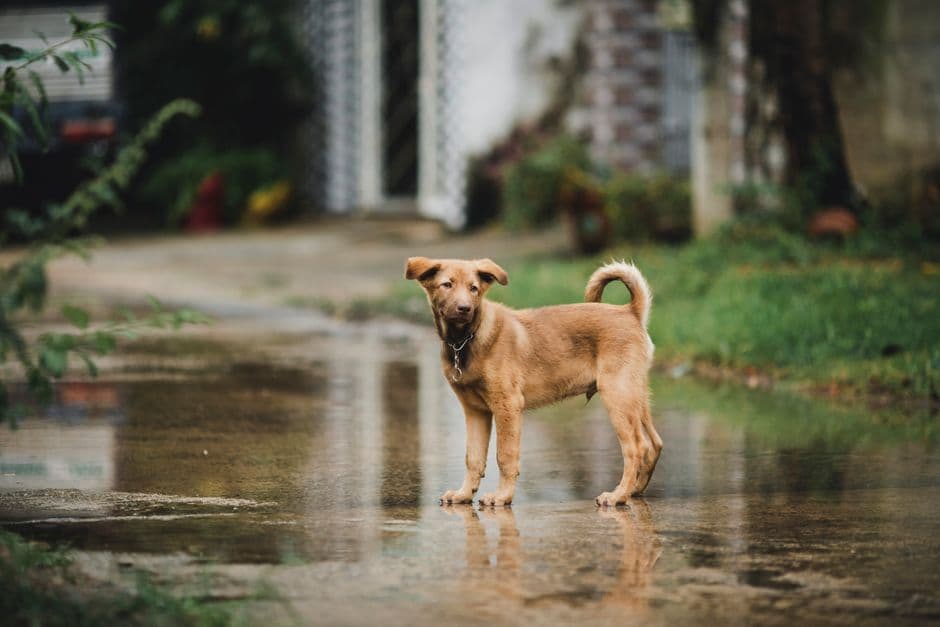
Mud is a solids problem and water is a volume problem, and the mat that handles one can be overwhelmed by the other - a soaked dog delivers most of its water in one place in about a second, which is a depth requirement rather than a scraping one. The wet paw picks cover the volume case, including the shake radius that decides how big the mat has to be. And if you are cross-shopping the two brands people name most often, Muddy Mat vs Gorilla Grip sets out what each one chose to publish and what that says about who it is for.
The coat is a separate problem from the paws
Everything else on this hub deals with what the paws bring in. The coat needs its own answer, and a towel needs both of your hands and a dog that stands still. Best dog drying robes ranks the hands-free version on published GSM, published fit measurements and what actually keeps one on a dog that shakes - including the awkward finding that the same maker publishes a higher absorbency figure for its flat towel than for its robe.
Three named products, looked at on their own
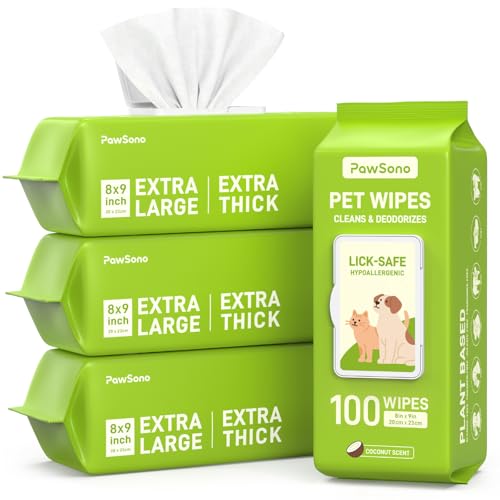
Two mats in this category are searched for by name more than the category itself, and both now have their own page. The Muddy Mat review covers the published 1 inch pile that keeps it from fitting under an inward-opening door, and the Dirty Dog Doormat review covers the only mat here that publishes a fabric weight, at 3000 GSM. For the days nobody is home to supervise any of it, best dog paw wipes judges the portable fallback on named ingredients, because a wiped paw is in the dog's mouth a minute later.
Questions people ask
+What is the best door mat for muddy dog paws?
A deep chenille mat placed just inside the door, past the swing, in the longest size your hallway takes. Depth is what dries a paw; length is what catches the prints. See our muddy paw picks.
+Will a dog mat fit under my door?
A one-inch chenille mat will not. A standard interior door has half to three-quarters of an inch of clearance. Put a low-profile mat at the swing and the deep mat immediately inside it.
+How do I wash a dog mat without wrecking my machine?
Shake or hose the mat first. Chenille holds dry grit as well as it holds water, and washing a mat full of dried mud puts that mud into the drum and back into the pile. Then machine wash cold with no fabric softener.
+Do paw cleaning mats work better than absorbent mats?
They do different jobs. An absorbent mat dries the bottom of a paw. A paw cleaning mat or cup works the mud out from between the pads, which a mat cannot do. If your dog comes home from a field rather than a sidewalk, you need both.