By Scooter M. · Last updated October 17, 2026
Mud & Mat earns a commission when you buy through the links on this page, at no extra cost to you. It does not change what we recommend, and we publish a skip-this verdict on products we could otherwise earn from. Full disclosure.
For a normal damp walk: walk the dog onto an absorbent mat inside the door, let it stand for a few seconds, then dry the front paws with a microfiber towel. That is the whole routine and it takes about twenty seconds. Only escalate when the walk justifies it - a paw washer like the Dexas MudBuster for genuinely muddy paws, wipes for salted winter pavements where you want the residue off rather than spread around. The common mistake is buying a paw washer for everyday use: it works well and it needs filling, carrying and emptying, so households stop using it by week three and the paws go back to being wiped on the hall carpet.
This page is deliberately about the routine rather than the product, because the products are the easy part. There are four tools, they overlap, and which one belongs in your hallway depends almost entirely on how dirty your walks actually get and how many steps you will tolerate between the door and the dog being loose in the house.
Step one: decide which of four jobs you are doing
Dirty paws are not one problem. They are four, and they want different tools. Diagnosing yours correctly is the whole decision.
What is actually on the paw, and what removes it
Step two: the routine, in order
- Stop at the threshold, not in the hall. The routine only works if the dog does not get past the mat. This is a training question more than an equipment one, and it is the step most people skip.
- Let the mat do the first pass. Four paws standing on an absorbent mat for a few seconds removes a surprising amount of water with zero effort from you. A dog that walks across it in one stride gets almost nothing from it.
- Towel the front paws first. Front paws are dirtier than back paws on almost every dog, because they land first and take more of the splash. If you are only going to do two, do the front two.
- Escalate only if the paw is still visibly dirty. This is where the washer or the wipes come out. On most walks, most of the year, you will not get to this step.
- Check between the toes in winter. Compacted snow and salt collect in the webbing, not on the pad. A quick squeeze of each paw tells you whether you need to go further.
- Put the towel somewhere it will dry. A damp towel left in a heap is why households end up with a smell they blame on the dog.
Why the mat is the pick if you buy one thing
Of the four tools, the mat is the only one that works when you are not there. A washer, a towel and a pack of wipes all require a human to be standing at the door at the moment the dog comes in. A mat works at six in the morning when you have let the dog out and gone back to bed, and it works for the second dog while you are dealing with the first.
That is also why pile depth matters more than absorbency ratings in this category. A dog does not press its paws into a mat the way a shoe does; it stands on it briefly. A deep chenille pile that wraps around the paw takes water off in those few seconds, whereas a thin flat mat needs contact time it will never get. The trade-off is door clearance - and it is a real one, because the most-bought dog mat in America is a full inch thick, which does not fit under a standard inward-opening door. That specific conflict is worked through in our Muddy Mat review and measured against published door gaps in the clearance guide.
How we picked
- Repeatability above cleaning power. A tool that cleans perfectly and gets used twice a week loses to one that cleans adequately twice a day. This is the criterion that moved the paw washer down and the mat up.
- Steps required per use, counted honestly - filling, carrying, emptying and drying all count.
- Whether it works unattended. Only the mat does, which is why it leads.
- Published fiber weight or pile depth where available, because on paw-drying the physical structure does the work.
- For wipes: whether the active claim is supported by a named ingredient on the maker's own page. Several in this category are not.
- No testing. We have not timed drying or weighed water uptake. Published specs and material behavior, cited per pick. How we pick.
We have not physically tested these products. We do not own them, we have no lab, and we do not accept free product. Everything above is compiled from published manufacturer specifications, published care guidance and live retailer data - and we tell you which is which on every claim. How we pick.
Quick picks
Ranked against the criteria below. Tap a row to jump to the full write-up; the price button goes straight to Amazon.
| # | Product | Best for | Score | Price |
|---|---|---|---|---|
| 1 | 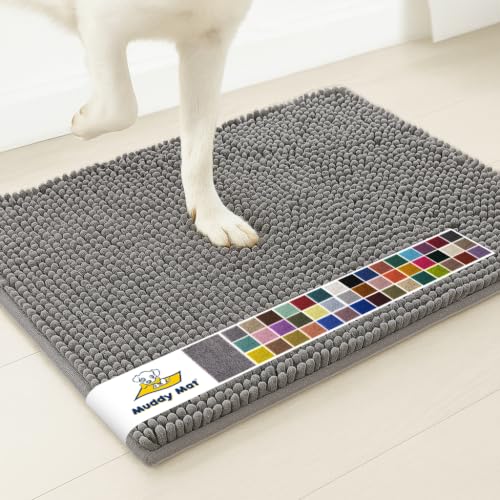 Muddy Mat Original Absorbent Door Mat A one-inch chenille pile the maker says absorbs five times its own weight | Wet dog paws | 8.5/10 | $22.70 - View on Amazon #ad affiliate link · Price as of October 18, 2026 |
| 2 | 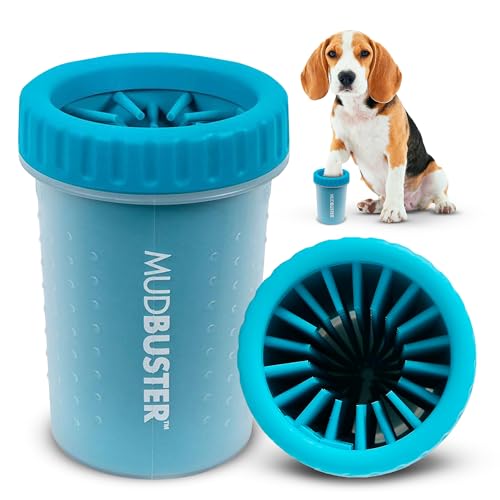 Dexas MudBuster Portable Dog Paw Cleaner, Medium The one product in this category with a published sizing chart and a published bristle length | The paw washer to buy first | 8.9/10 | |
| 3 |  Dog Gone Smart Dirty Dog Shammy Towel A published 1500 GSM microfiber blend the maker states holds up to eight times its weight in water, with EPA-approved anti-microbial treatment | The published density | 8.8/10 | $19.97 - View on Amazon #ad affiliate link · Price as of October 18, 2026 |
| 4 | 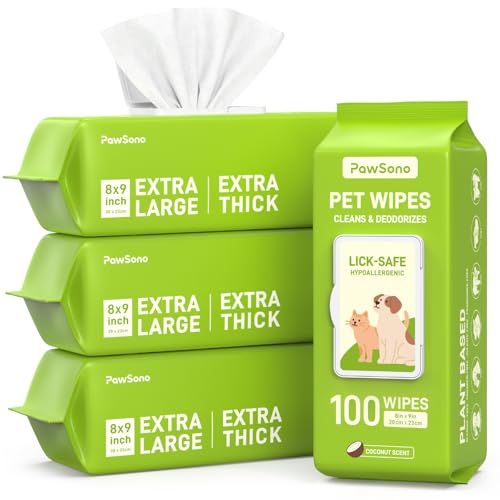 PawSono Hypoallergenic Pet Wipes Publishes its wipe size at 8 by 9 inches, names five plant ingredients, and is the only pack here whose listing uses the words lick-safe about a product dogs lick. | The one that answers the question that matters | 8.8/10 | $29.99 - View on Amazon #ad affiliate link · Price as of October 18, 2026 |
| 5 |  DOGNESS Automatic Dog Paw Cleaner Cup A motorised cup with two rotation speeds and 187 published food-grade silicone bristles, for the households where the manual twist is the part that does not get done. Our skip-this pick | Doing it one-handed | 7.6/10 | $42.99 - View on Amazon #ad affiliate link · Price as of October 18, 2026 |
Wet dog paws
Muddy Mat Original Absorbent Door Mat
A one-inch chenille pile the maker says absorbs five times its own weight - the deepest-pile mainstream option, and the one that most often will not clear a door.
Muddy Mat is the brand most people in this category have already heard of, and the demand data agrees - it is the single highest-volume product query in the entryway-mat space. The reason it earns that position is the pile. The maker states roughly a one-inch chenille layer that soaks up to five times its own weight, and depth is genuinely what separates a mat that holds a wet dog from a mat that smears one down the hall.
That same inch is the reason this mat needs a placement decision rather than a purchase decision. A standard interior door is hung with roughly half an inch to three-quarters of an inch of clearance above the finished floor. A one-inch pile does not fit under that. It will compress a little, and it will still catch. If the mat is going behind an inward-opening door, this is the wrong mat and no amount of liking it changes the arithmetic - put a low-profile mat at the swing and put this one just past it.
Where it belongs is the strip immediately inside the door, past the swing, or in a mudroom where the door opens outward. That is also where a wet dog actually shakes. The 60 by 24 inch runner is the size worth considering for a dog household: paw prints are not a doorway problem, they are a first-four-strides problem, and a 28-inch mat gets you one stride.
Cleaning is straightforward but has one rule people skip: shake or hose the mat before it goes in the machine. Chenille holds grit as effectively as it holds water, and washing a mat still full of dry mud puts that mud into your drum and back into the pile. Drying is the other honest limitation - a one-inch pile takes meaningfully longer to dry than a quarter-inch one, so a single mat in a two-dog household will spend part of its week damp. Two mats in rotation is the practical answer, and it is cheaper than a replacement floor. See our dog and paw mat picks for the full comparison.
What works
- The deepest published pile in this comparison - it holds a genuinely wet dog
- Runner size covers the first strides after the door, where paw prints actually land
- Machine washable, so the mud leaves rather than accumulating
What does not
- A 1-inch pile will not clear a standard interior door undercut - a placement decision, not a preference
- Deep pile takes noticeably longer to dry than a low-profile mat
- Needs shaking out before washing or the mud goes into your machine
The paw washer to buy first
Dexas MudBuster Portable Dog Paw Cleaner, Medium
The one product in this category with a published sizing chart and a published bristle length - one inch of BPA-free silicone, sized to paws between 1.5 and 2.5 inches wide.
A paw washer is a cup with soft bristles inside it. You put an inch of water in, put the paw in, twist, and the bristles do to the gap between the pads what no mat can: they get inside it. That is the entire mechanism, and the MudBuster is the product that defined it.
What makes it the default recommendation is the sizing chart. Dexas publishes three sizes by paw WIDTH - small for paws up to two inches, medium for 1.5 to 2.5, large for 2.5 to 3.5 - rather than by dog weight or breed, which is how everyone else sizes and is close to useless. A cup that is too wide does not scrub; a cup that is too narrow will not admit the foot.
The bristles are published at one inch of BPA-free silicone. That length matters for the same reason it matters on a boot scraper: a short bristle sweeps the surface of a pad, a long one deflects into the channel between pads where the mud is compacted.
Two honest limits. It leaves the paw wet, deliberately - it is a washer, and the drying is a separate step with a towel or an absorbent mat. And you finish the process holding a cup of muddy water, which on a doorstep is fine and on a hallway carpet is a new problem. Use it outside the door, not inside it.
What works
- Published sizing by paw width - almost nothing else in this category tells you how to size it
- One-inch silicone bristles reach between the pads, which is where mud actually packs
- Nothing to charge, nothing to break, and it rinses out in seconds
What does not
- You are holding a cup of dirty water at the end of it, and it has to go somewhere
- A dog that dislikes having a foot held will dislike this four times per walk
- Leaves the paw wet by design - it is step one of two
The published density
Dog Gone Smart Dirty Dog Shammy Towel
A published 1500 GSM microfiber blend the maker states holds up to eight times its weight in water, with EPA-approved anti-microbial treatment - the only towel here with a density figure.
Grams per square meter is the only absorbency number in textiles that means anything comparable, and this is the one towel in the category that publishes it: 1500 GSM. For context, a mid-range bath towel sits well under half that. Density is what decides how much water a fabric can hold before it starts pushing the rest around.
The maker pairs that with a claim of up to eight times the towel's own weight in water. That is a claim rather than a measurement - no test method is published, here or anywhere else in this category - but it is at least attached to a density figure you can weigh against rivals, which the adjective-only towels are not.
The anti-microbial treatment is the detail experienced dog owners will recognize as the important one. A dog towel's real failure is not wearing out; it is being put back on a hook damp, repeatedly, until it smells and has to be thrown away. An EPA-approved treatment does not make that impossible, but it buys time between washes.
The size is the honest limit. At 31 by 13 inches this is a legs-and-paws towel - long enough to wrap a foreleg and squeeze, too small to get over the back of a big dog. That is the right shape for entryway use, where you are drying the parts that touch your floor, and the wrong shape for a post-bath towel.
What works
- A published GSM figure, which is the only comparable absorbency spec in this category
- Anti-microbial treatment addresses the real failure of a dog towel: it goes sour
- Narrow 13-inch width wraps a leg rather than draping over a back
What does not
- 31 x 13in is a paws-and-legs towel, not a whole-retriever towel
- The 8x figure is a maker claim with no stated test method, like every figure here
- Costs several times a bath towel you already own
The one that answers the question that matters
PawSono Hypoallergenic Pet Wipes
Publishes its wipe size at 8 by 9 inches, names five plant ingredients, and is the only pack here whose listing uses the words lick-safe about a product dogs lick.
A paw wipe is unusual among the things this site covers, because the dog eats it. Not the wipe itself, but whatever the wipe leaves on the paw, which goes into the mouth within about ninety seconds of you finishing. That makes the ingredient list the specification, in the way that published thickness is the specification for a mat - and it is the thing most of this category declines to give you.
PawSono gives you both halves. It names what is in the formula: calendula, oat and cucumber, with coconut and jojoba oils. And it is the only listing here that addresses the licking directly, describing the blend as lick-safe. That is the maker's own phrasing rather than a certification, and we would not treat it as one, but a maker that has thought about the question in its own copy is ahead of one that has not.
It also publishes the wipe size at 8 by 9 inches, which matters more than it sounds. A wipe is only useful if it covers a paw with enough dry area left to finish the job, and on a large dog with four muddy feet the difference between a generous wipe and a mean one is the difference between four wipes and eight. Only one other pack on this page tells you.
The honest limits are about commitment rather than quality. Four hundred wipes is a lot to buy from a maker you have not tested, and they arrive as four 100-count packs rather than one big dispenser, so the handling is no more convenient than the small boxes - you simply have three spares in the cabinet. Once a pack is open it will dry out if you leave the seal loose, which is true of every wipe here and is the reason a pack by the door beats a pack in a drawer. For a dog that comes in genuinely caked rather than merely dirty, a wipe is the wrong tool and a paw washer is the right one.
What works
- Publishes the wipe size - 8 by 9 inches - which only one other pack here does and which decides how many passes a muddy paw takes
- Names five actual ingredients rather than listing what it leaves out, and states the formula is lick-safe
- At 400 wipes it is the only pack here sized for a dog that comes in wet most days through a winter
What does not
- Lick-safe is the maker's own wording with no standard behind it, so treat it as a formulation claim rather than a certification
- Four hundred wipes is a commitment to a brand you have not tried, and the packs dry out once opened
- Supplied as four separate 100-count packs rather than one dispenser, so the per-pack convenience is no better than the small boxes
Doing it one-handed
DOGNESS Automatic Dog Paw Cleaner Cup
A motorised cup with two rotation speeds and 187 published food-grade silicone bristles, for the households where the manual twist is the part that does not get done.
Skip this one
Skip the powered cup unless one-handed operation is a genuine requirement - a bad back, a strong dog, a person who cannot twist a cup. It works, it publishes more detail than most of its rivals, and it is solving a problem that a fifteen-dollar manual cup already solves with no battery, no motor and nothing to fail. The honest case for it is accessibility rather than performance, and that is a real case; it is just not the case most buyers are in.
The powered cups exist because the manual ones need two hands: one to hold the cup, one to hold the leg, and a third you do not have to steady the dog. This one replaces the twist with a motor and a button, so the job becomes one-handed.
DOGNESS publishes more than most of this sub-category: 187 food-grade silicone bristles, two speeds, and a high setting that reverses direction automatically after fifteen seconds. The reversal is the sensible part - scrubbing in one direction pushes mud around the pad, and changing direction is what lifts it out.
The detachable brush pad matters more than it sounds. A paw washer's failure mode is that the bristle bed silts up with grit and nobody wants to dig it out; a pad that lifts out and rinses under a tap is a pad that stays working.
We rank it below the manual cups anyway, and the reason is proportion. This is a rechargeable motorised appliance for a task that a fifteen-dollar plastic cup completes in about four seconds per foot. Buy it if holding and twisting is genuinely difficult - that is a real requirement and this answers it well. Buy the manual cup if it is not.
What works
- One-handed operation is the real feature - the other hand is holding the dog
- Auto-reversing high speed scrubs both directions without you rotating anything
- Detachable pad means the fiddly part actually gets cleaned
What does not
- You are adding a motor and a battery to a job a twist of the wrist does for free
- Costs several times the manual cup and has more to go wrong
- The noise and vibration are exactly what a nervous dog objects to
The mistakes that cost households the routine
- Buying the paw washer first. It is the most satisfying tool and the least repeatable. Buy it second, for the muddy months, not first for every day.
- Using a human bath towel. Cotton terry pushes water around rather than pulling it in, and it stays wet. Microfiber chenille is a genuinely different material for this job.
- Washing dried mud. Water turns dried mud back into wet mud and then you have wet mud on a towel instead of dry grit on a mat. Knock it off dry first.
- Fabric softener on the towels and mats. It coats the fiber and permanently reduces how much water it can hold. The single most common way to quietly ruin both items - see how to clean a doormat.
- One mat for two dogs. Two dogs arrive at the door simultaneously and one of them walks round the mat. Buy the runner size, not the doormat size.
- Letting the dog shake indoors. Nothing in this routine survives a shake in the hallway. If the dog is wet enough to shake, a drying towel or robe comes out at the door.
What about just rinsing in the bath?
It works and it is why a lot of dogs end up with sore paws. Repeated wetting without drying softens the pad and the webbing between the toes, and a dog with persistently damp feet is a dog prone to irritation there. Rinsing is the right call after genuine mud; it is the wrong default for a damp Tuesday. If you do rinse, dry properly afterwards - which puts you back to needing the towel anyway.
Questions people ask
How do you clean dog paws after a walk?
What is the best way to clean dog paws every day?
Do you need to wash dog paws after every walk?
How do you get dried mud off dog paws?
Should you clean dog paws after walking on salted roads?
Are dog paw wipes or a paw washer better?
Sources
- Muddy Mat Original - Amazon detail page (microfiber chenille, maker-stated 1in pile, TPE backing, machine washable, sizes to 60x24in)
- Dexas MudBuster - Amazon detail page (portable paw cleaner, silicone bristles, sizes and capacities)
- Dog Gone Smart Dirty Dog Shammy - Amazon detail page (microfiber chenille shammy, 31 x 13in, machine washable)
- PawSono Hypoallergenic Pet Wipes - Amazon detail page (count, hypoallergenic claim, stated ingredients)
- DOGNESS Automatic Dog Paw Cleaner Cup - Amazon detail page (powered paw washer, capacity and sizing)
Next stage
The mat does most of the work
If you only buy one thing from this page, buy the mat - it is the only tool that works without you being there to use it.
Keep goingAbout the author
Scooter M.
An enthusiast who is genuinely into this. I read the manuals, compile the published specs, and do the math on door clearances. No lab coat, no test bench, and nothing here is a product I have used - which is exactly why every claim carries a source.
Published by Slate Mill Group, with the Mud & Mat team. Published October 17, 2026; last updated October 17, 2026. Editorial policy.
Read next
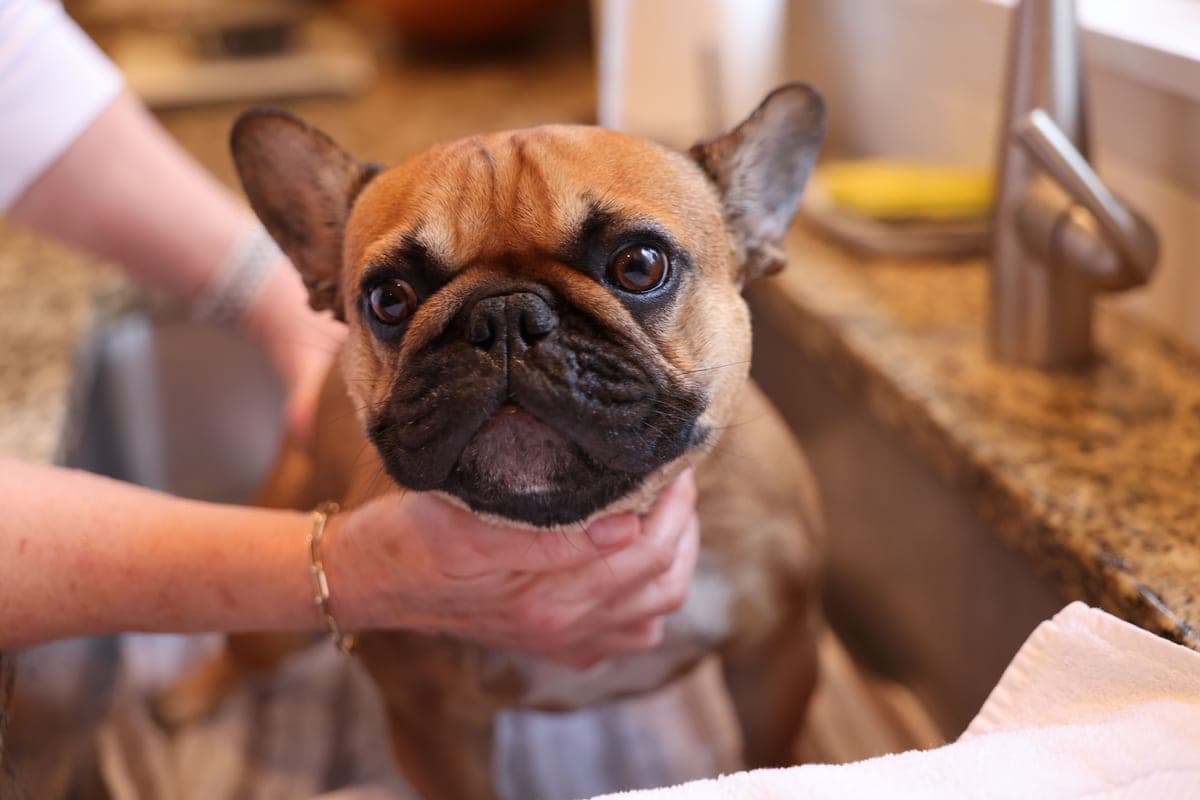
Best for Paw Cleaning
Best paw cleaning mats for dogs
What a paw mat genuinely removes, what it cannot reach, and the order that actually gets a muddy dog clean.
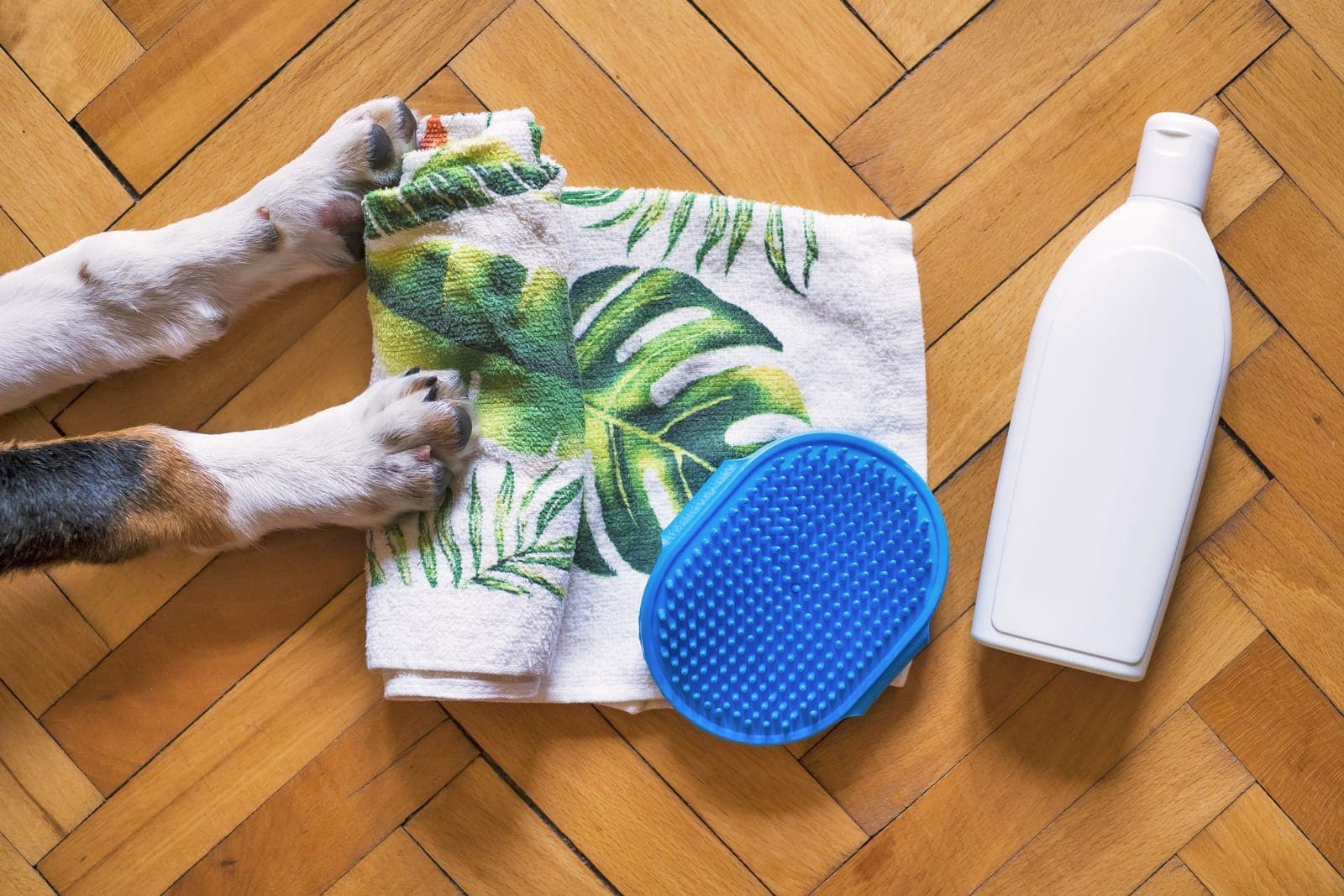
Best Paw Washer
Best dog paw washers
Published sizing by paw width and bristle length - the cup that gets between the pads, and the powered version you probably do not need.
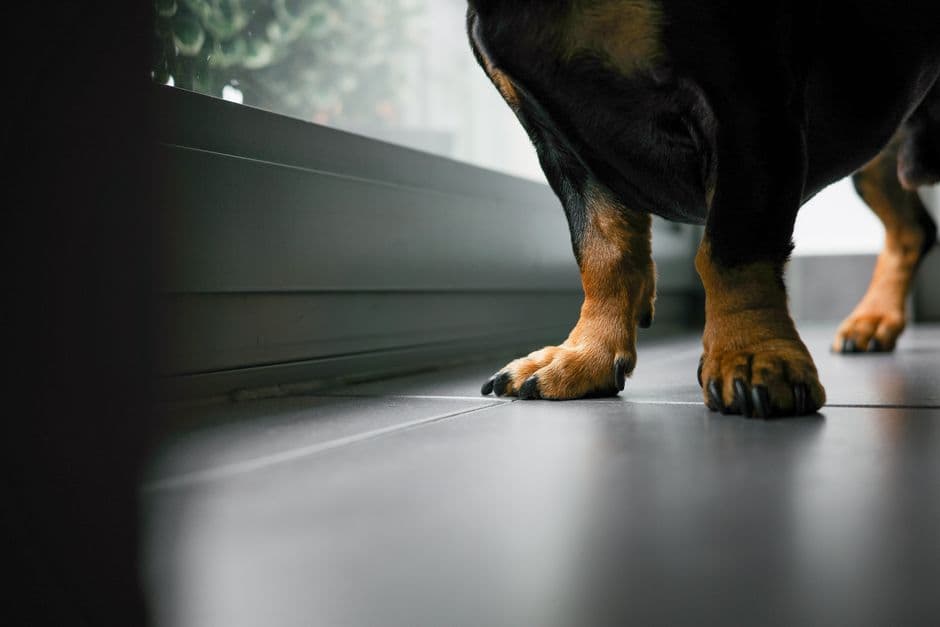
Best Paw Wipes
Best dog paw wipes
Named ingredients and published sheet size, on a product the dog licks - plus the antibacterial claim with no antibacterial ingredient behind it.
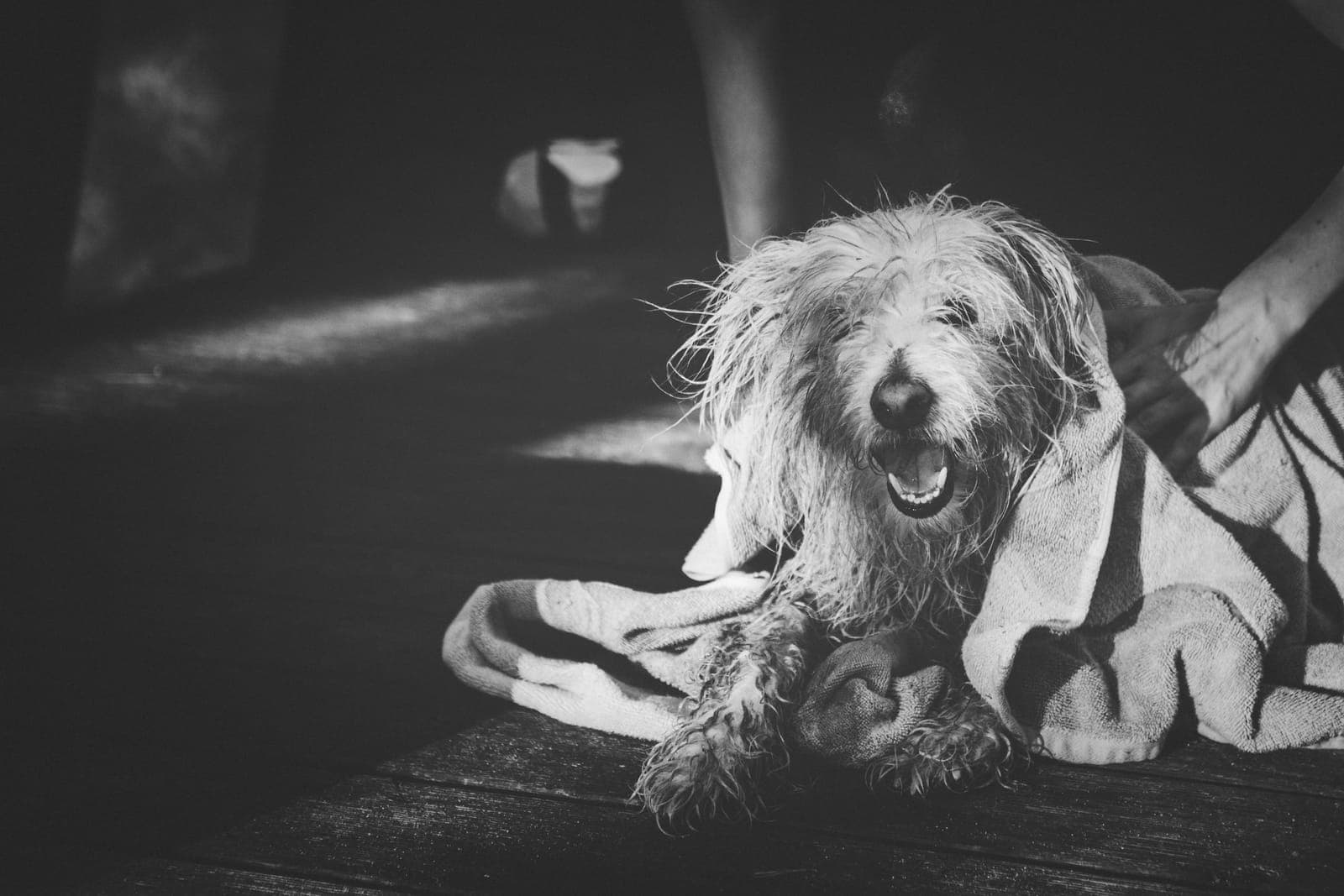
Best Drying Towel
Best dog drying towels
The only towel in the category that publishes a GSM figure, the biggest shammy, and the cheap bath sheet that beats both on area.
Best for Muddy Paws
Best dog door mats for muddy paws
Six mats ranked on pile depth, published density and drying speed - plus the placement that makes any of them work.