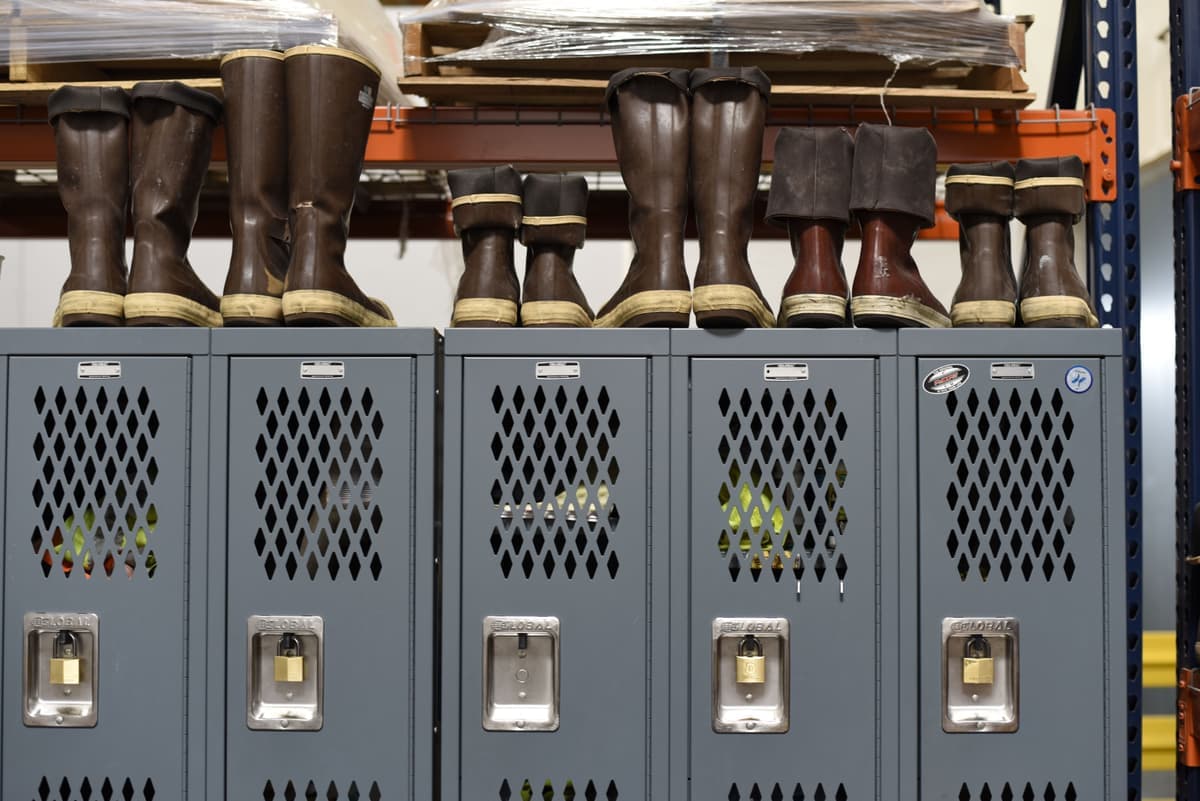
By Scooter M. · Last updated September 14, 2026
Mud & Mat earns a commission when you buy through the links on this page, at no extra cost to you. It does not change what we recommend, and we publish a skip-this verdict on products we could otherwise earn from. Full disclosure.
Four boots come in off a slush-covered sidewalk and each of them is carrying most of a cup of dirty, salted water. A mat has nowhere to put that. Within an hour it is saturated and the water is running off the edges onto whatever floor the mat is sitting on.
A tray has somewhere to put it. The water goes behind a raised wall and stays there until you pick the tray up and pour it out, which sounds trivially simple and is the whole reason the product exists.
Quick picks
Ranked against the criteria below. Tap a row to jump to the full write-up; the price button goes straight to Amazon.
| # | Product | Best for | Score | Price |
|---|---|---|---|---|
| 1 |  Kempf Large Rubber Boot Tray, 16 x 32 in Recycled rubber with raised edges and a ridged base, so boots sit above the meltwater instead of in it | Wet boots and snow melt | 8.6/10 | $24.95 - View on Amazon #ad affiliate link · Price as of October 18, 2026 |
| 2 |  Superio Rubber Boot & Shoe Tray, 34 x 14 x 2 in Two full inches of side wall | Deep sides | 8.2/10 | $49.50 - View on Amazon #ad affiliate link · Price as of October 18, 2026 |
| 3 |  Kingrol Small Shoe Trays, 4-Pack Four individual trays published at 16.5 by 12.6 inches with a 1.18-inch lip | One pair per tray | 7.4/10 | $17.99 - View on Amazon #ad affiliate link · Price as of October 18, 2026 |
| 4 |  Gorilla Grip WeatherMAX Outdoor Doormat Natural rubber that is genuinely waterproof rather than water-resistant, which is the difference between a mat that drains and a mat that becomes a sponge in November. | Rain and outdoor use | 8.4/10 | |
| 5 |  Smiry Natural Rubber Front Door Mat A competent low-profile rubber scraper at a lower price than the name brands, with the specification transparency to match the price Our skip-this pick | Budget outdoor scraper | 6.4/10 |
Wet boots and snow melt
Kempf Large Rubber Boot Tray, 16 x 32 in
Recycled rubber with raised edges and a ridged base, so boots sit above the meltwater instead of in it - the detail that separates a boot tray from a puddle.
The whole argument for a boot tray over a mat is containment: a mat spreads meltwater across its own surface and eventually onto your floor, while a tray holds it inside a raised edge until you tip it out. That is the entire product, and the Kempf tray does the two things that make it work.
First, the raised perimeter. Snow melt from two pairs of winter boots is a genuinely surprising volume of dirty water, and without an edge it goes onto the floor within an hour. Second, and more important, the ridged base. Boots sitting flat in their own meltwater do not dry - they sit in a shallow pool and stay wet until morning. Ridges hold the sole above the water line so the boot dries while the water pools below it.
Recycled rubber matters here for a reason people underrate: weight. Getting a wet boot off involves levering against it, and a light plastic tray slides across the floor and tips its contents out. A heavy rubber tray stays where you put it.
The honest limitation is capacity. Sixteen by thirty-two inches is two adult pairs, or one adult pair and two children's. A four-person household in a snow region needs two trays or a longer one - and this is exactly the point where a tray stops being enough and a bench with shoe storage starts being the better answer, because you also need somewhere to sit while the boots come off.
What works
- Ridged base is the feature that matters - boots dry instead of standing in their own melt
- Recycled rubber is heavy enough to stay put when a boot is levered off
- Genuinely multi-purpose, so it does not become clutter in summer
What does not
- 16 x 32 inches holds two adult pairs, not a family's worth
- Contained water has to be tipped out - it does not evaporate quickly in a cold hallway
- Rubber can mark a light-colored floor if grit gets underneath; sweep beneath it
Deep sides
Superio Rubber Boot & Shoe Tray, 34 x 14 x 2 in
Two full inches of side wall - the deepest containment here, and the right tray when what arrives at your door is slush rather than damp.
Wall depth is the specification that decides whether a boot tray works in a snow region, and this one publishes two inches. That is roughly double the shallow trays, and the difference shows up on exactly the days you bought a tray for - the day four boots come in caked in slush and road salt and each of them carries most of a cup of water.
The length helps too. At thirty-four inches it will take three adult pairs lined up, or two pairs plus a dog bowl, which is a common real-world arrangement in a back hallway. The fourteen-inch depth front to back is the constraint: adult winter boots are often longer than fourteen inches, so expect toes or heels to overhang the wall.
Deep walls have a cost that is easy to miss in a product photo. This is a tray you place boots into deliberately, not one you step onto. Two inches is enough of a lip to catch a toe, so it does not belong in a walking line - put it against the wall beside the door, not across the threshold.
One practical note about emptying it. A full two-inch tray of meltwater is heavy and the rubber flexes, which means carrying it to a sink is a two-hand job that ends badly at least once. If you can position it near an outside door, tip it onto the step instead. If your slush problem is mostly a salt problem, read our take on keeping dirt out of the house - salt is what actually damages the floor, and the tray is only half the answer.
What works
- A 2-inch wall holds a genuinely large volume of slush without overflowing
- Longer than most trays at 34 inches, so it takes three pairs at a squeeze
- Rated for outdoor use, so it can live on a covered porch instead of in the hall
What does not
- Deep walls make it awkward to step into and out of - it is a parking spot, not a standing mat
- Only 14 inches deep front to back, so large boots overhang
- A full tray of water is heavy and awkward to carry to a drain
One pair per tray
Kingrol Small Shoe Trays, 4-Pack
Four individual trays published at 16.5 by 12.6 inches with a 1.18-inch lip - the modular option, and the one sized so a full adult pair sits inside a single tray.
The modular argument is better than it sounds. A single long tray means every pair of boots shares one shallow pool of dirty meltwater, and the last pair in gets the water from the first three. One tray per pair keeps each pair's mess to itself, and it lets you carry one tray to the sink instead of relocating the whole row.
Length is what separates this set from the smaller multi-packs. Kingrol publishes 16.5 by 12.6 inches per tray and states one pair per tray, and at that length an adult pair sits with the heels inside the lip rather than hanging over the end. That reads like a detail until you watch a large boot bridge two undersized trays and drip into the join.
The base is the part worth paying attention to. Kingrol publishes a raised diamond pattern and says what it is for: traction under the shoe, air moving beneath the sole, and the footwear held clear of whatever has drained out of it. That is the construction detail that decides whether a tray dries shoes or merely contains them, and most trays at this price do not mention it at all.
Two honest constraints. The lip is published at 1.18 inches, which is right for rain and wrong for a hard winter - this is a shoe tray, not slush containment, and a snow region needs depth instead. And light plastic slides: everybody levers a shoe off with the other foot, that force goes sideways, and a tray that is not placed against a wall or a skirting board will travel. There is no published thickness or weight to set against that. If your household takes boots off standing up in the middle of the hall, buy a heavier rubber tray and a bench to sit on instead.
What works
- At 16.5 inches long it takes a full adult pair without overhang, which the smaller multi-packs do not
- One tray per pair means one pair's meltwater does not soak the next pair
- The raised pattern holds the sole above whatever has drained out of it, which is what dries a shoe
What does not
- Lightweight plastic slides when you lever a shoe off with the other foot
- A 1.18-inch lip is shallow next to a dedicated snow tray
- Kingrol publishes no thickness, weight or load figure - thick plastic is the whole durability claim
Rain and outdoor use
Gorilla Grip WeatherMAX Outdoor Doormat
Natural rubber that is genuinely waterproof rather than water-resistant, which is the difference between a mat that drains and a mat that becomes a sponge in November.
This mat has one job and it is not absorbency. It is a woven top bonded to a natural rubber backing, and the assembly sheds water rather than holding it. That sounds like a weakness until you have owned an absorbent outdoor mat through a wet November and discovered that what you actually own is a permanently saturated sponge that keeps the water at your threshold instead of away from it.
Outside the door, waterproof beats absorbent every time. Water needs to run off the mat and away; grit needs somewhere to fall out of the tread. Gorilla Grip builds this one with deep grooves, a beveled rubber border and what it calls a retention dam, then it cleans with a hose in thirty seconds - the cleaning method people will genuinely perform, unlike hauling a soaked outdoor mat into a washing machine.
Gorilla Grip also specifies stain and fade resistance, which matters more outdoors than most buyers expect. UV is what turns a black rubber mat chalky gray in a single summer, and a mat that has gone gray and stiff has usually also gone brittle around the edges.
The thing this mat cannot do is finish the job. It is stage one of a layered system - scrape outside, absorb inside. Pair it with a chenille mat immediately in from the door and you have the household version of what commercial buildings have used for decades. Buy it as the only mat and you will have clean boot treads and wet floors. Our coir versus chenille versus rubber comparison sets out which material belongs at which position.
What works
- Waterproof rather than absorbent - it never gets waterlogged and never needs drying
- Hoseable, which is the cleaning method most people will actually do
- Stain and fade resistant, so it does not go gray in a season of sun
What does not
- The woven top catches moisture but holds no useful volume - it still needs an absorbent mat inside
- One size per listing, so the 72x24in runner has to be bought separately
- Rubber goes stiff in hard frost
Budget outdoor scraper
Smiry Natural Rubber Front Door Mat
A competent low-profile rubber scraper at a lower price than the name brands, with the specification transparency to match the price - which is to say, not much.
Skip this one
Skip this one unless price is the deciding factor. It is not a bad mat - it is an unspecified one. Smiry publishes no thickness, no rubber grade and no durability testing, which means the only thing you can actually compare it on is price. Gorilla Grip's WeatherMAX costs a little more and at least tells you it is stain and fade resistant natural rubber; WaterHog costs more again and publishes both its thickness and its fabric weight. In a category where the failure mode is a mat going stiff and chalky after one summer of UV, buying the option that makes no durability claim at all is a gamble you are taking on purpose.
This is the mat we would not buy, and it is on the list because a roundup where everything wins is an advertisement rather than a comparison.
There is nothing wrong with it. It is natural rubber, it is low profile, it traps dirt and moisture in the way rubber mats do, and it hoses clean. If you bought it you would probably be fine.
The problem is that Smiry publishes nothing you can check. No thickness, so you cannot answer the door-clearance question before it arrives. No rubber grade or UV treatment, so you cannot predict whether it survives a summer. No durability claim of any kind, which in a category whose characteristic failure is exactly durability - rubber going chalky, stiff and brittle - is the specification that matters most.
Compare that with the alternatives at close to the same money. Gorilla Grip states stain and fade resistance on the WeatherMAX. WaterHog publishes thickness, fabric weight and construction. Kempf publishes coir thickness to the inch. Buying the unspecified option saves a few dollars and costs you the ability to tell whether you bought the right thing until a year has passed. That is the trade, stated plainly; if you take it knowingly, that is a legitimate choice.
What works
- Genuinely cheap for a natural rubber mat
- Hoseable, like every rubber mat, which is the easiest cleaning routine there is
- Low profile enough for most door swings
What does not
- No published thickness, no published rubber grade, no published durability claim
- One size only
- Nothing here that the better-specified rubber mats do not do better
How we picked
- Published wall depth. Containment capacity, and the number that decides whether a tray copes on the worst day of the year rather than the average one. Published depths in our set run from 1.18 inches to a full 2 inches.
- A ridged or raised base. The difference between drying a boot and soaking one. A boot standing flat in its own meltwater is still wet in the morning; ridges hold the sole above the water line.
- Weight. Levering a wet boot off pushes sideways, and a light tray slides across a hard floor and tips its contents out. Heavy recycled rubber stays put; lightweight plastic does not.
- Realistic capacity. Length in inches is not pairs. We state how many adult pairs a tray actually takes, because that is the number that decides whether one tray is enough for your household.
- Emptying. A full tray of meltwater is heavy and flexible, and carrying it to a sink is where the mess usually happens. Trays that can be tipped one-handed score better than ones that cannot.
We have not physically tested these products. We do not own them, we have no lab, and we do not accept free product. Everything above is compiled from published manufacturer specifications, published care guidance and live retailer data - and we tell you which is which on every claim. How we pick.
Wall depth is the spec, and almost nobody leads with it
One inch versus two inches sounds like a rounding error and is close to double the volume. It is also exactly the difference between a tray that holds a hard winter day and a tray that overflows onto the floor it was bought to protect.
For rain and general damp, an inch is plenty and the shallower trays are easier to step around. For snow, slush and road salt, buy depth - and buy it before the first hard week rather than after it. Superio publishes two inches; Kingrol publishes 1.18. Those are the honest ends of the useful range.
The ridged base is what dries the boot
This is the feature that separates a boot tray from a shallow bowl, and it is the one that gets skipped on cheap trays. A boot standing flat in a pool of its own meltwater is in contact with water all night. It does not dry, the lining stays damp, and that is how boots start to smell and how leather goes stiff and cracks.
Ridges lift the sole above the collected water so the boot dries while the water pools underneath it. Kempf specifies this explicitly. Several trays in this category are simply flat, and a flat tray is a puddle with a wall around it - it protects your floor and does nothing for your boots.
Where to put it, and where not to
A tray with a two-inch lip is a genuine trip hazard, so it does not belong across a threshold or in a walking line. Put it against the wall beside the door - a parking spot rather than a standing mat - and keep the walking line for a low-profile mat.
If you can position the tray near an outside door, emptying becomes a tip onto the step rather than a two-hand carry to a sink, and that single logistical detail decides whether a tray gets emptied regularly or sits full. It matters more than any spec on this page.
Where a tray stops being enough
Capacity is the wall. A 16 by 32 inch tray takes two adult pairs. A four-person household in a snow region needs two trays or a longer one - and at that point the household usually also needs somewhere to sit while four pairs of boots come off, which is the transition into shoe storage benches.
Two constraints push you off this list and onto a more specific one. If the tray keeps overflowing, the answer is dimensions rather than a better tray - best large boot trays works through length against wall depth. If the tray is taking too much out of a tight hallway, best narrow boot trays puts every published depth against a real corridor width.
A tray solves the water that comes off the outside of a boot. It does nothing about the water inside the liner, which is what makes a boot still damp the next morning and what eventually makes it smell - that is a different appliance, and we have ranked them in best boot dryers.
One thing has to happen before a tray is any use at all, and it is the step households most often skip: the boot has to come off at the door. Levering a wet boot off standing up is genuinely awkward, which is why people carry them through to a chair - a boot jack costs a few dollars, takes no floor, and is the cheapest fix for that on this site.
What we did not do
We did not pour measured water into these trays or leave boots in them overnight. Dimensions, wall depths, materials and base construction above are published by the makers and retailers and cited per product. Where a tray's base geometry is not described, we say so rather than assuming ridges exist. How we pick.
A tray contains the boots that come in. The other approach is that the worst pair never comes in at all - best outdoor shoe storage covers the weatherproof cabinets for a porch or a back step, and is honest that a sealed box is the wrong place for a boot that is still soaking.
Questions people ask
What size boot tray do I need?
How deep should a boot tray be?
Do boots dry in a boot tray?
Rubber or plastic boot tray?
Can a boot tray go outside?
Sources
Next stage
Stage 4: store
Once the boots are dry they need somewhere to live, or the pile by the door comes back within a week.
Keep goingAbout the author
Scooter M.
An enthusiast who is genuinely into this. I read the manuals, compile the published specs, and do the math on door clearances. No lab coat, no test bench, and nothing here is a product I have used - which is exactly why every claim carries a source.
Published by Slate Mill Group, with the Mud & Mat team. Published August 31, 2026; last updated September 14, 2026. Editorial policy.
Read next

Best for Wet Shoes
Best shoe trays for wet shoes
Modular trays and shallow walls - what wet sneakers actually need, which is not what snow boots need.
Tray Design Decision
Rubber boot tray vs tray with drainage
Sealed with a ridged base for indoors, draining for a porch - and why the two get confused.
Definition
What is a boot tray?
The definition, the parts that matter, and the difference between a tray and a mat - in that order.

Best Storage Bench
Best shoe storage benches
Published load ratings, wet tolerance and depth - and the bench that publishes no load rating at all.