By Scooter M. · Last updated September 14, 2026
Mud & Mat earns a commission when you buy through the links on this page, at no extra cost to you. It does not change what we recommend, and we publish a skip-this verdict on products we could otherwise earn from. Full disclosure.
Buy on three things: published weight, the width of the heel notch, and whether anything stops the jack sliding. A boot jack is a lever you stand on, so a light jack on a smooth floor skates at the exact moment your weight is on one leg. Published weights here run from 7.83 ounces to 1.76 pounds, and only one maker publishes both a non-slip pad underneath and a soft binding in the notch - which are the two places these products fail.
This site spends most of its words on what to do with dirt once it has arrived at your door. A boot jack is further upstream than any of it: it is the thing that decides whether boots come off at the threshold at all, or whether somebody walks through to a chair because levering a wet boot off standing up is genuinely difficult.
That is the same behavioral argument we make for a bench - sitting down is what gets boots off at the door - except a jack does it for about a tenth of the price and takes up no floor. For a lot of entries it is the highest-value ten dollars available.
How we picked
How we picked
- Published weight, because weight is what stops it moving. A jack resists sliding either by being heavy or by having rubber underneath. Weight is the number more makers publish, and it runs from under half a pound to nearly two here. Where only a package weight is published we say so, because a package weight is not a product weight.
- Notch width against the heel you actually own. A western heel is narrow and defined; a wader or a rubber work boot has a wide soft one. A notch cut for the first will not take the second. Published widths are the proxy, and one maker sells specifically for the wide case.
- What is underneath. A grip pad is the difference between a jack that holds and a jack that skates, and it is the specification most of this category leaves blank. Bare cast iron on tile is the worst combination available.
- What the notch does to the boot. A bare wooden or metal V bites into the heel counter every time. A soft binding in the notch is cheap to add and almost nobody publishes it - the one maker who does gets weighted heavily for it.
- Published detail overall, including where it is absent. This category publishes very little. We rank on what is stated, and a listing that states nothing checkable ranks below one that states a weight and a pad, regardless of how well known the name on it is.
We have not physically tested these products. We do not own them, we have no lab, and we do not accept free product. Everything above is compiled from published manufacturer specifications, published care guidance and live retailer data - and we tell you which is which on every claim. How we pick.
How a boot jack actually works
The mechanics are worth understanding because they explain every specification on this page. The jack is a wedge with a V cut into the raised end. You stand on the flat tail with one foot, drop the heel of the other boot into the V, and pull the leg straight up. The V holds the heel; your leg does the work; the boot stays behind.
Two forces act on the jack while that happens. Your standing foot pushes it down, which is what keeps it in place. The boot being pulled drags it forward and up, which is what makes it move. If the downward force is not applied first - or the underside cannot resist the drag - the jack shoots out and you are on one leg with nothing under you.
So the order matters as much as the product: standing foot on the tail FIRST, then the heel into the notch. Every jack on this page works if you do it in that order, and the light ones are unforgiving if you do not.
Published figures only. Most of these are PACKAGE dimensions - the listing says so, and it is not the same as the product.
Quick picks
Ranked against the criteria below. Tap a row to jump to the full write-up; the price button goes straight to Amazon.
| # | Product | Best for | Score | Price |
|---|---|---|---|---|
| 1 |  Cobbler's Choice Wooden Boot Jack Pine with a published non-slip grip pad underneath and a microfiber-bound heel notch on top | The only one that publishes both fixes | 9.0/10 | $19.99 - View on Amazon #ad affiliate link · Price as of October 18, 2026 |
| 2 |  MyGift Cast Iron Boot Jack At a published 1.76 pounds it is the heaviest jack here, which is the single property that decides whether the thing stays put when you pull against it. | Mass, and a mudroom floor | 8.0/10 | $24.99 - View on Amazon #ad affiliate link · Price as of October 18, 2026 |
| 3 |  SUREWAY Boot Jack for Waders and Work Boots The widest published package footprint of the five, sold specifically for waders and work boots | Waders and wide work boots | 7.6/10 | |
| 4 |  ZOMAKE Boot Jack The only one here that publishes actual PRODUCT dimensions rather than package dimensions | The cheapest thing that works | 7.4/10 | $9.99 - View on Amazon #ad affiliate link · Price as of October 18, 2026 |
| 5 |  ARIAT Stained Wood Boot Jack The best-known brand in the category and the least documented listing on this page Our skip-this pick | The name everyone recognizes | 6.8/10 | $31.00 - View on Amazon #ad affiliate link · Price as of October 18, 2026 |
The only one that publishes both fixes
Cobbler's Choice Wooden Boot Jack
Pine with a published non-slip grip pad underneath and a microfiber-bound heel notch on top - the only jack here that addresses both ways this product goes wrong.
A boot jack is a wedge with a notch cut in it. You put one foot on the flat tail, hook the heel of the other boot into the notch, and pull the foot straight up - the jack holds the boot while your leg leaves it. Everything that separates a good one from a bad one comes down to two contact points, and this is the only jack on this page whose maker publishes something about both.
Underneath there is a grip pad, described by the maker as custom developed and easy to clean. That matters more than anything else here: the failure mode of a boot jack is that it skates across the floor at the exact moment your weight is on one leg, and a pad is what stops it.
On top, the heel notch is bound with soft microfiber, which the maker states is there so the jack does not damage or scratch leather. That is the second way these go wrong - a bare wooden or metal notch bites into the heel counter of a boot every time you use it, and after a winter the damage is visible on anything decent.
The honest limits are material and mass. Pine is right for an indoor floor and wrong for permanent outdoor use; it will weather and eventually soften. And 15.52 ounces is a published package weight rather than a product weight, so the jack itself is lighter - which is fine, because you are standing on it, but it is not a jack you can use one-footed while holding a doorframe. Keep it on a mat rather than a bare hard floor and it will stay where you put it.
What works
- Publishes the two features that matter - a grip pad underneath and a soft heel notch on top
- Microfiber binding is the detail that stops a jack scoring the heel counter of a good boot
- Wood does not mark a finished floor the way a cast-iron base does
What does not
- At 15.52oz it still needs your weight on the tail to stay put; nothing this light anchors itself
- Pine outdoors will weather - this is an indoor or covered-porch tool
- The published figure is PACKAGE size, so the jack itself is smaller than 12.64 inches
Mass, and a mudroom floor
MyGift Cast Iron Boot Jack
At a published 1.76 pounds it is the heaviest jack here, which is the single property that decides whether the thing stays put when you pull against it.
There are two ways to stop a boot jack sliding: put rubber under it, or make it heavy. This one takes the second route, and at a published 1.76 pounds it is roughly three times the weight of the light plastic and wood jacks it sits beside.
Mass genuinely helps. A jack with real weight has already resisted the first shove before your foot lands on the tail, and on a rough surface - a concrete porch, a garage slab, a doormat - that is usually enough on its own. It is also the format that survives being left outdoors under cover, which pine is not.
The trade is what cast iron does to a floor. There is no pad published on this one, so what meets your floor is bare metal, and bare metal on tile is a skid rather than a grip. On wood or vinyl it is worse than that: dragged or dropped it marks, and marks in a finished floor do not come out - the same plasticizer-and-abrasion problem we set out in non-slip backings explained, with a harder object.
So the placement rule is specific. This belongs on a mat, a mudroom floor, a concrete porch or a garage slab, not on a hall floor you care about. Kept dry and kept off the good floor it is the most durable thing here. Left sitting in a wet boot tray, untreated iron will surface-rust.
What works
- Weight is the feature - a heavy jack resists sliding before your foot is even on it
- Cast iron survives a garage or a covered porch in a way pine does not
- The widest published package footprint here, which usually means a wider heel notch
What does not
- No non-slip pad is published, and bare cast iron on tile is exactly what skids
- Cast iron will mark a wood or vinyl floor if it is dragged or dropped
- Untreated iron in a wet entryway surface-rusts; keep it off the mat and dry
Waders and wide work boots
SUREWAY Boot Jack for Waders and Work Boots
The widest published package footprint of the five, sold specifically for waders and work boots - the two shapes a narrow cowboy-boot notch will not take.
Most boot jacks are cut for a cowboy heel: a narrow, defined block that drops neatly into a V. Waders and rubber work boots do not have that heel. They have a wide, soft, rounded one, and a notch sized for western boots either will not take it or grips it so tightly that the boot comes off with the jack attached.
This is one of the few jacks sold explicitly for that problem, and its published package width of 7.24 inches is the widest here by more than an inch. That is the dimension a wide heel needs, and it is the reason this one is on the page.
What it does not publish is nearly everything else. No material, no underside treatment, no product dimensions - only the package figures. For a product whose whole job is to resist sliding while you put your weight on it, an unpublished underside is a real gap, and it is why this ranks below the jacks that state a grip pad or a weight.
Buy it for the fit and check the rest on arrival. If your entry is about waders, fishing boots or steel-toe work boots, a jack that admits the heel beats a better-documented one that does not - and pair it with something that keeps it still, because nothing here is heavy enough to anchor itself.
What works
- Explicitly sold for waders and work boots, which most jacks are not sized for
- The widest published package dimension in this set, which is the axis wide heels need
- Sensible middle weight - heavier than the budget jacks, lighter than cast iron
What does not
- Publishes no material and no underside detail - two of the three things that matter
- Package width is not the same as notch width; the notch itself is unpublished
- Newest listing here, with the shortest track record
The cheapest thing that works
ZOMAKE Boot Jack
The only one here that publishes actual PRODUCT dimensions rather than package dimensions - 12.4 by 4.33 inches and 7.83 ounces - and it is also the lightest, which is the catch.
Worth noting what this listing does that the others do not: it publishes product dimensions. Every other jack on this page states package dimensions, which include the box and tell you almost nothing about the object. 12.4 by 4.33 by 2.17 inches is the jack itself.
The published weight is 7.83 ounces, and that number is the honest summary of this product. Under half a pound is light. It will not hold position on a smooth floor on its own, and the technique that makes it work is non-negotiable: the tail goes under your standing foot first, then the heel goes in the notch. Done in that order it is perfectly effective; done the other way round it shoots out.
At this price that is a reasonable trade, and there is a genuine argument for the cheapest jack in the house. The behavior you are buying is people taking boots off at the door instead of walking through to a chair, and a nine-dollar tool that achieves that is better value than a thirty-dollar one nobody keeps by the door.
The two gaps are material and underside - neither is published, so what meets your floor is unknown until it arrives. Use it on a mat or a mudroom floor, and if the entry is about waders or wide work boots, the 4.33-inch width is likely too narrow. Storage-wise it belongs with the drop-zone items by the door, not in a cupboard.
What works
- Publishes product dimensions rather than package dimensions - the only one here that does
- Cheapest way to stop people levering boots off against a doorframe
- Small and light enough to take to a cabin, a truck or a tent
What does not
- 7.83oz is genuinely light - it will move unless your weight is on the tail first
- No material and no underside published, so grip is unknown until it arrives
- A 4.33-inch width is narrow for a wide work-boot heel
The name everyone recognizes
ARIAT Stained Wood Boot Jack
The best-known brand in the category and the least documented listing on this page - no dimensions, no weight, no material detail, no underside.
Skip this one
Skip this one if you are choosing on specifications rather than on the badge. It is a wood boot jack from a genuine western-boot brand, it will very likely be fine, and its listing publishes nothing you can check - no dimensions, no weight, no material beyond stained wood, and nothing about the underside. Its competitors on this page publish a grip pad and a microfiber heel binding, a 1.76-pound weight, a 7.24-inch width for waders, and in one case real product dimensions. Paying the most for the least published information is a decision worth making deliberately rather than by brand recognition.
ARIAT makes boots, and for a lot of buyers that is the whole argument - a boot jack from a boot company ought to understand the heel it is designed to release. It is the oldest listing in this set and comfortably the best-reviewed brand name on the page.
It is also, on the evidence of its own listing, the least specified product here. There are no dimensions, no weight, no description of the underside and no material detail beyond the two words in the title. For a site that ranks on what makers publish, that is not a small gap.
The reason it matters is that the gaps are exactly the specifications that decide a boot jack. Width tells you whether a wide work-boot heel will seat. Weight predicts whether it slides. The underside tells you whether it grips or skates on your particular floor. A competitor at two-thirds the price publishes a grip pad AND a microfiber-lined heel notch; another publishes 1.76 pounds.
None of which says it is a bad product. It says you cannot evaluate it, and that you are paying a premium for the badge rather than for documented design. If you want an ARIAT because your boots are ARIATs, that is a perfectly reasonable purchase - just make it knowing that the published-spec comparison on this page has almost nothing to compare it with.
What works
- From a boot maker rather than a housewares importer, which buyers reasonably weight
- Wood, so it will not mark a finished floor the way cast iron can
- The longest-listed product here by several years
What does not
- Publishes no dimensions at all, so heel fit cannot be checked before it arrives
- No weight published - the one number that predicts whether a jack stays put
- Costs the most on this page while stating the least
Weight or rubber - pick one
There are only two ways to stop a boot jack sliding and the products here split neatly between them. The cast-iron jack takes the mass route at a published 1.76 pounds: heavy enough that it has resisted the first shove before your foot arrives. The pine jack takes the rubber route with a published grip pad, at under a pound.
Rubber is the better answer on a hard indoor floor, because mass alone does not help on smooth tile - a heavy object on a slick surface still slides, it just slides more impressively. Mass is the better answer outdoors and on rough surfaces, where there is friction to work with and where a rubber pad would degrade in UV anyway.
The jacks that publish neither are the gamble. Two of the five state nothing at all about what meets your floor, which for a product whose defining risk is sliding is the specification you would most want. On a doormat it stops mattering much, which is one reason we suggest putting the jack on one.
The heel is the fit problem
Boot jacks were designed around a western heel: narrow, square-edged and defined, which is exactly the shape a V-notch was cut for. Most of the category is still sized for that, and most of the disappointment comes from people buying one for a boot that is nothing like it.
Waders, rubber wellingtons and many steel-toe work boots have a wide, soft, rounded heel. In a narrow notch they either will not seat at all, or they wedge so firmly that the jack lifts off the floor with the boot. The published width is the proxy to shop on - one jack here publishes a 7.24-inch package width against another's 4.33-inch product width, and that spread is the difference between the two heel shapes.
If your entry is about work boots and waders, buy for the notch and accept less published detail elsewhere. If it is about western or hiking boots, the narrower jacks are fine and generally better made.
What a jack does to a good boot
Every use presses the heel counter into a hard V. On a rubber boot that is irrelevant. On a leather boot with a stitched heel counter it is a wear point, and after a season of daily use on a bare wooden or metal notch you can see it - a scuffed band across the back of the heel, sometimes a crease in the leather above it.
A soft binding in the notch fixes it entirely and costs the maker almost nothing, which makes it odd that only one of these five publishes one. If the boots being removed cost real money, that single feature is worth more than the price difference between any two jacks on this page.
A jack is the first step, not the whole system
What a boot jack produces is a muddy boot standing on your floor and a person in socks. Both of those need somewhere to go next, and the reason this page sits in the boot-tray hub is that the two products are a pair: the jack releases the boot, the tray holds it while it drains.
After that, the water still inside the liner is a separate problem again, and the appliance for it is covered in best boot dryers. The full four-stage arrangement - scrape, absorb, contain, store - is set out in layered entryway defense, and a jack slots in right at the front of it.
Buy it this way
- Standing foot on the tail first, every time. That is the technique, and it matters most on the light jacks.
- Work boots or waders - buy for notch width and accept the thinner spec sheet.
- Leather boots you care about - buy the one with a published soft binding in the notch.
- Hard indoor floor - buy rubber underneath rather than mass; a heavy jack still slides on tile.
- Put it on a mat, which fixes the slipping and the scratching at the same time.
Questions people ask
How does a boot jack work?
What should I look for in a boot jack?
Will a boot jack work with rubber work boots or waders?
Do boot jacks damage boots?
Cast iron or wood?
Is a boot jack better than a bench?
Sources
- Cobbler's Choice Wooden Boot Jack - Amazon detail page (pine, non-slip grip pad, microfiber-bound heel insert, package 12.64 x 5.2 x 3.58in and 15.52oz)
- MyGift Cast Iron Boot Jack - Amazon detail page (cast iron, package 15.04 x 6.5 x 4.02in and 1.76 lb, model HOM3222BLK)
- SUREWAY Boot Jack - Amazon detail page (stated for cowboy boots, waders and work boots; package 13.39 x 7.24 x 2.48in and 15.52oz)
- ZOMAKE Boot Jack - Amazon detail page (product dimensions 12.4 x 4.33 x 2.17in, 7.83oz, model Boot Jack 212A)
- ARIAT Stained Wood Boot Jack - Amazon detail page (stained wood, one size; no dimensions, weight or underside detail published)
Next stage
Stage 3 - contain
The jack gets the boot off. A tray is where the wet one goes next.
Keep goingAbout the author
Scooter M.
An enthusiast who is genuinely into this. I read the manuals, compile the published specs, and do the math on door clearances. No lab coat, no test bench, and nothing here is a product I have used - which is exactly why every claim carries a source.
Published by Slate Mill Group, with the Mud & Mat team. Published September 14, 2026; last updated September 14, 2026. Editorial policy.
Read next
Best Boot Tray
Best boot trays for entryways
Wall depth, a ridged base and enough weight to stay put - the three things that separate a tray from a puddle.
Best Boot Dryer
Best boot dryers
Forced air against silent convection, ranked on published wattage, dry time and capacity - and the classic that publishes none of them.
Best Storage Bench
Best shoe storage benches
Published load ratings, wet tolerance and depth - and the bench that publishes no load rating at all.
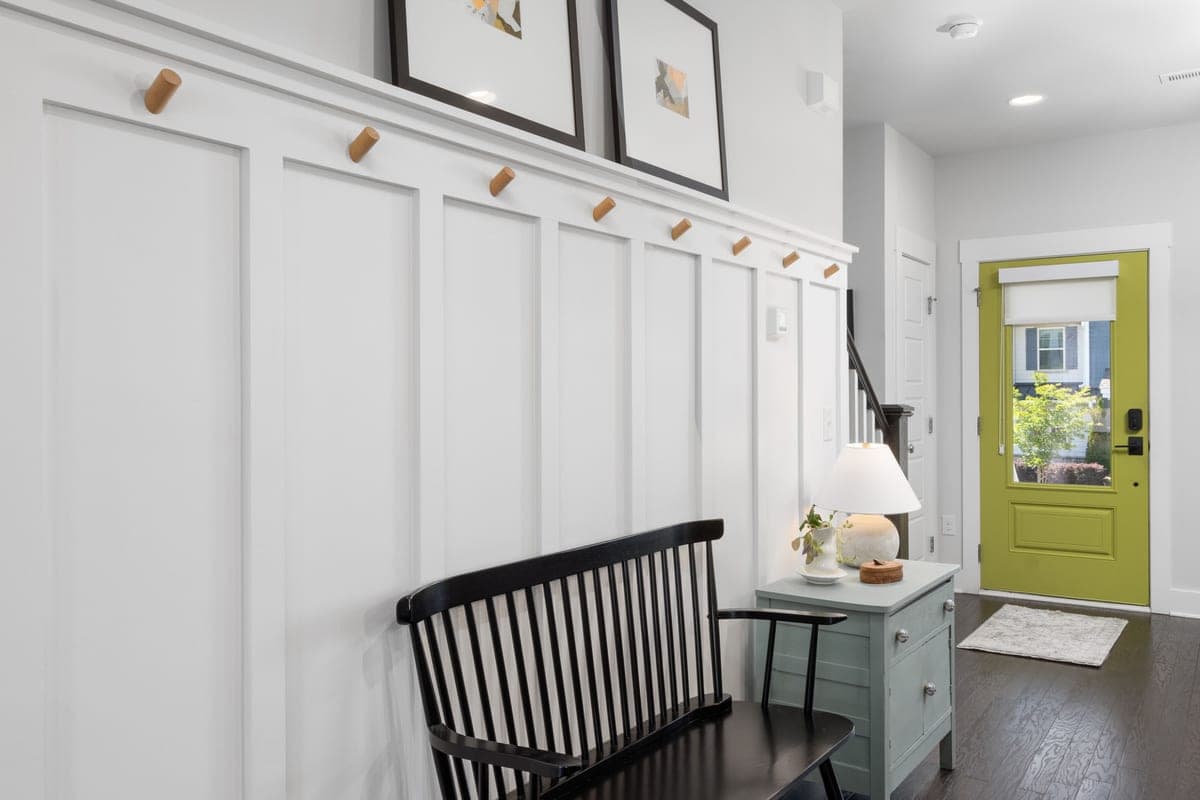
Drop-Zone Setup
Entryway drop zone setup
The physical arrangement that makes the sequence take five seconds instead of thirty.