By Scooter M. · Last updated October 3, 2026
Mud & Mat earns a commission when you buy through the links on this page, at no extra cost to you. It does not change what we recommend, and we publish a skip-this verdict on products we could otherwise earn from. Full disclosure.
Buy outdoor shoe storage on three published numbers: the weight the top is rated for, how far the cabinet projects from the wall, and whether the maker says anything about ventilation. Published loads here run from 260 to 550 pounds where they are stated at all, footprints from 16.5 to 18.5 inches deep, and exactly one of the three publishes built-in ventilation - which is the spec that decides whether damp boots keep or sour.
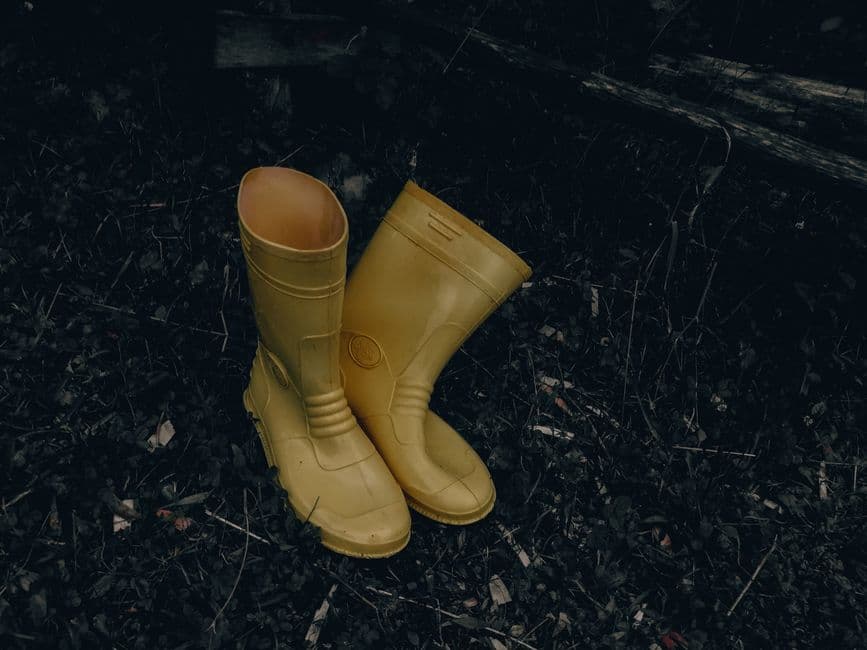
Every other page on this site is about intercepting dirt once it has reached your door. This one is about the case where it never gets that far: the work boots, the garden clogs and the dog-walking wellingtons live permanently outside, and the only floor they touch is the porch. For a household with one genuinely filthy category of footwear, it is the highest-leverage purchase available.
It is also the format with the least honest specification sheet in this niche. Two of the three cabinets we cover are unbranded resin from makers with no track record, sold on photographs. What separates them is what they are willing to put in writing, and on that test they differ enormously.
How we picked
How we picked
- A published weight capacity for the top. This is furniture you sit on - the entire point of a box outside the door is that boots come off before the threshold, and boots come off sitting down. Two of these publish a top load, at 260 and 550 pounds. The third publishes nothing, which means treating the lid as a lid.
- Published ventilation, or the honest admission that there is none. Rain has to stay out and the damp inside a boot has to get out, and those two requirements fight. A sealed resin box full of wet footwear is a humidity chamber. Only one product here publishes a vent, and we weight that heavily.
- Depth off the wall. A porch, a step or a side passage is a walkway before it is a storage location. Published depths here run from 13.38 to 17.32 inches, and none of these cabinets can be wall-fixed, so the footprint is the footprint.
- Whether the listing addresses footwear at all. Shelves, a stated pair count, a mention of boot height. One of the cabinets here is a general-purpose garden store with no shoe features published, and it costs the most.
- Material and weather claims that are specific. 'Weatherproof' on its own is marketing. UV resistance, a named resin, steel reinforcement, an impact-resistant floor and a lock are checkable statements, and we prefer the listings that make them.
We have not physically tested these products. We do not own them, we have no lab, and we do not accept free product. Everything above is compiled from published manufacturer specifications, published care guidance and live retailer data - and we tell you which is which on every claim. How we pick.
The contradiction at the heart of the category
An outdoor shoe cabinet has one job that is easy and one job that is hard. Keeping rain off a pair of boots is easy: any lidded resin box does it. Letting the water already inside those boots escape is hard, and it is the job the category almost entirely ignores.
This is the same argument our open versus closed storage comparison makes about indoor cabinets, and outdoors it is worse rather than better. A sealed plastic box in the sun warms up, the moisture in it evaporates, and it has nowhere to go. By spring the cabinet itself smells, and the smell transfers to everything in it.
There are only two workable answers. Buy the one product here that publishes built-in ventilation, or accept that the cabinet is for dry and dry-ish footwear and give genuinely soaked boots an hour on an open step or a tray first. What does not work is putting a streaming pair of wellingtons into a sealed box and shutting the lid.
Maker-published figures from each product's own retailer listing. 'Not published' means the listing states nothing, not that the product lacks the property.
No column has three good answers in it. The two cabinets built for shoes publish loads and shelves and say nothing about air; the one that publishes ventilation is not a shoe product at all. Pick the compromise that matches your own footwear rather than looking for the one that wins everywhere, because it is not on this list.
Quick picks
Ranked against the criteria below. Tap a row to jump to the full write-up; the price button goes straight to Amazon.
| # | Product | Best for | Score | Price |
|---|---|---|---|---|
| 1 |  DRATO Outdoor Shoe Storage Cabinet Nearly four feet of resin cabinet across three doors, rated at a published 260 lb on top | Boots that never come inside | 7.9/10 | $105.99 - View on Amazon #ad affiliate link · Price as of October 18, 2026 |
| 2 |  KAMABOKO Outdoor Shoe Storage Bench A 550 lb published weight capacity on a resin bench with three shelves behind two barn doors | The most published load for the money | 7.8/10 | |
| 3 |  Keter Velo 30-Gallon Outdoor Cabinet The only box on this page whose maker publishes built-in ventilation Our skip-this pick | Boots that go away damp | 7.6/10 | $67.97 - View on Amazon #ad affiliate link · Price as of October 18, 2026 |
Boots that never come inside
DRATO Outdoor Shoe Storage Cabinet
Nearly four feet of resin cabinet across three doors, rated at a published 260 lb on top - the only one here whose maker says out loud that it takes tall boots.
The premise of outdoor shoe storage is simple and this site has argued it from the beginning: the cheapest way to keep mud out of a house is for the muddy thing never to come in. A weatherproof cabinet by the back door is where the work boots, the garden clogs and the dog-walking wellingtons live permanently, and the only mess they make is outside.
This is the largest shoe-specific option here. Nearly four feet across, three doors, two internal shelves, and a published 260 pound maximum on the top - enough that the lid is a real perch for hauling a boot off rather than a decorative surface. Crucially, DRATO is the only maker on this page whose listing says the interior takes large and tall boots; the others quote pair counts and leave the shaft question open.
Read the published dimensions with your eyes open. The listing gives 46.85 by 17.32 by 17.91 inches with the largest number labeled as depth, which cannot be right for a cabinet that stands against a wall. Treat 46.85 as the width and plan your wall accordingly. That sort of label slip is common in this category and it is worth catching before delivery day.
The real limitation is the one every sealed cabinet shares. Nothing about ventilation is published, so a boot that goes in soaked will still be soaked tomorrow, and an unvented plastic box in the sun is a humid box. Give the boots a session on an open tray or a dry hour on the step before they go away, or buy the ventilated option on this page instead.
What works
- The widest cabinet here at nearly four feet, and the only listing that names tall boots specifically
- 260 lb published top load makes the lid a genuine seat for pulling boots off outside
- Resin body is stated to keep contents dry in an uncovered doorway, which is where this product has to live
What does not
- No ventilation is published, and a sealed box is the wrong place for a boot that is still wet
- The published dimension order is odd - 46.85 is plainly the width rather than the depth - so measure against the largest figure
- 22.9 lb of empty cabinet is light for something left on an exposed porch in wind; nothing published about anchoring
The most published load for the money
KAMABOKO Outdoor Shoe Storage Bench
A 550 lb published weight capacity on a resin bench with three shelves behind two barn doors - the highest stated load on this page, by a distance, at the lower end of the price range.
Outdoor shoe storage gets sat on. That is not a misuse - it is the point, because the reason you put the cabinet outside is so that boots come off before the threshold, and boots come off far more easily sitting down. So the top load rating matters more here than it does on an indoor cabinet, and this one publishes 550 pounds.
That figure is more than double anything else on this page and it removes the usual worry about a plastic bench entirely. Behind the two barn doors are three shelf levels inside a published 17.7 inches of height, which is the tightest shelf spacing here - good for shoes, and the reason the maker's stated capacity of eight pairs is believable rather than optimistic.
Depth is the cost. At 16.5 inches it takes a real bite out of a porch or a landing, and nothing in this category is designed to be fixed to a wall. On a narrow step that is the difference between a usable path and a squeeze, which is the same arithmetic our small-space storage guide applies indoors.
Two gaps in the listing. No item weight is published, and for a resin box that lives outdoors in weather that is exactly the number you want before a gale. And there is nothing about ventilation, which on a sealed cabinet full of damp footwear is the thing most likely to disappoint. Put wet boots on the step for an hour first, then in here.
What works
- 550 lb is more than double the next published figure here - as a seat it is not in question
- Three shelf levels in a 17.7 inch height is the densest published shelving on this page
- States a pair count and names bulky boots, so the capacity claim is at least specific
What does not
- No ventilation published, on a product designed to hold footwear that arrives wet
- 16.5 inches deep is a lot of porch or landing to give up, and nothing here is wall-fixable
- No item weight is published, which for something that lives outdoors in wind is the figure you want
Boots that go away damp
Keter Velo 30-Gallon Outdoor Cabinet
The only box on this page whose maker publishes built-in ventilation - which for footwear that is put away before it is properly dry is the specification that decides whether it smells in March.
Skip this one
It is the only cabinet here that publishes built-in ventilation, and we still would not buy it for shoes. It is a deck box: thirty gallons of open interior with no shelves at all, so footwear goes in as a heap and comes out unpaired. It publishes no weight capacity, so the lid is a lid rather than a seat. And thirty gallons sounds more generous than it is once bulky winter boots go in standing up. Buy it for cushions and garden kit, where an open vented box is exactly the right thing. If what you are storing is footwear, the two shoe-specific cabinets above publish a load rating and give you shelves to keep pairs together.
Outdoor shoe storage has to solve two problems that pull in opposite directions. Rain has to stay out, which argues for a sealed box. And the damp already inside a boot has to get out, which argues for exactly the opposite. Every shoe-specific cabinet on this page answers the first and ignores the second. Keter publishes built-in ventilation, and that is why it is here.
The construction is the other reason. Steel reinforcement in the body and the lid is stated on the listing, which none of the resin shoe cabinets mention, and at 12.3 pounds the whole thing is light enough to carry off the porch when the season ends. It locks, it stacks, and the wood-look finish will not look out of place beside a back door.
What it is not is a shoe cabinet. There are no shelves, so boots and shoes go in as a heap, pairs separate and the one you want is at the bottom. Thirty gallons is a reasonable volume for cushions and garden tools and a tight one for four pairs of bulky winter boots standing upright.
There is also no published weight capacity anywhere on the listing, so unlike the shoe benches here the lid is not a rated seat. Treat it as storage rather than furniture. For a household whose boots regularly go away before they are dry, that is still the right trade - our deodorizer page exists because of what happens to footwear stored damp in a sealed space.
What works
- Published ventilation is unique on this page and it is the difference between storing boots and fermenting them
- Steel reinforcement in both body and lid, which none of the shoe-specific cabinets here mention
- Lockable and stackable, and light enough at 12.3 lb to move off the porch for the summer
What does not
- It is a deck box, not a shoe cabinet - no shelves, so footwear goes in as a pile rather than in pairs
- No weight capacity is published, so treat the lid as a lid rather than a seat
- 30 gallons sounds generous and is not, once bulky winter boots go in standing up
Where it goes, and what the weather does to it
A covered position roughly doubles the useful life of anything left outside, and it changes what you need to buy. Under a porch roof or a deep overhang, the lid is barely tested and a cheaper cabinet is fine. Fully exposed to driving rain and a winter of freeze and thaw, the seal around the lid is doing real work and the UV claim matters, because resin left in full sun for three summers without UV stabilizer goes chalky and brittle.
Wind is the other consideration nobody plans for. An empty resin cabinet weighs between twelve and twenty-three pounds where the weight is published at all, and one of the three publishes no weight. None of them publishes an anchoring method. A cabinet against a wall, in a corner, with boots in it, stays put; a light empty one standing alone on an exposed deck does not.
If the space in question is a garage rather than a porch, the constraints change again - no weather, but concrete dust, oil and temperature swings instead. That is a different set of products and we cover it in best garage shoe storage.
How many pairs actually fit
The two shoe-specific cabinets here publish pair counts: up to 8 pairs for the 31.7-inch bench and no figure at all for the 46.85-inch one, which instead says it takes large and tall boots. Neither publishes an internal shelf height, so the useful way to read those numbers is that they assume ordinary shoes lying flat. Put four pairs of bulky winter boots in and the count halves, the same way it does in an indoor cubby bench.
The general-purpose box publishes volume instead - 30 gallons - which is a harder number to translate. Volume assumes you fill the space, and footwear stored as a heap is footwear you dig through. If pairs matter more than raw volume, the cabinets with shelves are the ones to compare, and the shelf count is published for both: two and three.
What nobody publishes about cold
Every cabinet here publishes UV resistance in some form, because sun is the failure everybody knows about. Not one publishes a temperature range. That matters in a region with hard frosts, because the lid hinge and the door catch are the thinnest sections of a molded resin shell and they are what get levered first thing on a cold morning. Treat cold-weather durability as unpublished rather than assured, and open a frozen lid gently rather than with a boot.
What outdoor storage does not fix
It is worth being clear that this is not a replacement for the rest of the entry. Somebody still walks from the cabinet to the door in socks or house shoes, the dog still comes through, and every household has footwear that has to come inside. Moving the dirtiest pair outside removes the worst input; it does not remove the need for a mat.
The honest framing is that outdoor storage is stage zero of the sequence in our layered entryway defense guide - it stops material before the scraping stage rather than instead of it. Households that buy a cabinet and then remove the mats usually put the mats back.
Questions people ask
Can you really store shoes outside all year?
How much weight can an outdoor shoe bench hold?
Will an outdoor shoe cabinet blow over?
Do outdoor shoe cabinets need ventilation?
How deep are outdoor shoe cabinets?
Is outdoor storage better than a boot tray?
Sources
- DRATO Outdoor Shoe Storage Cabinet - Amazon detail page (46.85 x 17.32 x 17.91in, 22.9 lb, 260 lb maximum, 3 doors and 2 shelves, resin, stated to store tall boots)
- KAMABOKO Outdoor Shoe Storage Cabinet - Amazon detail page (31.7 x 16.5 x 17.7in, 550 lb maximum weight capacity, 3 shelf levels, 2 barn doors, up to 8 pairs including bulky boots)
- Keter Velo 30 Gallon Outdoor Storage Cabinet - Amazon detail page (24.5 x 18.5 x 24.8in, 30 gallons, 12.3 lb, resin with steel reinforcement, built-in ventilation, lockable, stackable)
Next stage
The whole system
Storing boots outside is stage zero. What still gets through is what the mats are for.
Keep goingAbout the author
Scooter M.
An enthusiast who is genuinely into this. I read the manuals, compile the published specs, and do the math on door clearances. No lab coat, no test bench, and nothing here is a product I have used - which is exactly why every claim carries a source.
Published by Slate Mill Group, with the Mud & Mat team. Published September 21, 2026; last updated October 3, 2026. Editorial policy.
Read next
Best Garage Storage
Best garage shoe storage
Published depths from 7.9 inches and capacities to 50 pairs, ranked on what survives an unheated space - plus the engineered-wood one that will not.
Best Boot Tray
Best boot trays for entryways
Wall depth, a ridged base and enough weight to stay put - the three things that separate a tray from a puddle.
The System
Layered entryway defense
Scrape, absorb, contain, store - the four stages, and what each one can and cannot do.
Best Deodorizer
Best shoe deodorizers
Named actives, stated service life and whether it reaches up a boot - five deodorizers compared, including the one that publishes no ingredient at all.