By Scooter M. · Last updated September 13, 2026
Mud & Mat earns a commission when you buy through the links on this page, at no extra cost to you. It does not change what we recommend, and we publish a skip-this verdict on products we could otherwise earn from. Full disclosure.
Buy all-metal, buy on published depth, and expect the capacity figure to be roughly halved by boots. A garage cycles between cold and humid every time the weather turns, so engineered wood swells and delaminates and unfinished steel rusts - powder-coated metal is the only construction that reliably survives. Published depths here run from 7.9 to 12 inches, which decides whether the rack clears a car door, and capacity claims of 25 to 50 pairs all assume shoes rather than work boots.
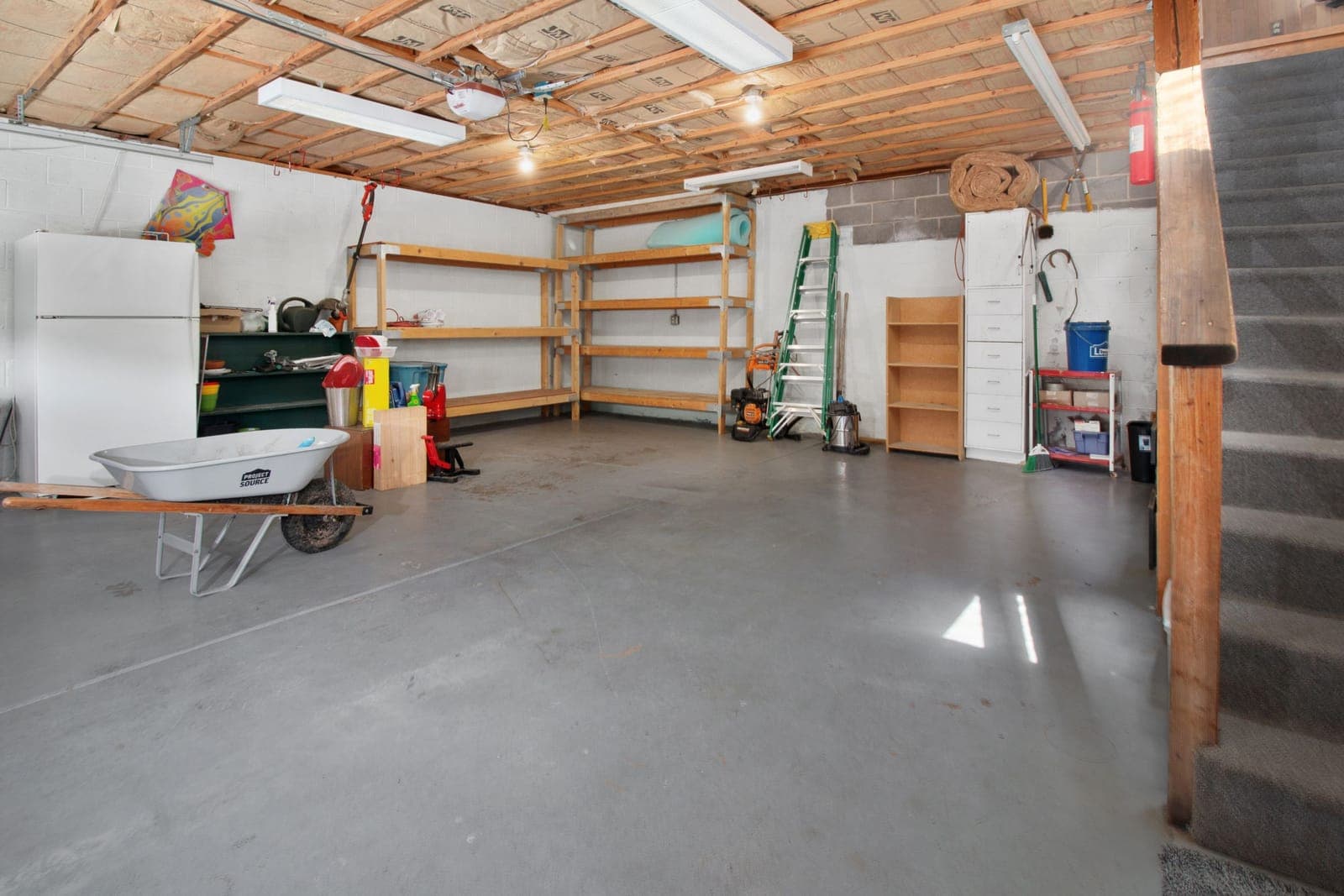
In a large number of American houses the front door is ceremonial and the real entrance is the door from the garage into the kitchen or the mudroom. That is where the dirt arrives, where the boots come off, and where the storage should be - and almost every shoe-storage product is designed for a hallway instead.
The difference is not size. It is that a garage is not climate-controlled. It swings from freezing to humid, there is dust off a car and grit off a driveway, and the footwear arriving is the filthiest in the house. Furniture that is perfectly good in a hall gets destroyed there in two winters.
How we picked
How we picked
- Material against an unheated space, first. Engineered wood swells at the edges when a garage cycles through condensation and it does not recover. Powder-coated steel does not care. We rank on construction before capacity, which is the reverse of how this category is normally sold.
- Published depth, because a car door swings. A garage rack usually lives on the wall a vehicle parks beside, and the clearance between the rack face and the car is what decides whether it survives being reversed past. Depths here run from 7.9 to 12 inches.
- Capacity read honestly. Every maker states a pair count and every one of those counts shoes. Work boots are taller and wider; assume roughly half. We report the published figure and we say this each time rather than repeating the number as fact.
- Airflow, because garage footwear arrives wet. Open shelving and mesh let grit and meltwater fall through and air reach the sole. Solid shelves trap both under the shoe. Dust is the price of that airflow and we state it rather than pretending otherwise.
- Whether the frame takes abuse. Boots get dropped onto garage shelving rather than placed on it, and bikes, bins and car doors catch the frame. Square-tube steel survives that; folded sheet and wire do not.
We have not physically tested these products. We do not own them, we have no lab, and we do not accept free product. Everything above is compiled from published manufacturer specifications, published care guidance and live retailer data - and we tell you which is which on every claim. How we pick.
What a garage does to furniture
Three things, and they are all moisture. The first is condensation: an unheated garage warms up faster than the concrete slab beneath it, so when mild air arrives after a cold night, water condenses on every cold surface including the underside of your shelving.
The second is the slab itself. Concrete wicks ground moisture continuously unless it has an intact vapor barrier under it, and anything standing on it with an absorbent foot sits in that. The third is the footwear, which arrives wet and then releases that water into an enclosed space with poor ventilation.
Metal shrugs all three off provided its coating is intact. Engineered wood - particleboard or MDF with a laminate face - absorbs through cut edges and screw holes, swells, and delaminates permanently. That is the single most reliable prediction anyone can make about garage furniture, and it is why the material column matters more here than anywhere else on this site.
Published figures. Capacity is the maker's own pair count, which assumes shoes.
Quick picks
Ranked against the criteria below. Tap a row to jump to the full write-up; the price button goes straight to Amazon.
| # | Product | Best for | Score | Price |
|---|---|---|---|---|
| 1 |  KEETDY 5-Tier Heavy Duty Shoe Rack for Garage Thicker square-tube metal at a published 7.9 inches deep, rated by the maker for 25 pairs of men's boots and sold explicitly for a garage rather than adapted to one. | Boots on a garage wall | 8.6/10 | $38.99 - View on Amazon #ad affiliate link · Price as of October 18, 2026 |
| 2 |  Nunsino 8-Tier Large Metal Shoe Rack, 50 Pairs Fifty pairs across eight tiers in a published 11.4 by 45 inch footprint | Sheer volume on one wall | 8.4/10 | $89.99 - View on Amazon #ad affiliate link · Price as of October 18, 2026 |
| 3 |  ROJASOP 8-Tier Shoe Rack with 15 Hooks Eight tiers for 26 to 32 pairs with fifteen hooks along the frame, so the leashes, helmets and bags that normally end up on the floor have somewhere to go. | Shoes and the gear that comes with them | 8.1/10 | |
| 4 |  HOOBRO 5-Tier Shoe Rack with Adjustable Mesh Shelves Adjustable mesh shelves on a metal and engineered-wood frame Our skip-this pick | Letting the dirt fall through | 7.3/10 |
Boots on a garage wall
KEETDY 5-Tier Heavy Duty Shoe Rack for Garage
Thicker square-tube metal at a published 7.9 inches deep, rated by the maker for 25 pairs of men's boots and sold explicitly for a garage rather than adapted to one.
A garage is a different storage problem from a hallway and the difference is not size - it is that nothing in a garage is climate-controlled. Temperature swings, damp concrete, dust off a car and footwear that arrives genuinely filthy. Furniture that suits a hall gets ruined in a garage, and this rack is one of the few sold the other way round.
The construction claim is the one that matters: thicker metal square tubes rather than the folded sheet or wire most cheap racks use. Square tube resists the specific abuse a garage delivers, which is boots being dropped onto a shelf rather than placed on it, and a bike or a bin catching the frame.
Published at 7.9 inches deep, it is also shallower than most indoor shoe racks - useful because a garage rack usually has to fit between a wall and a car door arc. Five tiers stack, so the vertical space above stays available.
The capacity figure deserves a caveat we would apply to every rack in this category: 25 pairs assumes shoes. Work boots are taller and wider and you will get materially fewer on it. And open shelving means garage dust settles on everything, which is the price of the airflow that keeps damp boots from souring - the same trade set out in open vs closed shoe storage.
What works
- 7.9 inches deep is shallower than most indoor shoe racks, let alone garage ones
- Square-tube steel rather than folded sheet, which is what survives boots being thrown at it
- Stackable, so the wall height above it is usable later
What does not
- 25 pairs is the maker's count using shoes, not 25 pairs of work boots
- Open metal shelving offers no protection from garage dust, which is the trade for airflow
- Nothing published about the finish, which is the spec that decides rust in an unheated space
Sheer volume on one wall
Nunsino 8-Tier Large Metal Shoe Rack, 50 Pairs
Fifty pairs across eight tiers in a published 11.4 by 45 inch footprint - the highest capacity we have compiled, and it needs a wall to match.
This is the rack for the household that has genuinely run out of room: eight tiers, forty-five inches wide, published for up to fifty pairs. In a garage that is often exactly the right answer, because a garage wall is the one surface in a house nobody is protecting for looks.
The geometry is worth noticing. At 11.4 inches deep and 56.7 inches tall it is doing what a garage rack should - claiming height rather than floor. A rack this tall against a wall costs you under a foot of depth and gives back what would otherwise be a stack of shoes on concrete.
Powder coating is the correct finish for the location. An unheated garage cycles through condensation every time the weather turns, and bare or lacquered steel in that environment eventually shows it.
Two honest qualifications. The fifty-pair figure is a shoe count - boots are taller and wider and will roughly halve it, which is the same caveat that applies to every capacity claim in this category. And a five-foot open rack loaded top-heavy with footwear should be against a wall, not standing free in a space where a car door swings.
What works
- Fifty pairs is genuinely a household plus overflow, on one footprint
- Powder coat is the right finish for an unheated space
- Nearly five feet tall, so it converts wall height into storage rather than floor
What does not
- 45 inches wide and 11.4 deep is a serious commitment of garage wall
- The 50-pair figure is shoes; boots will roughly halve it
- At 56.7 inches tall and loaded high, it wants to be against a wall rather than free-standing in traffic
Shoes and the gear that comes with them
ROJASOP 8-Tier Shoe Rack with 15 Hooks
Eight tiers for 26 to 32 pairs with fifteen hooks along the frame, so the leashes, helmets and bags that normally end up on the floor have somewhere to go.
The hooks are why this one is here. A garage entry is never only shoes - it is shoes plus dog leads, bike helmets, hi-vis, tote bags and the gloves somebody will want tomorrow. Fifteen hooks along the frame means that material has a home other than the roof of the car.
The capacity claim is also the most honest on the page, and that is worth rewarding: 26 to 32 pairs, published as a range. Every other maker in this category picks the flattering end and states it as fact. A range tells you the truth, which is that it depends entirely on what shape the footwear is.
Adjustable tiers matter for the same reason. A fixed 8-tier rack set at sneaker height is useless for boots; being able to give up one shelf to make a tall bay is what makes a rack work for a household that owns both.
Against the other garage racks it gives up depth - twelve inches versus 7.9 for the KEETDY - and it mixes plastic connectors into a metal frame, which is where this class of product usually fails. In a garage where the rack takes knocks, all-metal is the more durable purchase; if the hooks are what you need, this is the one that has them.
What works
- Fifteen hooks turn a shoe rack into a garage drop zone - leads, helmets, bags, hi-vis
- Capacity published as a RANGE, which is more honest than a single flattering number
- Adjustable tiers, so one shelf can be set tall enough for boots
What does not
- 12 inches deep is the deepest of the garage racks here
- Metal and plastic rather than all-metal; the plastic connectors are the weak point
- Hooks on a frame loaded with shoes make the whole thing easier to snag walking past
Letting the dirt fall through
HOOBRO 5-Tier Shoe Rack with Adjustable Mesh Shelves
Adjustable mesh shelves on a metal and engineered-wood frame - the open-grid surface is what lets grit and meltwater drop through instead of collecting under the shoe.
Skip this one
Skip this one for a damp garage specifically, and buy it for a covered porch, a utility room or an entryway instead. The mesh shelving is genuinely the best surface here for footwear that arrives wet - grit and meltwater drop through instead of sitting under the sole - but the frame uses engineered wood, and engineered wood in an unheated space that cycles through condensation every time the weather turns is the one material on this page that will swell and delaminate. In a heated indoor spot it is an excellent rack. In the place this page is about, the all-metal racks are the safer buy.
Mesh is the right shelf surface for footwear that arrives wet, and almost nothing in this category uses it. A solid shelf traps whatever comes off a sole underneath the shoe, where it stays damp; an open grid lets grit and meltwater fall straight through and lets air at the sole from both sides.
The shelves also adjust and detach, which is the feature that decides whether a five-tier rack is usable for a household that owns boots as well as sneakers. Pull one shelf and you have a bay tall enough for a pair of wellingtons; leave them all in and you have twenty pairs of shoes.
At 31.8 inches tall it is also the low option here, which sounds like a disadvantage and is occasionally exactly what a garage needs - it fits under a window, a workbench overhang or an existing wall shelf where the five-foot towers cannot go.
The reservation is the material. A metal frame with engineered-wood elements is fine indoors and questionable in a space that swings between cold and humid all winter. Engineered wood swells at the edges and then never recovers. Put this one in a utility room or an entryway - where it is a very good rack - and put metal in the garage.
What works
- Mesh shelves let grit and water fall through rather than pooling under the sole
- Shelves adjust and detach, so a bay can be opened up for boots
- Lower profile at 31.8 inches - it fits under a garage window or a wall shelf
What does not
- Engineered wood in an unheated garage is the material most at risk from damp
- Whatever falls through the mesh lands on the floor under the rack
- 16-20 pairs is modest next to the 8-tier towers
Measure against the car, not the wall
The mistake people make in a garage is measuring the wall. The number that matters is the gap between the rack face and the car when the car is parked where it actually gets parked - and then whether a door still opens into that gap without touching.
A 7.9-inch rack and a 12-inch rack differ by four inches, which sounds trivial and is roughly the margin between a door that clears and a door that does not. Do the measurement with the car in position, open the door to the angle somebody would actually use, and mark the floor.
The same arithmetic we run for narrow hallways applies here with a more expensive failure mode: in a hall an over-deep unit is an inconvenience, and in a garage it is a door ding.
Capacity claims and boots
Every capacity figure in this category counts shoes laid flat, and the one thing a garage rack is guaranteed to hold is boots. A work boot is taller than a sneaker and considerably wider at the ankle, which means fewer pairs per shelf and often a shelf that will not close over them at all.
Assume roughly half the stated figure for boots, and prefer racks with adjustable tiers so one bay can be opened tall. One rack here publishes its capacity as a range rather than a single number, which is the more honest way to state it and worth rewarding.
Open shelving, dust, and the trade you cannot avoid
Every rack here is open, and in a garage that is deliberate. Wet footwear in a closed cabinet in an unventilated space does not dry - it stays damp and the cabinet takes on the smell, which is the same argument this site makes in open vs closed shoe storage and applies with more force where the air is already humid.
The price is dust. Garages are dusty in a way houses are not - brake dust, driveway grit, whatever comes off a lawnmower - and it settles on open shelving and inside the shoes on it. There is no version of this where you get airflow and cleanliness both.
Our position is that airflow wins, because damp footwear is a smell and a material problem while dust is a wipe. If the shoes on the rack are seasonal rather than in daily use, a cover or a closed cabinet indoors is the better home for them.
The door into the house is still the weak point
Garage storage solves where the footwear lives. It does not solve the thirty seconds between taking a boot off and getting through the internal door, which is when socks cross a concrete floor covered in driveway grit and then walk into a kitchen.
That internal threshold deserves the same treatment as a front door and almost never gets it. A mat on the garage side to take the grit, and an absorbent mat on the house side for whatever is still on a sock - the same two-position logic set out in indoor vs outdoor door mats, applied to a door most people do not think of as an entrance.
It is also the cheapest part of the whole arrangement. A rack is a considered purchase; two mats at that threshold cost a fraction of it and stop more dirt than the rack ever will.
Buy it this way
- All-metal, powder coated. Engineered wood in an unheated garage swells and does not come back.
- Measure to the car door, not the wall - four inches of rack depth is the usual margin.
- Halve the stated capacity if you store boots, and prefer adjustable tiers so one bay opens tall.
- Go tall rather than wide. A garage wall has height available and floor is what the car wants.
- Keep a tray by the door for today's wet boots; the rack is for dry footwear.
If the space in question is a porch rather than a garage, the constraints change from dust and temperature swings to rain, UV and wind. Best outdoor shoe storage covers the weatherproof cabinets, with the finding that only one of them publishes any ventilation at all.
Questions people ask
What is the best shoe storage for a garage?
Will a normal shoe rack survive in a garage?
How many pairs does a garage shoe rack really hold?
Should garage shoe storage be open or closed?
How much depth do I need to clear a car door?
Can I put wet boots straight on a garage rack?
Sources
- KEETDY 5-Tier Heavy Duty Shoe Rack - Amazon detail page (7.9 x 31.1 x 31.9in, 5 stackable tiers, 25 pairs, thicker metal square tubes, rated for garage and outdoor use)
- Nunsino 8-Tier Shoe Rack - Amazon detail page (11.4 x 45 x 56.7in, 8 tiers, up to 50 pairs, powder-coated metal, stackable)
- ROJASOP 8-Tier Shoe Rack - Amazon detail page (12 x 35 x 56in, 8 adjustable tiers, 26-32 pairs, 15 hooks, stated rust proof)
- HOOBRO 5-Tier Shoe Rack - Amazon detail page (11.8 x 29.5 x 31.8in, adjustable detachable mesh shelves, 16-20 pairs, metal and engineered wood)
Next stage
The door into the house
Whatever the garage misses arrives at the internal door. That door needs a mat.
Keep goingAbout the author
Scooter M.
An enthusiast who is genuinely into this. I read the manuals, compile the published specs, and do the math on door clearances. No lab coat, no test bench, and nothing here is a product I have used - which is exactly why every claim carries a source.
Published by Slate Mill Group, with the Mud & Mat team. Published September 13, 2026; last updated September 13, 2026. Editorial policy.
Read next
Best Shoe Rack
Best entryway shoe racks
Depth in inches, pairs per foot of wall, and whether shoes can dry - ranked for a hallway you still need to walk down.
Best for Small Spaces
Best small-space shoe storage
Published depths from 9.4 inches, pairs per square foot of floor, and why vertical beats clever in a tight entry.

Open or Closed
Open vs closed shoe storage
Concealment and ventilation are opposites. The fix is a sequence, not a product.
Best Large Tray
Best large boot trays
Length versus wall depth, on published dimensions - the two things a big tray can buy, and the one that suits your mess.