By Scooter M. · Last updated August 31, 2026
Mud & Mat earns a commission when you buy through the links on this page, at no extra cost to you. It does not change what we recommend, and we publish a skip-this verdict on products we could otherwise earn from. Full disclosure.
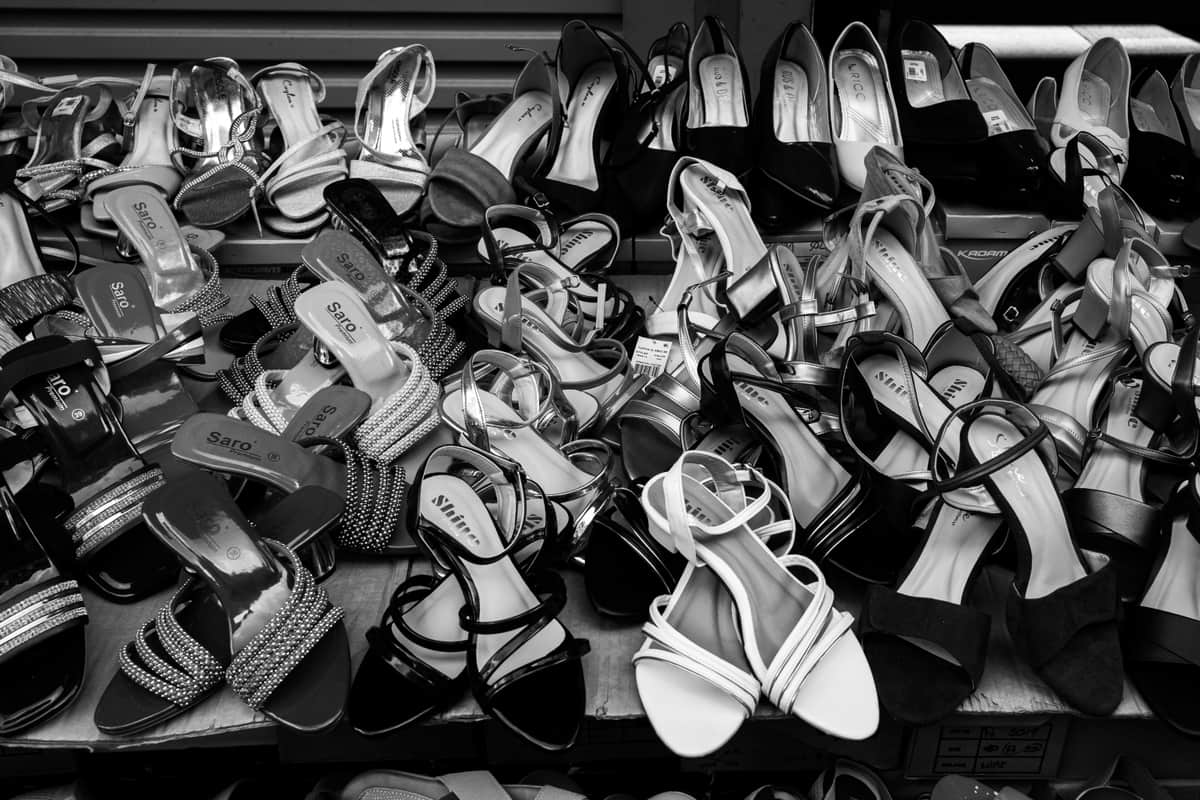
Mats and trays deal with what is on the shoe. A rack deals with the shoe, and it is the stage most households skip - which is why the mat is doing its job perfectly and the hallway still looks like a disaster.
There is a functional argument too, not just a cosmetic one. Shoes in a heap by the door sit sole-to-sole and do not dry, and a damp pile in an unventilated hallway is where entryway smell comes from. A rack that lets air at the shoes is doing dirt-defense work.
Quick picks
Ranked against the criteria below. Tap a row to jump to the full write-up; the price button goes straight to Amazon.
| # | Product | Best for | Score | Price |
|---|---|---|---|---|
| 1 |  VASAGLE 10-Tier Shoe Rack Organizer Thirty pairs from a 24.8-inch wall run at 12.6 inches deep | Sheer volume | 7.9/10 | $119.99 - View on Amazon #ad affiliate link · Price as of October 18, 2026 |
| 2 |  Simple Houseware 3-Tier Shoe Rack 11.2 x 26.8 x 20.9 inches, nine to sixteen pairs, a metal frame and nothing else | The cheapest thing that works | 7.6/10 | $21.87 - View on Amazon #ad affiliate link · Price as of October 18, 2026 |
| 3 |  SONGMICS 3-Tier Bamboo Shoe Rack Bench Published at 11.3 x 27.6 x 17.8 inches and rated to 286 lb | Sitting down to take boots off | 8.4/10 | |
| 4 |  VASAGLE HAINS Narrow Shoe Storage Cabinet 9.4 inches deep and rated for 14 to 16 pairs, with a published anti-tip kit in the box | Narrow hallways | 8.3/10 | $85.99 - View on Amazon #ad affiliate link · Price as of October 18, 2026 |
| 5 |  Simple Houseware Entryway Shoe Rack Bench A seat and two shelves at the bottom of the price band, with no published load rating Our skip-this pick | Budget bench | 6.2/10 | $35.87 - View on Amazon #ad affiliate link · Price as of October 18, 2026 |
Sheer volume
VASAGLE 10-Tier Shoe Rack Organizer
Thirty pairs from a 24.8-inch wall run at 12.6 inches deep - open shelving that goes up instead of out, with everything on display as the price.
If the constraint is simply that there are too many shoes and not enough floor, this is the arithmetic answer. Thirty pairs, 24.8 inches of wall, 12.6 inches of depth. Per pair stored it is comfortably the cheapest thing in this comparison and nothing else is close.
Open shelving has one genuine functional advantage over every cabinet here, and it is the one this site cares about: air. A damp shoe on an open shelf dries. The same shoe in a closed flip-drawer cabinet stays damp, and a hallway full of damp shoes in a closed cupboard is where entryway smells come from. If your household comes home wet regularly, open shelving is not a compromise - it is the correct choice.
The height is the thing to think about honestly before buying. At 73.6 inches the top two tiers are above eye level for most people and above reach for some. In practice those tiers become long-term storage - the shoes you wear twice a year - rather than daily slots. That is fine if you plan for it and annoying if you do not.
And it hides nothing. Thirty pairs of shoes on ten open shelves is thirty pairs of shoes you can see from the front door. If the reason you are shopping is that the hallway looks chaotic, this will organize the chaos without concealing it, and a flip-drawer cabinet is the product that actually addresses what is bothering you.
What works
- Thirty pairs from under 25 inches of wall is the highest raw capacity here
- Open shelves let damp shoes dry, unlike any closed cabinet
- Cheapest per pair stored of anything in this comparison
What does not
- Over six feet tall - top tiers are out of reach for many people
- Everything is visible; this is a storage solution, not a tidiness solution
- Tall and light means wall anchoring is mandatory, not advisory
The cheapest thing that works
Simple Houseware 3-Tier Shoe Rack
11.2 x 26.8 x 20.9 inches, nine to sixteen pairs, a metal frame and nothing else - the honest minimum, and often all a small entry actually needs.
There is a version of this problem that does not need furniture, and this is the product for it. A metal frame, three tiers, nine to sixteen pairs depending on what you own, and a published footprint of 11.2 by 26.8 by 20.9 inches. It costs a fraction of the cabinets above and in a small entry it is frequently sufficient.
The height is quietly its best feature. At under twenty-one inches it slides beneath a window sill, beneath a wall-mounted coat rail, or under a console table - the places in an entryway that are otherwise dead space. Tall storage buys capacity; short storage buys the ability to put it somewhere.
Metal and open means it tolerates a wet hallway indefinitely. Nothing swells, nothing traps damp, and a hose or a wipe is the whole maintenance routine. That is a real advantage over anything made of engineered wood in the splash zone of a back door.
Two honest limits. Wire shelves let narrow children's shoes tip and fall through, which is irritating daily rather than occasionally - the grid variant handles that better. And the top is not a seat: it is not rated, it is not padded, and it will bend. If you want somewhere to sit while boots come off, that is a bench, and it is a genuinely different product.
What works
- Cheap enough to be a non-decision, and it does the basic job properly
- Under 21 inches tall, so it fits under a window or a coat rail
- Metal and open, so damp shoes dry and nothing swells
What does not
- Wire shelves let small shoes tip through - not ideal for children's shoes
- The flat top is not a seat and is not rated as one
- No concealment at all
Sitting down to take boots off
SONGMICS 3-Tier Bamboo Shoe Rack Bench
Published at 11.3 x 27.6 x 17.8 inches and rated to 286 lb - a bench you can genuinely sit on, which is the entire point and the thing most shoe benches quietly are not.
Most furniture sold as a shoe bench is a shoe rack with a flat top. The distinction is not pedantic: a rack with a flat top will hold a bag, and it will fail the first time an adult sits down hard on it to pull a wet boot off. SONGMICS publishes a static load rating of 286 pounds for this bench, which is the specification that tells you which of the two you are buying.
That matters because sitting down is the behavior change that actually keeps mud out of a house. People take boots off standing in the hall, hopping, holding a wall, and the boot ends up somewhere other than where you wanted it. Give them somewhere to sit within reach of the door and the boots come off at the door.
Bamboo is the right material for this position for an unglamorous reason: hallways get damp, and particle board swells irreversibly the first time it gets properly wet. Bamboo tolerates humidity, and the open-tier construction lets wet shoes dry instead of sealing moisture into a closed cabinet - which is the trade you make when you choose a bench over a closed shoe cabinet.
Two limits worth knowing before you measure. The standard bench is 11.3 inches deep, and large men's boots will overhang that; the wider 42.9-inch version in the same line gives you more length but not more depth. And this is open storage - the shoes are on display. If a visible row of shoes is the thing you are trying to fix, this is the wrong category and a cabinet is the right one.
What works
- A published load rating - most shoe benches publish none, and most are not seats
- Bamboo tolerates a damp hallway better than particle board, which swells and never recovers
- Open tiers let wet shoes dry instead of sealing damp in
What does not
- Open shelving means the shoes are visible - this is storage, not concealment
- 11.3 inches deep is tight for large men's boots, which will overhang
- Bamboo marks if water is left standing on it
Narrow hallways
VASAGLE HAINS Narrow Shoe Storage Cabinet
9.4 inches deep and rated for 14 to 16 pairs, with a published anti-tip kit in the box - the cabinet for a hallway that cannot spare a foot of floor.
Depth is the specification that decides whether entryway furniture is possible at all. A hallway you can still walk down with a cabinet in it is usually a hallway with under twelve inches to spare, and most shoe furniture is fifteen or more. At 9.4 inches, this cabinet fits where the alternatives simply do not.
The flip-drawer mechanism is how it gets there: shoes sit at an angle inside a shallow panel that tips forward, rather than sitting flat on a deep shelf. That geometry is also the limitation, and VASAGLE is upfront about it - fourteen to sixteen pairs up to about a US 11. Boots do not fit. Winter boots really do not fit. If boots are the problem you are solving, this is the wrong product and an open bench or a boot tray is the right one.
Two published numbers deserve attention because most makers omit them: a 15 pound maximum top load and 11 pounds per interior shelf. That top figure rules out the obvious use - dumping a bag of shopping or a heavy plant on it - and it is worth knowing before rather than after. The included anti-tip wall-mount kit is a genuine plus on a forty-inch-tall, nine-inch-deep cabinet; that footprint is tippy by geometry, and having the hardware in the box makes it likely you will actually fit it.
The real trade with any closed cabinet is moisture. Sealing a wet shoe into a cupboard is how a hallway starts smelling. Closed storage is for dry shoes; wet ones need a tray or an open shelf first. That sequence - contain, dry, then store - is the whole logic of our layered defense guide.
What works
- 9.4 inches deep is genuinely narrow - it fits hallways that reject normal furniture
- Publishes both capacity and load limits, including per-shelf
- Anti-tip kit is included rather than sold separately, which for a 40-inch-tall cabinet matters
What does not
- Flip drawers are shallow - boots and high-tops do not fit, only shoes up to about US 11
- 15 lb top load means it is not a place to put a heavy plant or a bag of shopping
- Closed storage traps damp - wet shoes should dry before they go in
Budget bench
Simple Houseware Entryway Shoe Rack Bench
A seat and two shelves at the bottom of the price band, with no published load rating - which is precisely the specification a bench needs and this one does not have.
Skip this one
Skip this one if anyone in the household will sit on it hard. Simple Houseware publishes no static load rating for this bench, and a bench with no load rating is a rack with a cushion on it until proven otherwise. SONGMICS publishes 286 lb for its bamboo bench and 350 lb for the cushioned one, at a modest step up in price. When the specification that defines the product category is the one the maker declines to state, that absence is the finding. Buy it as a shoe rack that happens to have a padded top and you will be satisfied; buy it as a seat and you may not be.
This is the explicit non-recommendation in the storage category, and the reason is a single missing number.
A shoe bench has exactly one specification that separates it from a shoe rack with a soft top: the static load rating. It tells you whether an adult can drop onto it to lever a wet boot off, which is the entire behavior a bench exists to enable. SONGMICS publishes 286 pounds for its bamboo bench and 350 pounds for the cushioned model. Simple Houseware publishes nothing for this one.
We are not claiming it will fail. We have not tested it and we do not own one - we compile what makers publish, and what this maker publishes about load is nothing at all. In a category where the defining spec is load, an absent load figure is itself the finding.
There is a version of this purchase that works fine: buy it as an open shoe rack with a padded top, put bags on it, do not sit on it, and it will be a perfectly reasonable cheap shoe rack. If what you want is somewhere to sit down at the door - and that is the thing that genuinely changes where boots end up in a house - spend the extra and buy a bench whose maker will put a number behind it. Our storage bench picks cover the alternatives.
What works
- Cheapest way to get a seat at the door, which is the behavior that matters
- Metal frame, so it survives a damp hallway
- Open shelves let wet shoes dry
What does not
- No published load rating - the one number a bench should have
- Faux leather cracks in a cold, damp entry over time
- One configuration, so it fits or it does not
How we picked
- Published depth in inches. The constraint that decides whether a hallway is still walkable. Most shoe furniture is fifteen inches or more; the racks worth considering for a hall are eleven to thirteen.
- Pairs per foot of wall. Raw capacity divided by the resource you are actually short of. A 10-tier rack storing thirty pairs from 24.8 inches of wall is a completely different proposition from a 3-tier storing nine.
- Whether shoes can dry. Open shelving ventilates; closed cabinets do not. For a household that comes home wet, this is a functional requirement rather than a preference.
- Height against reach. A 73-inch rack has genuine capacity and its top two tiers are above eye level for most people, which turns them into long-term storage whether you planned that or not.
- Stability. Tall, shallow and light is the geometry that tips. We note where wall anchoring moves from advisable to mandatory.
We have not physically tested these products. We do not own them, we have no lab, and we do not accept free product. Everything above is compiled from published manufacturer specifications, published care guidance and live retailer data - and we tell you which is which on every claim. How we pick.
Depth is the constraint, not width
A hallway you can still walk down usually has under twelve inches of spare depth, and that single measurement eliminates most of this category before style enters the conversation. Measure the walkable width you have left after the furniture goes in, not the wall it sits against - that is the number that decides whether you keep the thing.
Height is where the capacity comes from once depth is fixed. A 73.6-inch rack at 12.6 inches deep stores thirty pairs; a 20.9-inch rack at 11.2 inches deep stores nine to sixteen. Same footprint problem, very different answers, and the tall one costs you reach and visual presence rather than floor.
The argument for open shelving
Open racks have one genuine functional advantage over every cabinet, and it is the one this site cares about: air. A damp shoe on an open shelf dries. The same shoe in a closed flip-drawer cabinet stays damp, and a hallway of damp shoes in a sealed cupboard is exactly how the smell starts.
If your household comes home wet regularly, open shelving is not a compromise - it is the correct choice, and the visible shoes are the price. If the visible pile is precisely what is bothering you, you want a narrow shoe cabinet and you should put a tray in front of it for the wet ones.
The flat top is not a seat
A rack with a flat top will hold a bag. It will not reliably hold an adult dropping onto it to lever a wet boot off, and none of the racks here publish a static load rating because they are not benches.
That matters because sitting down is the behavior that actually determines where boots end up in a house. If nobody has anywhere to sit at the door, boots come off standing in the hall and land wherever. A rack solves storage; a bench solves the behavior, and it is a genuinely different product.
Anchor the tall ones
Tall, shallow and lightweight is the geometry that tips, and this category is full of it. A 73.6-inch rack at 12.6 inches deep loaded top-heavy with boots is not a stable object, and in a house with small children a shelf at that height is a climbing frame. Anchor it. The hardware is cheap and the alternative is not.
Two variations on this. If the rack also has to hold coats and give somebody somewhere to sit, that is a hall tree - see best hall trees. If the entry is genuinely tight, depth rather than capacity decides it, and best small-space shoe storage is the shortlist built on that constraint.
Two positions need something other than a general shoe rack. Tall boots crease permanently on a shelf and want storing inverted on poles - that is best boot racks. And if your real entrance is the door from the garage, the furniture has to survive an unheated space, which is best garage shoe storage.
What we did not do
We have not assembled or loaded any of this furniture. Every dimension, capacity and load figure above is published by the maker and cited on the product. Where a load rating is absent from the maker's own materials - which for one bench in this list it is - we report the absence rather than estimating a number. How we pick.
The cheapest alternative to a floor rack is not a smaller rack, it is a door. Best over-door shoe organizers compares them on published depth, published pocket dimensions and whether the pockets breathe - and works out the honest pair count, which is roughly half the advertised pocket count.
If the floor is the constraint rather than the budget, the rack can go on the wall instead. Best wall-mounted shoe racks applies the same published-spec test to that format, and finds a category where two listings in six state what the rack can actually hold.
Questions people ask
How deep should an entryway shoe rack be?
Open rack or closed cabinet for an entryway?
How many shoes fit on an entryway rack?
Can I sit on a shoe rack?
Do shoe racks need to be anchored to the wall?
Sources
Next stage
The whole system
Storage is the last stage. The drop-zone guide puts the mat, the tray and the rack into one working arrangement.
Keep goingAbout the author
Scooter M.
An enthusiast who is genuinely into this. I read the manuals, compile the published specs, and do the math on door clearances. No lab coat, no test bench, and nothing here is a product I have used - which is exactly why every claim carries a source.
Published by Slate Mill Group, with the Mud & Mat team. Published August 31, 2026; last updated August 31, 2026. Editorial policy.
Read next
Best Storage Bench
Best shoe storage benches
Published load ratings, wet tolerance and depth - and the bench that publishes no load rating at all.
Best Narrow Cabinet
Best narrow shoe cabinets
Published depth, pairs stored and load limits - plus the boots that flip drawers cannot take.
Storage Decision
Bench vs cabinet vs rack
Behavior, concealment or capacity - pick the one your entry actually lacks.
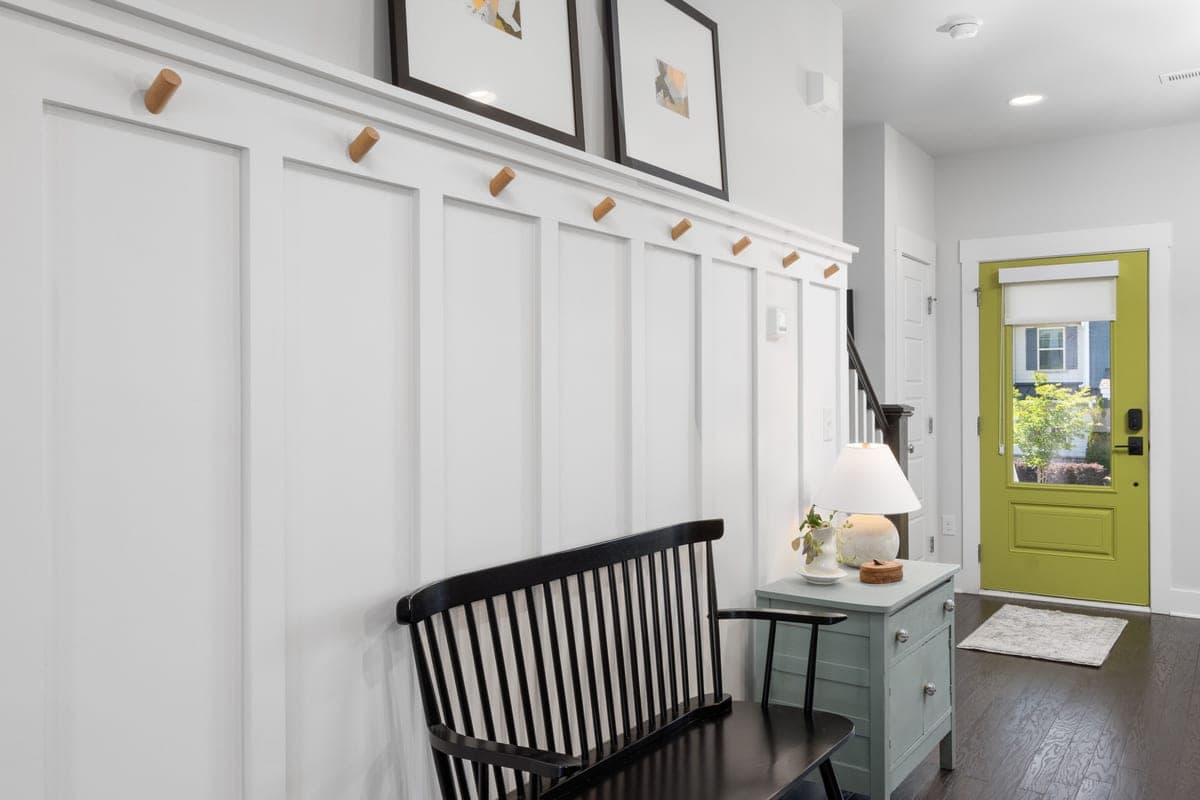
Drop-Zone Setup
Entryway drop zone setup
The physical arrangement that makes the sequence take five seconds instead of thirty.
Best for Big Feet
Best shoe storage for large shoes
Published shelf depth against published foot length - the comparison that explains why your size 14s hang off the front.