
By Scooter M. · Last updated September 23, 2026
Mud & Mat earns a commission when you buy through the links on this page, at no extra cost to you. It does not change what we recommend, and we publish a skip-this verdict on products we could otherwise earn from. Full disclosure.
Buy a wall-mounted shoe rack on its published weight capacity first and its projection off the wall second. Of the six listings we read for this page, two publish a weight capacity - 150 pounds and 5 pounds - and four publish nothing at all. Projection runs from 5.98 to 8 inches, which is the difference between a hallway you can still pass someone in and one you cannot. Pair counts printed on the title are the least reliable number on the page.
A wall-mounted rack is the only shoe storage that takes up no floor whatsoever, which makes it the obvious answer to the problem our small-space shoe storage guide is built around. That guide measures floor-standing units on published depth, because in a narrow entry depth is the only number that matters. Put the same unit on the wall and the depth question does not go away - it just moves up to chest height, where you walk into it rather than trip over it.
It is also the only format on this site that carries a genuine safety question. A boot tray cannot fall on anyone. A shoe bench cannot pull out of the wall. A loaded rack fixed to half an inch of drywall can do both, which is why this page leads on the weight capacity rather than on the finish or the pair count - and why the rack we tell you to skip is the one whose listing cannot keep its own installation details straight.
How we picked
How we picked
- Published weight capacity. This is the specification. A wall rack's entire job is to hold a load away from the floor, and the fixings have to be sized for that load plus the rack's own weight. Two of the six listings we read state a figure: 150 pounds on the steel cabinet we rank first, 5 pounds per shelf on the acrylic set. The other four say nothing, and we mark them down for it rather than guessing on their behalf.
- Projection off the wall. The published depth is how far the rack sticks into the room, at the height where your shoulder is. Across these six it runs 5.98, 6.1, 6.5, 7.4, 7.8 and 8 inches. In a hallway 36 inches wide, losing 8 inches of it at chest height is something you notice every day; losing 6 is something you stop noticing in a week.
- Whether the stated capacity survives contact with the listing. A pair count in a title is marketing. We checked each one against the bullets and the spec table underneath it. One product here claims exactly twice as many pairs in its title as its own bullets describe, and that is the single biggest reason it is the skip.
- What is actually in the box. A wall rack you cannot fix to the wall is a parcel. We read the included-components field and the bullets for fixings, anchors and anti-tip kits. One listing counts them out - 14 screws and 14 anchors for 6 shelves. One manages to say that hardware is both included and not included in the same sentence.
- Whether damp footwear can dry on it. Everything this site says about closed storage applies at wall height too. Open shelving lets a shoe that came in wet finish drying. A sealed flip drawer holds the moisture against it all night, and in engineered wood that is a problem for the cabinet as well as for the shoe.
We have not physically tested these products. We do not own them, we have no lab, and we do not accept free product. Everything above is compiled from published manufacturer specifications, published care guidance and live retailer data - and we tell you which is which on every claim. How we pick.
Two of six publish what it holds
This is the finding that shaped the page. We read six current listings in full - title, bullets, product overview and the detail specification table underneath - and looked for a weight capacity on each. NOXJUQU publishes 150 pounds. Alitamei publishes 5 pounds per shelf. Vtopmart, STEELIST, SoBuy and MyGift publish nothing at all.
That is a strange gap, because the same listings are perfectly happy to publish their own weight. SoBuy states 18 kilograms, about 39.7 pounds. NOXJUQU states 28.6 pounds. STEELIST states 25. Those are the figures that tell you how much cabinet you are asking the wall to carry before a single shoe goes in - and on a wall rack the product's own weight is a load in a way that it simply is not on a floor-standing unit, where the floor takes it and the wall fixing only stops the thing tipping.
Published figures only, read from each product's Amazon detail page in September 2026. Where a listing publishes nothing for a field, we say so rather than estimating.
Read down the load column and the ranking on this page explains itself. The two products that tell you what they hold are the two we are most comfortable recommending, and they sit at opposite ends of the category - a 43-inch steel cabinet and a set of six small acrylic shelves. Everything in between asks you to take the fixing decision on trust.
When the pair count and the load rating disagree
The reason to care about a published load is not abstract. During research we looked at several racks whose stated capacity and stated load cannot both be true. One 2-pack wall rack publishes a maximum weight capacity of 20 pounds and advertises 24 pairs of shoes across the two units. One wooden hanging rack publishes a maximum weight recommendation of 5 pounds per rack and describes each rack as holding approximately 3 pairs. A pair of adult sneakers is roughly 2 pounds; three pairs is around 6. Neither of those products is on this page.
Alitamei is on this page precisely because it passes the same test. Five pounds published, one pair per shelf claimed. That is arithmetic that works, and it is the reason a set of inexpensive acrylic shelves outranks two competent steel cabinets here. It is not that the shelves are better furniture. It is that they are the only ones whose two numbers agree.
Projection is the number you live with
Weight capacity is the number that matters once. Projection is the number that matters every day. These six run from 5.98 inches to 8, and the spread is not trivial in the places people actually mount them: a hall 36 inches wide, or the wall behind a door that opens back against it.
That second case is worth thinking about before you buy. A door swinging back against a wall needs the wall to be clear to roughly the width of the door's arc, and a cabinet 6 to 8 inches deep in that arc will stop the door dead. It is the same geometry our over-door shoe organizer roundup deals with from the other side, where the organizer hangs on the door itself and the clearance you need is on the far side of it. Between the two formats, one of them fits almost any entry - but not the same one.
There is a pattern in the numbers worth knowing, too. The enclosed cabinets are shallower than the open shelving, which is the opposite of what people expect. A flip-drawer cabinet stores shoes on their edge, tilted into a shallow box, so 6 inches is enough. An open shelf has to be as deep as the shoe standing on it, which is why the acrylic shelves here are 8 inches - the deepest thing on the page despite being the smallest.
What is actually in the box
A wall-mounted rack is the one product category on this site where the fixings are not an accessory - they are the product. We read the included-components field and the mounting bullets on each listing, and the range is wide. Alitamei counts them: 6 shelves, 14 screws, 14 anchors, one screwdriver. NOXJUQU lists a cabinet, an assembly kit and instructions. Vtopmart names anti-tip installation accessories. STEELIST names an anti-tip kit and states that all hardware is included.
SoBuy lists its included components as, in full, the shoe cabinet. And MyGift states in one bullet that the rack includes drywall anchors and standard screws and, in the same bullet, that mounting hardware is not included - while its structured components field says mounting hardware is included. None of the six publishes any guidance on studs versus drywall, which is the thing a buyer most needs to be told and the thing this category consistently leaves out.
The closed-drawer problem, at chest height
Four of the six racks here are flip-drawer cabinets, and that is the format the category has settled on because it hides shoes behind a flat front. Our open versus closed comparison sets out the cost of that in full, and nothing about mounting it on a wall changes the argument: a shoe that goes into a closed drawer damp comes out damp, and it takes the smell of the drawer with it.
What does change with height is the consequence for the cabinet itself. The SoBuy unit is MDF and particle board, and engineered wood is the material that fails when moisture reaches a cut edge - it swells, and it does not return. On a floor-standing cabinet that damage shows up at the plinth where you can live with it. On a wall-mounted cabinet the same swelling is happening around the fixing points that are holding it up. Steel and plastic have no equivalent failure, which is most of why the two cabinets we rank above it are made of those materials.
The honest version of this advice is the one our wet shoe tray guide gives: genuinely wet footwear should not go into any cabinet, on the wall or on the floor. It should drip somewhere that is designed to be dripped on, and go away once it is dry. A wall rack is storage for dry shoes that would otherwise be on the floor - which is most of the shoes in most households, but not the muddy ones.
Quick picks
Ranked against the criteria below. Tap a row to jump to the full write-up; the price button goes straight to Amazon.
| # | Product | Best for | Score | Price |
|---|---|---|---|---|
| 1 |  NOXJUQU 43in Steel Wall Cabinet The single cabinet here that publishes a weight capacity | The only one that says what it holds | 8.4/10 | Check price on Amazon #ad affiliate link · no live price for this item |
| 2 |  Alitamei Floating Shoe Shelves Six single-pair acrylic shelves that publish a 5 lb limit and claim one pair each | A few pairs, honestly specified | 7.5/10 | $14.99 - View on Amazon #ad affiliate link · Price as of October 18, 2026 |
| 3 |  Vtopmart 7.8in Slim Wall Cabinet The one cabinet here made of a material that does not care about water, with anti-tip accessories in the box and a refreshingly specific capacity claim. | Shoes that come in wet | 6.8/10 | |
| 4 |  STEELIST Wall Shoe Cabinet A 6.5 inch metal cabinet with an open top shelf and pegboard down both sides, which makes it the only pick here that handles keys and bags as well as shoes. | Shoes plus the rest of the drop zone | 6.4/10 | $75.99 - View on Amazon #ad affiliate link · Price as of October 18, 2026 |
| 5 |  SoBuy FSR204 Wall Shoe Cabinet The one that looks like joinery rather than hardware, and the one that asks the most of your wall | A built-in look on a solid wall | 5.9/10 | |
| 6 | 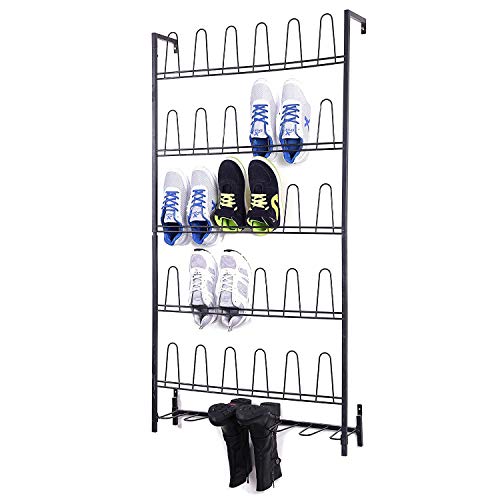 MyGift Metal Wall Shoe Rack An open wire rack whose own listing claims 18 pairs in the title and 9 in the bullets, and says in one sentence that mounting hardware is both included and not included. Our skip-this pick | Not this one - see the skip | 4.6/10 | $99.99 - View on Amazon #ad affiliate link · Price as of October 18, 2026 |
The only one that says what it holds
NOXJUQU 43in Steel Wall Cabinet
The single cabinet here that publishes a weight capacity - 150 pounds - and it is also the shallowest enclosed unit on the page at 5.98 inches off the wall.
A wall-mounted shoe rack is the only storage format on this site that can hurt someone. It hangs above a floor people walk across in socks, it is loaded by children, and it is fixed to a surface that is usually a half-inch of drywall with air behind it. So the specification that matters is not the pair count or the finish. It is the published weight capacity, and across the six listings we read for this page, four of them do not have one.
NOXJUQU does. The spec table states a maximum weight capacity of 150 pounds, and it states an item weight of 28.6 pounds alongside it. Those two figures together are what let you do the arithmetic that actually keeps the cabinet on the wall: the fixings carry the cabinet plus whatever goes inside it, and you cannot size fixings for a load nobody has told you.
It is also the shallowest enclosed unit here. At 5.98 inches off the wall it takes less hallway than the 6.5, 7.4 and 7.8 inch cabinets on this page, and depth is the dimension you feel every single day in a corridor - the same argument our small-space shoe storage guide makes about floor-standing units, moved up onto the wall.
The honest limits are three. It is big: 31.5 inches wide and 43 tall is a serious area of wall, and a wall with a light switch, a radiator pipe or a meter box in the middle of it is not a candidate. The drawers are closed, which means the moisture problem our open versus closed comparison sets out applies in full - steel will not swell the way engineered wood does, but a wet shoe shut in a steel drawer overnight is still a wet shoe in the morning. And the bullets hedge between 3 and 4 flip drawers, which is a variant listing rather than a fixed product, so check the selector before you order.
What works
- Publishes a 150 lb weight capacity - the only enclosed cabinet here that states the one number a wall-mounted rack exists to satisfy
- At 5.98 inches it projects less into a hallway than any other cabinet on this page
- Publishes its own 28.6 lb weight as well, so you can add cabinet plus shoes before you choose fixings
What does not
- 31.5 inches wide by 43 tall is a large flat area of wall, and it has to be genuinely flat
- Steel flip drawers are closed storage - a shoe that goes in damp stays damp
- The bullets describe 3 or 4 flip drawers depending on version, so confirm which one the size selector is actually showing
A few pairs, honestly specified
Alitamei Floating Shoe Shelves
Six single-pair acrylic shelves that publish a 5 lb limit and claim one pair each - the only product here whose stated capacity and stated load agree with each other.
This is the cheapest product on the page and, by the standard the page is judged on, the most honest one. It publishes a maximum weight capacity of 5 pounds. It states that each shelf holds one pair of shoes. A pair of adult sneakers weighs somewhere around 2 pounds, so the claim and the limit sit comfortably together - and that is genuinely unusual here, because two of the racks we read state a pair count their own published load cannot support.
It goes further and counts the hardware: six shelves, 14 screws, 14 anchors, one screwdriver. Compare that with the listings that say only that mounting hardware is included, or that say both things in the same bullet, and you can see why we rank a set of acrylic shelves above two proper cabinets.
The format has a real advantage beyond the numbers, too. It is completely open. Nothing is shut in, nothing is sealed against a damp upper, and a shoe that came in at the end of a wet walk finishes drying on the shelf rather than souring in a drawer. For a household that keeps genuinely wet footwear by the door, that matters more than the shelf material does.
What you are buying, though, is six pairs and no more, so this is a supplement to a rack rather than a household's shoe storage. It is also the deepest thing here: at 8 inches the shelf is as deep as the shoe standing on it, which is more hallway than the 5.98 inch cabinet above. And six individual shelves is six sets of holes to mark, level and drill, which is an afternoon rather than a job. Anything heavier than a trainer - work boots especially - belongs on a boot rack instead.
What works
- Publishes a 5 lb limit next to a one-pair-per-shelf claim, which is the only pair of numbers on this page that agree with each other
- Counts the fixings on the listing - 14 screws and 14 anchors for 6 shelves - rather than leaving you to discover what is missing
- Completely open, so a shoe that is not quite dry finishes drying instead of being shut in
What does not
- Six pairs is the ceiling, and that is a person or two, not a household
- At 8 inches it projects further off the wall than any cabinet here, because the shelf is the depth of the shoe
- Six separate shelves means six separate sets of holes to measure, drill and level
Shoes that come in wet
Vtopmart 7.8in Slim Wall Cabinet
The one cabinet here made of a material that does not care about water, with anti-tip accessories in the box and a refreshingly specific capacity claim.
Every other enclosed unit on this page is steel or engineered wood. This one is plastic, and on a site about footwear that arrives wet that is a genuine argument rather than a cost-cutting compromise. The listing states the material is waterproof and moisture-resistant, which means the thing this site worries about most - a damp shoe sitting against a panel for eight hours - cannot swell it, stain it or make it smell.
It is also unusually specific about what fits. Most listings in this category quote a pair count and stop. Vtopmart states two pairs of sneakers plus two pairs of flats per cabinet, and states that pulling the divider out lets you fit one larger shoe, up to size 10 or an ankle boot. That is a claim you can measure your own footwear against before you order, and we would rather have it than a bigger number with nothing behind it.
The catch is the one that runs through this whole page: no weight capacity is published. For a lightweight plastic box the stakes are lower than they are for a 39-pound wooden cabinet, and anti-tip accessories are listed in the box, but the number still is not there.
The other honest limit is scale. At 14.5 inches tall this is a box, not a cabinet - roughly four pairs, and the listing is set up to sell you several to stack or line up. The structured fields say two items, and the bullets talk about capacity per cabinet, so confirm the quantity at the size selector rather than assuming. If you want one unit that takes a household's shoes, the steel cabinet above does that; if what you actually need is somewhere for shoes to drip, a shoe tray costs a fraction of this and does it better.
What works
- Plastic is the only material here that a wet shoe cannot damage - the listing states it is waterproof and moisture-resistant
- The capacity claim is specific enough to check: 2 pairs of sneakers plus 2 pairs of flats per cabinet, or one larger shoe up to size 10 with the divider out
- Anti-tip installation accessories are named in the included components, and the unit is light enough that mounting it is a one-person job
What does not
- No weight capacity is published anywhere on the listing
- At 14.5 inches tall it is a box rather than a cabinet, so the real capacity is small unless you buy several
- The listing states a size 10 limit with the divider removed, which rules out a lot of men's footwear
Shoes plus the rest of the drop zone
STEELIST Wall Shoe Cabinet
A 6.5 inch metal cabinet with an open top shelf and pegboard down both sides, which makes it the only pick here that handles keys and bags as well as shoes.
Our drop-zone guide makes the case that an entry fails at the point where there is nowhere to put the things you are holding - keys, mail, a bag, a wet umbrella - and that shoes are only one item on that list. This is the only pick here built for that whole list. The cabinet has an open shelf across the top and pegboard panels down both sides, so hooks go wherever you need them.
The shoe part of it is competent rather than remarkable. Two flip drawers behind a metal front, 6.5 inches off the wall, which is the second-shallowest projection on this page and impressive for a unit just under 30 inches wide. Metal means nothing swells if a damp shoe goes in, which is more than can be said for the engineered-wood option below.
Where it is strong is the install. The bullets name a professional-grade anti-tip kit and state that all hardware is included, and the cabinet has reserved mounting holes rather than expecting you to find your own line. On a page where one listing manages to say that hardware is both included and not included, being clear about this counts for something.
Two things hold it back. There is no published weight capacity, which matters more here than on most of these because the pegboard invites you to hang a loaded bag off the side of a 25 pound cabinet, and nobody has told you what the wall fixings are being asked to carry. And the listing quotes no pair count anywhere - not an inflated one, simply none - so the capacity of those two drawers is something you find out after it is on the wall. If keys and coats are the real problem rather than shoes, a coat rack solves it for less.
What works
- An open top shelf and pegboard on both sides turns a shoe cabinet into the whole drop zone - keys, mail, bags, umbrellas
- 6.5 inches is the second-shallowest projection on this page, on a unit nearly 30 inches wide
- The anti-tip kit is named and the bullets state all hardware is included, which two listings here cannot manage
What does not
- No weight capacity published, on a 25 lb cabinet that also wants to carry hanging bags
- The listing quotes no pair count at all, so the capacity is whatever two flip drawers turn out to hold
- Closed flip drawers again - the open top shelf is for keys, not for wet shoes
A built-in look on a solid wall
SoBuy FSR204 Wall Shoe Cabinet
The one that looks like joinery rather than hardware, and the one that asks the most of your wall - roughly 40 pounds of engineered wood with no published load rating.
This is the cabinet most people will want to look at, and the one we are most cautious about recommending. It is engineered wood with a painted finish, it reads as joinery rather than as a storage product, and SoBuy states it can be mounted either vertically or horizontally, which is a genuinely useful piece of flexibility when the only clear wall you have is a low wide one beside the door.
The capacity is real too. Two flip drawers arranged over three levels in a cabinet nearly three feet tall holds considerably more than the shallow plastic box further up, and at 7.4 inches it projects about the same amount into the hall.
Then you reach the weight. The listing gives an item weight of 18 kilograms, which is a shade under 40 pounds, and publishes no weight capacity at all. That combination is the least comfortable on this page: you are being asked to hang the heaviest object here, plus its contents, on fixings you are sizing entirely by guesswork. On a stud wall with the fixings into a stud that is a manageable job. Into drywall alone it is not a job we would take on without knowing the number.
There is a material problem as well, and it is the one this whole site keeps running into. MDF and particle board are the materials that fail when footwear arrives wet, because once moisture reaches a cut edge the board swells and does not go back. Our narrow shoe cabinet roundup covers the same trade-off at floor level. Finally, note that the listing publishes two different heights - 35.8 inches in one field and 39.37 in another - so take your own measurements from the cabinet rather than from the page.
What works
- Reads as fitted furniture rather than a storage product, which is the reason most people choose wood over steel
- Stated to install either vertically or horizontally, so one cabinet suits a tall narrow wall or a low wide one
- Two flip drawers over three levels gives it more usable capacity than the shallow plastic box
What does not
- About 39.7 lb of cabinet before a single shoe goes in, with no published weight capacity to size fixings against
- Engineered wood is the worst material here for footwear that arrives wet - MDF and particle board swell once moisture reaches a cut edge
- The listing publishes two different heights, 35.8in in one field and 39.37in in another, so measure before you commit to a space
Not this one - see the skip
MyGift Metal Wall Shoe Rack
An open wire rack whose own listing claims 18 pairs in the title and 9 in the bullets, and says in one sentence that mounting hardware is both included and not included.
Skip this one
Skip it until the listing is fixed. This is the only product we looked at whose own page cannot agree with itself on the two things you buy a wall rack for: how much it holds and whether you can fix it to the wall. The title claims 18 pairs, the bullets claim 9 - twice, once as a hook count and once as a 6-plus-3 breakdown. A single bullet says both that drywall anchors and standard screws are included and that mounting hardware is not included. And the structured dimension field says 28.7 inches deep where the bullets say 6.1. Any one of those could be a typing error. Together they mean you cannot plan an installation from this page, and installation is the entire risk with a wall-mounted rack.
We wanted to like this one. It is open wire, which is the format that suits damp footwear best, it weighs only 7 pounds, and it publishes the size of its hook openings at 5.4 inches high by 2.1 wide - a level of detail most of this category skips entirely.
The problem is that the listing contradicts itself on both of the things that decide whether a wall rack works. The title says it holds 18 pairs. The first bullet says 16 wire loop-style hooks which can hold up to 9 pairs. The second bullet then explains the 9: two tiers for 6 pairs of sneakers, flats or heels, plus a bottom tier for 3 pairs of boots. So the title is exactly double the figure the rest of the page gives, twice over.
The mounting information is worse, because it is wrong inside a single sentence. One bullet reads that the design helps save space and keep shoes crease-free, includes drywall anchors and standard screws, is ideal for any closet, garage or laundry room, and is easy to mount to most wall surfaces with proper hardware - mounting hardware not included. Both claims, one after the other. The structured components field separately says mounting hardware is included. You cannot tell from this page whether you need a trip to a hardware store before you can hang it.
Then the dimensions. The bullets give approximate dimensions of 23.1 inches high by 28.9 wide by 6.1 deep, which is a sensible shape for a wall rack. The structured field lists 28.7 inches deep by 6.1 wide by 23.2 high - the depth and width transposed, describing something that would stand more than two feet out from the wall. Read only the specification box, as plenty of buyers do, and you would reject a perfectly reasonably shaped rack.
None of this means the rack is badly made, and we have no published weight capacity to judge it by either way. It means the listing is not a document you can plan an installation from, and with a wall-mounted rack the installation is the whole risk. Buy the steel cabinet at the top of this page, or the acrylic shelves, and you will at least know what you are fixing to the wall.
What works
- Open wire throughout, so nothing is sealed in and damp footwear can dry
- Only 7 lb of rack, which is the easiest thing here to hold up against a wall single-handed
- The hook openings are published at 5.4in high by 2.1in wide, which is more shelf detail than most of this category offers
What does not
- The title says it holds 18 pairs; the bullets say 16 hooks holding up to 9 pairs, then break that down as 6 plus 3
- One bullet states it includes drywall anchors and standard screws and then states mounting hardware is not included
- The structured dimensions field reads 28.7in deep, which would put it more than two feet off the wall and contradicts the 6.1in depth in the bullets
Wall-mounted, or just narrow?
Mounting to the wall is not the only way to get shoes off a narrow floor, and it is the most committing. It needs a suitable wall, a drill, and in most cases a second pair of hands to hold 25 or 40 pounds of cabinet at height while you mark the holes. If any of those is missing, a shallow floor-standing unit from our narrow shoe cabinet roundup reaches a similar footprint without touching the structure - and you can take it with you when you move.
Where wall mounting genuinely wins is under-used vertical space and cleaning. A floor unit has a floor under it that collects grit you cannot reach; a wall unit leaves the baseboard clear, so the floor by the door can be swept or mopped in one pass. In an entry where mud is the actual problem, that is a better argument for going on the wall than the space saving is. For a fuller comparison of the formats, our bench, cabinet or rack guide covers the trade-offs at floor level.
Questions people ask
How much weight can a wall-mounted shoe rack hold?
How far does a wall-mounted shoe rack stick out?
Can I put wet or muddy shoes on a wall-mounted rack?
Does a wall-mounted shoe rack need to go into studs?
Is a wall-mounted rack better than an over-door organizer?
Sources
- NOXJUQU 43in Steel Wall Mounted Narrow Slim Hidden Shoe Cabinet Rack - Amazon detail page (5.98 x 31.5 x 43.01in, 28.6 lb, Weight Capacity Maximum 150 pounds, 0.6 mm alloy steel plate, 3 flip drawers, assembly kit and instructions included)
- Alitamei Acrylic Floating Shoe Rack, Set of 6 - Amazon detail page (each 8 x 3 x 2in, 1.6 lb the set, Weight Capacity Maximum 5 pounds, stated to hold 1 pair per rack, included components 6 shoe racks, 14 screws, 14 anchors, 1 screwdriver)
- Vtopmart 7.8in Slim Plastic Wall Mounted Shoe Cabinet with Flip Drawers - Amazon detail page (7.8 x 19.2 x 14.5in, plastic stated waterproof and moisture-resistant, anti-tip installation accessories included, 2 pairs of sneakers plus 2 pairs of flats each cabinet, removable divider for shoes up to size 10; no weight capacity published)
- STEELIST Hidden Shoe Rack, Ultra Slim Wall Mounted Floating Shoe Cabinet - Amazon detail page (6.5 x 29.92 x 34.49in, 25 lb, metal, 2 flip drawers, open top storage and pegboard panels both sides, anti-tip kit and all hardware stated included; no weight capacity published)
- SoBuy Wall Mounted Slim Shoe Cabinet for Entryway, FSR204 - Amazon detail page (Product Dimensions 7.4 x 19.6 x 35.8in, Item Dimensions field 7.48 x 19.69 x 39.37in, 18 kg, MDF and PB, 2 flip drawers over 3 levels, vertical or horizontal installation, included components listed as the shoe cabinet; no weight capacity published)
- MyGift Black Metal Hanging Shoe Rack, Wall Mount Organizer Holds 18 Pairs - Amazon detail page (title states 18 pairs; bullets state 16 wire loop hooks holding up to 9 pairs and a 6-plus-3 breakdown; structured dimensions 28.7in D x 6.1in W x 23.2in H against bullet dimensions 23.1 H x 28.9 W x 6.1 D; one bullet states both that drywall anchors and standard screws are included and that mounting hardware is not included; 7 lb; no weight capacity published)
Next stage
The whole system
A rack on the wall is one stage. The drop-zone guide puts the mat, the tray and the hooks around it.
Keep goingAbout the author
Scooter M.
An enthusiast who is genuinely into this. I read the manuals, compile the published specs, and do the math on door clearances. No lab coat, no test bench, and nothing here is a product I have used - which is exactly why every claim carries a source.
Published by Slate Mill Group, with the Mud & Mat team. Published September 23, 2026; last updated September 23, 2026. Editorial policy.
Read next
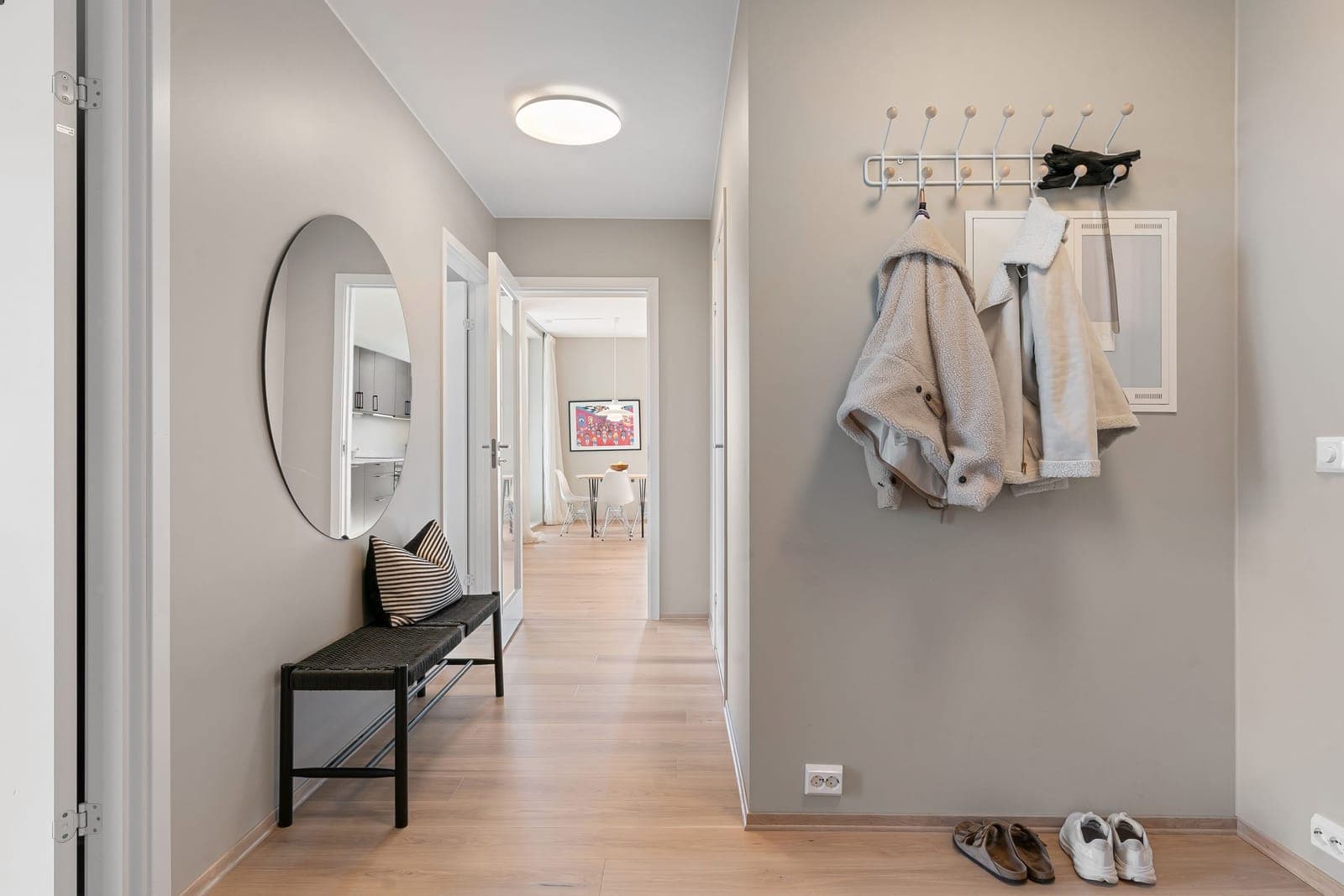
Best for Small Spaces
Best small-space shoe storage
Published depths from 9.4 inches, pairs per square foot of floor, and why vertical beats clever in a tight entry.

Best Over-Door Storage
Best over-door shoe organizers
Published depth off the door, published pocket size and whether the pockets breathe - four over-door organizers, one of which is the wrong material for damp shoes.
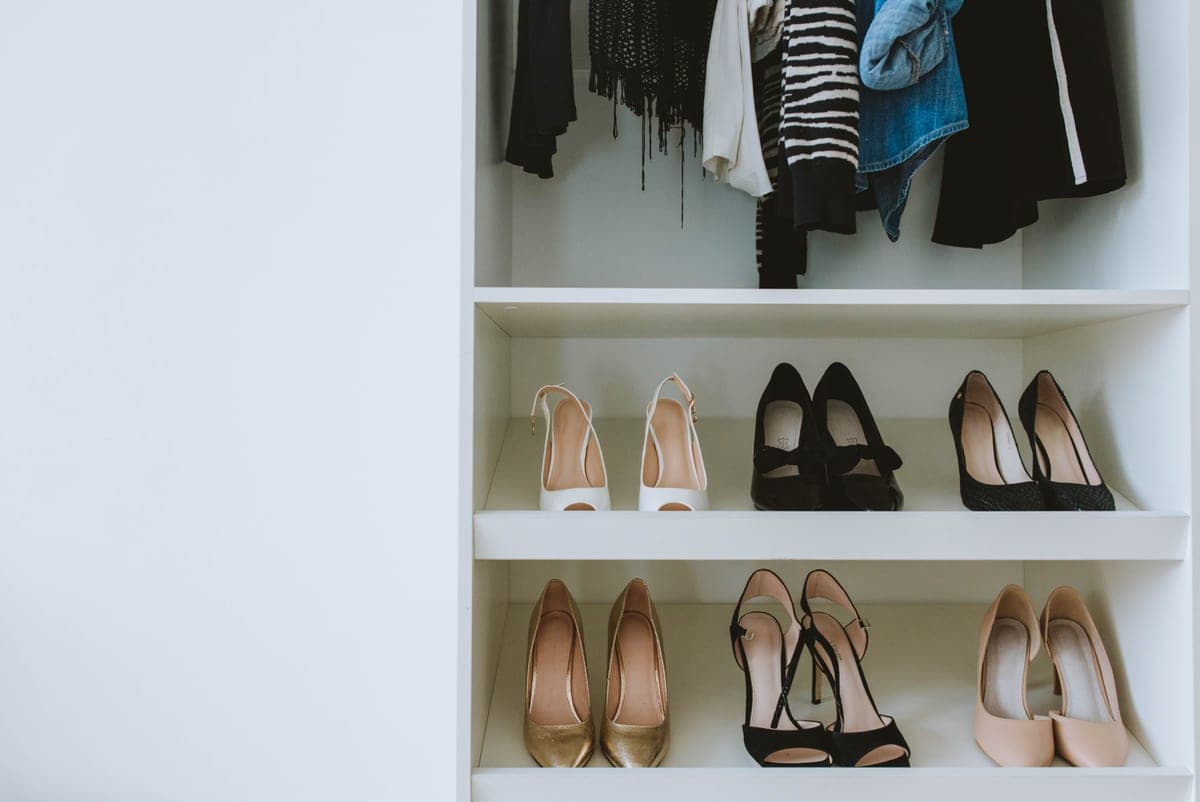
Open or Closed
Open vs closed shoe storage
Concealment and ventilation are opposites. The fix is a sequence, not a product.
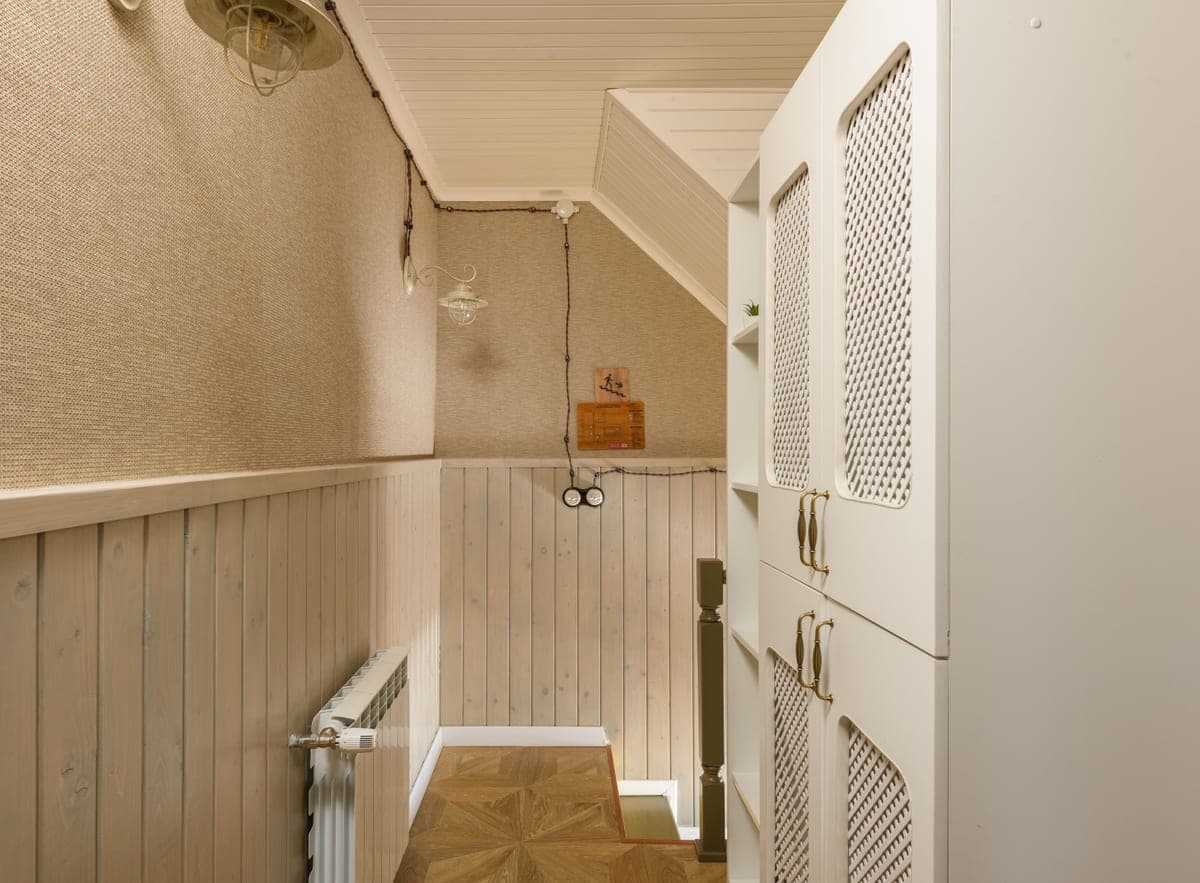
Best Narrow Cabinet
Best narrow shoe cabinets
Published depth, pairs stored and load limits - plus the boots that flip drawers cannot take.