
By Scooter M. · Last updated September 14, 2026
A boot tray is a shallow, waterproof tray with a raised perimeter wall that holds wet or muddy footwear and contains the meltwater, mud and road salt running off it. Better trays add a ridged or raised base so the soles sit above the collected water and the boots dry rather than soaking. It differs from a door mat in that a mat absorbs and spreads moisture across its own surface, while a tray contains it behind a wall until you tip it out.
That is the whole definition. What follows is the part that decides whether a given tray does the job, because the category contains a lot of shallow rectangles that technically meet the description and do not work.
The three parts that matter
1. The wall
The raised perimeter is what makes it a tray rather than a mat, and its height is the containment capacity. Published wall depths run from about 1.18 inches at the shallow end to a full 2 inches at the deep end. For rain and damp, an inch is enough. For snow and slush, two inches is what copes on the worst day rather than the average one.
2. The base
A flat base leaves the boot standing in its own meltwater all night, which is how boots stay damp and start to smell. A ridged base lifts the sole above the water line so the boot dries while the water pools underneath. This is the feature that separates a real boot tray from a shallow bowl, and it is what people are actually looking for when they search for a tray with drainage.
3. The weight
Taking a boot off means levering against it, and that force goes sideways. A heavy recycled-rubber tray absorbs it and stays put. A lightweight plastic tray slides across a hard floor and tips its contents out, which is the most common practical complaint about the category.
What a boot tray is not
It is not a walking surface. A tray with a two-inch lip is a trip hazard across a threshold, and it belongs against a wall beside the door rather than in the walking line. Keep the walking line for a low-profile mat.
It is not a substitute for a mat, either. A tray does nothing for the water still on the sole of a shoe somebody is walking in on. The two products handle different moments - the mat handles the walk-in, the tray handles the parking - and a well-set-up entry has both. That comparison is worked through in boot tray vs mat.
What size to buy
Count the pairs that actually come off at that door on a wet day rather than on an average one. A 16 by 32 inch tray takes two adult pairs. A 34-inch tray takes three at a squeeze. Adult winter boots are frequently longer than the 14-inch front-to-back depth of a standard tray, so expect some overhang.
If the honest answer is four or more pairs, you are at the point where two trays or a bench with storage underneath is the better purchase, because the household also needs somewhere to sit while four pairs of boots come off. Our boot tray roundup covers the sizes; shoe storage benches covers the step after.
Once you know what a tray is for, the buying decision is almost entirely dimensional. We have split it two ways: best large boot trays for capacity and containment, and best narrow boot trays for entries where depth is the constraint.
A tray is where wet boots go. Where they live once they are dry is a different question, and for tall boots it has a specific answer: stored on their soles they fold at the ankle and keep the crease, which is why boot racks hold them inverted on poles instead.
Other things people use them for
- Pet food and water bowls - the raised wall contains spills on a wood floor
- Plant pots indoors, where a saucer is not big enough
- Garage and workshop storage for anything that drips
- Under a coat rack, catching drips off wet outerwear
This matters more than it sounds, because a seasonal product that becomes clutter in summer tends not to get bought again. A tray that has a year-round use stays useful.
Questions people ask
What is a boot tray used for?
What is the difference between a boot tray and a boot mat?
How big should a boot tray be?
Can a boot tray be used for anything else?
Sources
About the author
Scooter M.
An enthusiast who is genuinely into this. I read the manuals, compile the published specs, and do the math on door clearances. No lab coat, no test bench, and nothing here is a product I have used - which is exactly why every claim carries a source.
Published by Slate Mill Group, with the Mud & Mat team. Published August 31, 2026; last updated September 14, 2026. Editorial policy.
Read next

Best Boot Tray
Best boot trays for entryways
Wall depth, a ridged base and enough weight to stay put - the three things that separate a tray from a puddle.
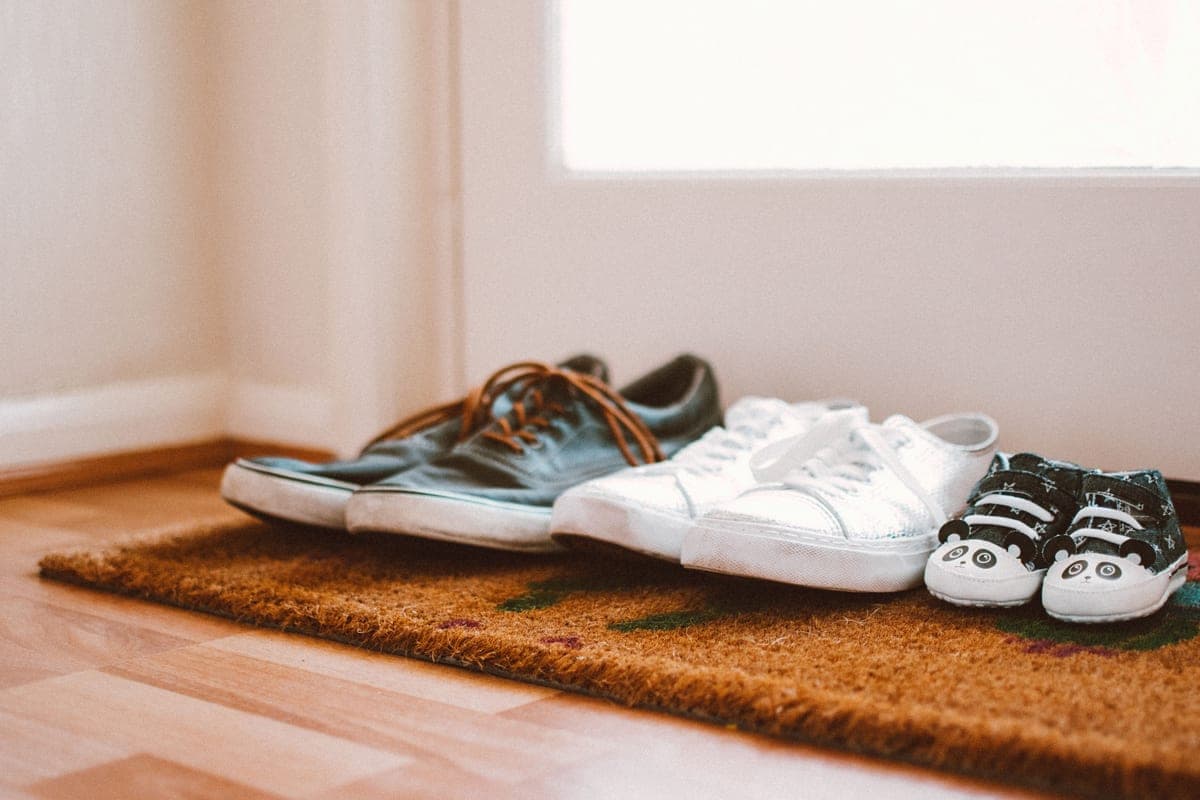
Tray or Mat
Boot tray vs mat
Not alternatives - sequential. The mat handles the walk-in, the tray handles the eight hours after.
Tray Design Decision
Rubber boot tray vs tray with drainage
Sealed with a ridged base for indoors, draining for a porch - and why the two get confused.

Best for Wet Shoes
Best shoe trays for wet shoes
Modular trays and shallow walls - what wet sneakers actually need, which is not what snow boots need.