By Scooter M. · Last updated October 17, 2026
Mud & Mat earns a commission when you buy through the links on this page, at no extra cost to you. It does not change what we recommend, and we publish a skip-this verdict on products we could otherwise earn from. Full disclosure.
Yes, you can put a doormat on carpet - but use a thin, flat, low-profile mat, not a thick rubber-backed one. A chunky rubber or TPR backing is engineered to grip a hard floor; on carpet pile it has nothing to grip, so the mat creeps, rucks at the edges and becomes a genuine trip hazard, and a solid rubber back can flatten or mark the pile beneath it over months. The Gorilla Grip woven mat at a published 0.28 inches is the right shape for this job. The honest caveat is that a mat on carpet is always damage control - carpet at an entry is the problem, and a mat only reduces it.
This question gets asked because carpeted entries are extremely common in apartments, rentals and older houses, and every piece of mat advice on the internet assumes a hard floor. The two mats behave completely differently on pile, and the difference is entirely in the backing.
Why a rubber-backed mat misbehaves on carpet
A non-slip mat backing works by friction against a smooth, continuous surface. Press a textured TPR sheet onto tile and the two surfaces meet across their whole area; the mat will not move. Press the same sheet onto a half-inch of carpet pile and it is resting on thousands of individual fiber tips that bend sideways under load. The friction is still there, but so is a layer that moves - so the mat walks a little with every footfall. Over a week it has shifted; over a month the leading edge has turned up.
That turned-up edge is the real issue. On a hard floor a creeping mat is an annoyance you nudge back with your foot. On carpet, at a doorway, a raised lip in the exact spot where people step while carrying things is how falls happen. This is also why the usual fix people reach for - a rug pad - does not help: a rug pad is designed to stop a rug sliding on a hard floor, which is not the failure mode here.
- Creep and rucking. Pile flexes under load, so a stiff backing never truly locks. Thin and flexible beats thick and grippy on carpet.
- Pile crushing. A continuous rubber back under constant foot traffic compresses the pile beneath it. Some of that recovers when the mat moves; some does not.
- Trapped moisture. This is the one nobody mentions. A solid rubber back over damp carpet stops the carpet drying from above, and damp carpet under an impermeable layer is how an entryway starts to smell.
- Height stacking. Carpet thickness plus mat thickness both eat into the gap under your door. A mat that clears the door on tile may not clear it on carpet.
What to use instead
The attributes that decide a mat on carpet, and how the three picks compare. Note that the ranking inverts the usual one: on pile, flexible beats grippy.
The characteristics that make a mat work on carpet are close to the opposite of the ones that sell mats. You want it thin, flexible, flat-edged and wide rather than thick, plush and heavily backed.
- Thin profile, ideally under about a third of an inch. Less height means less leverage on the edge and a smaller change in your door gap.
- A flexible backing rather than a rigid slab. It needs to drape with the pile, not sit on top of it like a board.
- Tapered or bound edges. A thick cut edge is what a toe catches. A bound or feathered edge is dramatically safer on pile.
- Bigger than you think. A wide mat distributes the force of each step so that no single edge is being levered up repeatedly. Narrow mats creep fastest.
- Washable, because carpeted entries are harder to clean around. You cannot hose the floor under it, so the mat has to carry the cleaning burden itself.
How we picked
- Published thickness, because on carpet it is doing double duty - it decides both trip risk and whether the door still clears.
- Backing flexibility over backing grip. On pile, a mat that drapes outperforms one that grips, which inverts the normal ranking.
- Size availability, especially width. Wide mats creep less, so a product with a runner or an oversized option scores better here than it does elsewhere on this site.
- Washability, since you cannot clean the carpet under the mat without lifting it anyway.
- Honest exclusion of the heavy chenille mats we recommend everywhere else. They are the wrong tool here and we have not pretended otherwise.
- No testing. Published specs and material behavior only - we have not run creep trials on carpet. How we pick.
We have not physically tested these products. We do not own them, we have no lab, and we do not accept free product. Everything above is compiled from published manufacturer specifications, published care guidance and live retailer data - and we tell you which is which on every claim. How we pick.
Quick picks
Ranked against the criteria below. Tap a row to jump to the full write-up; the price button goes straight to Amazon.
| # | Product | Best for | Score | Price |
|---|---|---|---|---|
| 1 |  Gorilla Grip Indoor Door Mat (Woven Low-Profile) The rare mat that publishes both numbers a buyer needs | A published thickness that still washes | 8.5/10 | $16.99 - View on Amazon #ad affiliate link · Price as of October 18, 2026 |
| 2 |  Gorilla Grip Traffic Guard Mat, 60x36in Six and a half pounds of ribbed, rubber-backed mat across five feet | A wide opening that takes real traffic | 8.1/10 | |
| 3 | 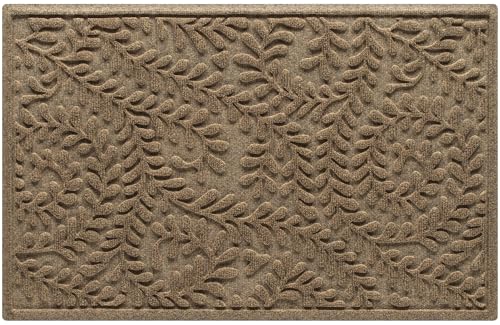 WaterHog Indoor/Outdoor Door Mat (Boxwood) The domestic version of the mat that has been in commercial lobbies for decades: published 3/8-inch construction, 24 oz per square yard PET, and made in the USA. | The commercial-grade option | 8.9/10 | $44.95 - View on Amazon #ad affiliate link · Price as of October 18, 2026 |
A published thickness that still washes
Gorilla Grip Indoor Door Mat (Woven Low-Profile)
The rare mat that publishes both numbers a buyer needs - 0.28 inches thick and up to six cups of water - and then goes in a washing machine anyway.
This is the mat that makes the premium argument awkward, and it is worth being clear about why. Gorilla Grip publishes two figures on this listing: a 0.28-inch profile and a capacity of up to six cups of water. Two numbers is more than most of this category will give you, and both of them are the numbers that decide a purchase - whether the door clears it, and whether it holds anything.
Run the second figure out to the unit the commercial mat world uses and the result is uncomfortable for the expensive end of the shelf. Six cups across a 29 by 17 inch mat works out to roughly one gallon per square yard, which is the same figure the residential WaterHog publishes for itself. That is one maker's claim measured against another maker's claim, with no stated method behind either, so it is not proof that they perform identically. It is enough to say the cheap mat is not obviously in a different class on the one property both brands chose to quantify.
The 0.28 inches matter more than the capacity for most households. A standard interior door is hung with roughly half an inch to three-quarters of an inch of clearance, so this mat clears even the tight end of that range - and you can know that before it arrives instead of after. Almost nothing else in this hub can be bought with that certainty; see low-profile mats and door clearance for the full table.
Where it genuinely gives ground is depth and weather. A flat woven face is not a deep chenille pile, so a soaked dog shaking on it will overwhelm it in a way it will not overwhelm a chenille absorber, and the maker states this is indoor only. Buy it as the mat immediately inside a door with a tight gap. Do not buy it as the mat that dries a wet retriever, and do not put it outside.
What works
- Publishes a thickness AND a water figure - two numbers almost nobody in this category states
- Low enough at 0.28in to clear a standard door undercut without measuring twice
- Machine washable, which the commercial-grade mats it competes with are not
What does not
- Indoor only - a woven face on a domestic backing is not built for weather
- The published six-cup figure is the maker's own, with no stated test method
- A flat woven face cannot hold what a deep chenille pile holds when a dog shakes on it
A wide opening that takes real traffic
Gorilla Grip Traffic Guard Mat, 60x36in
Six and a half pounds of ribbed, rubber-backed mat across five feet - the heaviest published weight here bar one, and the only one whose maker describes the topside as waterproof rather than absorbent.
Weight is the specification that changes when a mat goes from doormat size to five feet across. A small mat is held down by the furniture of the doorway itself; a 60 by 36 inch mat has fifteen square feet of unsupported middle, and the only things stopping it creeping and curling are its own mass and its backing. At about six and a half pounds this is the second heaviest here, and it feels it.
The surface is the other reason it leads. Gorilla Grip describes a raised ribbed topside with deep grooves and calls the mat waterproof rather than absorbent - which is the correct design for a wide opening that faces outward. Ribs scrape the tread, the grooves hold what comes off below the walking surface, and nothing soaks up and stays wet across an area that big.
That also defines what it is not. A waterproof mat sheds water instead of holding it, so on its own it leaves clean treads and a wet floor beyond it. Our indoor versus outdoor comparison sets out why most entries want one of each; at double-door width, the mat inside is the one doing the absorbing.
The published gap is thickness. Not one mat in this size class publishes a pile height, and this one is no exception, which matters because a door with a low sweep over a 36-inch depth of mat has nowhere to hide. If your door clears less than about half an inch, the figures in our door clearance guide are the place to start and a physical test with a folded towel is the place to finish.
What works
- At about 6.6 lb it has the mass a five-foot mat needs to stay flat and stay put
- A ribbed, grooved topside is a scraping surface rather than a soaking one, which is right for a wide outdoor-facing opening
- Stated waterproof and stain resistant, from the maker whose backing this site has already tested against the published claims
What does not
- No pile height is published, which on a mat this size is exactly what a door with a low sweep needs to know
- A waterproof topside sheds water rather than holding it, so it wants a second absorbent mat inside
- PVC construction is heavier and less pleasant underfoot than a chenille or woven mat
The commercial-grade option
WaterHog Indoor/Outdoor Door Mat (Boxwood)
The domestic version of the mat that has been in commercial lobbies for decades: published 3/8-inch construction, 24 oz per square yard PET, and made in the USA.
WaterHog is the mat you have already walked on hundreds of times without noticing - it is the standard entrance mat in commercial lobbies, and Bungalow Flooring sells domestic-sized versions of the same construction. Buying it is buying a specification rather than a look.
That specification is the most complete on this page. The Classic construction is published at three-eighths of an inch thick with a gripper backing, or closer to a quarter inch with the smooth backing intended for hard floors, using a 24 ounce per square yard PET fabric. Two numbers - thickness and fabric weight - are two more than most of this category publishes, and together they tell you almost everything: how much it holds, and whether your door will clear it.
The construction detail that matters is bi-level. The raised ridges hold the walking surface up while grit falls into the channels below, so the dirt you scrape off is not the dirt you then walk back over. That is why commercial buildings use it in the second zone of an entry system, and it works the same way at a domestic front door.
The honest downside is cleaning. This is not a mat you put in a washing machine. It hoses down well and it dries reasonably fast, but that is an outdoor job on a dry day rather than a laundry-day job. If the appeal of a mat for you is that it goes in the wash, buy chenille - see best absorbent chenille mats. If the appeal is that it will still be flat and still be working in five years, buy this.
What works
- Published thickness and published fabric weight - the most complete spec sheet here
- Bi-level construction traps grit below the walking surface instead of on it
- Beveled edges reduce the trip hazard and stop the corners curling
What does not
- Not machine washable - cleaning is a hose and a drying rack
- Costs meaningfully more than the chenille mats it sits beside
- Stiffer underfoot than an absorbent mat; it is built for traffic, not comfort
The better answer, if it is available to you
A mat on carpet manages a problem that should ideally not reach the carpet. If you can put anything on the hard surface outside the door - a coir scraper on the step, a tray for wet boots just inside - you are removing mud and water before carpet is involved, and that is worth more than any mat choice on this page. The sequencing is set out in layered entryway defense, and the boot-parking half of it in entryway drop zone setup.
Renters in particular are often stuck with carpet right up to the front door and no permission to change it. In that case the realistic goal is to keep the dirt in a zone you can wash rather than spread across a floor you cannot. One wide, thin, washable mat that you actually launder monthly beats a thicker, better mat that stays down for a year.
Questions people ask
Can you put a doormat on carpet?
Will a rubber-backed mat damage carpet?
Do I need a rug pad to put a mat on carpet?
How thick can a mat be on carpet?
Why does my mat keep moving on the carpet?
Sources
- Gorilla Grip Indoor Door Mat (woven low-profile) - Amazon detail page (published 0.28in thickness, TP rubber backing, machine washable, indoor only, sizes to 72x24in)
- Gorilla Grip Traffic Guard - Amazon detail page (60x36in, heavy duty indoor/outdoor construction)
- WaterHog Boxwood - Amazon detail page (published 3/8in thickness, rubber backing in gripper or smooth, hose and air dry)
Next stage
Better: stop it reaching the carpet
A mat on carpet is damage control. The real fix is catching mud outside and water on a hard surface before the carpet is in play at all.
Keep goingAbout the author
Scooter M.
An enthusiast who is genuinely into this. I read the manuals, compile the published specs, and do the math on door clearances. No lab coat, no test bench, and nothing here is a product I have used - which is exactly why every claim carries a source.
Published by Slate Mill Group, with the Mud & Mat team. Published October 17, 2026; last updated October 17, 2026. Editorial policy.
Read next

Backing & Grip
Non-slip backings explained
TPR, TPE, SBR rubber or no backing at all - what each one is, which floors the maker says it is safe on, and what actually makes a mat slide.

Door Clearance Data
Low-profile mats and door clearance
Published mat thicknesses against the real door undercut - the arithmetic nobody else prints.

Best Washable Rug
Best washable entryway rugs
Ranked on what a domestic drum will actually take: published sizes, care labels, backing survival and the mat that is hose-only.
Hardwood Guide
Mats for hardwood floors
Standing water and trapped grit - the two ways a mat damages the floor it was bought to protect.