By Scooter M. · Last updated August 31, 2026
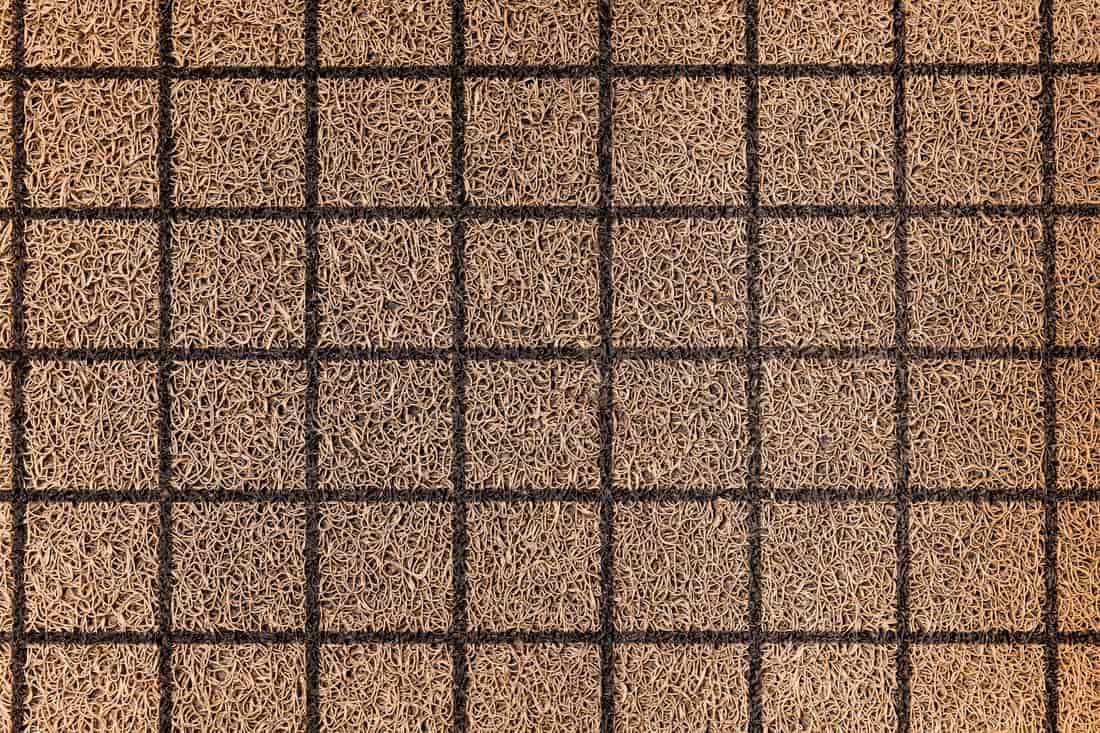
To clean a coir doormat: shake it out hard, beat it against a wall or step to release embedded grit, then vacuum both sides. Never machine wash it, never soak it and never pressure-wash it - coconut fiber is organic, and prolonged wetting softens the bristles and loosens the woven backing. For a stain, spot-clean with a barely damp cloth and let the mat dry fully, ideally in sun, before it goes back down.
Coir is the only mat material on this site that is actively damaged by the cleaning method people apply to everything else. That is the whole reason this page exists separately.
The procedure
- Lift the mat and sweep the surface underneath. Coir sheds and drops grit through its weave, and what is under it is abrasive against whatever it is sitting on.
- Shake it out, hard, held vertically. Most of what a coir mat holds is loose and will simply fall out.
- Beat it against a wall, a step or a railing. This is the step that releases the grit embedded down in the fiber, and it is the one people skip.
- Vacuum both sides. The underside matters - fine material collects against the woven backing and stays there.
- Spot-clean only if genuinely needed, with a barely damp cloth and a little mild soap. Blot; do not scrub, which breaks fibers.
- Dry it completely before it goes back down. On its edge or flat in the sun. A coir mat put back damp is a coir mat that starts to rot.
The three things that destroy a coir mat
1. The washing machine
It will come out as a mat-shaped pile of loose fiber with a separated backing. The agitation breaks the bristles and the prolonged soak dissolves the binding of the weave. There is no gentle cycle that makes this survivable.
2. The hose or pressure washer
Better than a machine and still bad. High-pressure water strips fiber out of the weave, and thorough saturation takes days to dry properly in anything but hot sun. A mat that stays saturated softens and starts to break down from the backing outward.
3. Leaving it in a position that stays wet
This is the slow version of the same problem and the most common one. Coir in a fully exposed position through a wet season never dries out between wettings, and organic fiber that stays wet rots. A covered porch or an overhang roughly doubles the usable life of a coir mat and it is free.
About the shedding
A new coir mat sheds loose fiber heavily for the first few weeks. This is normal, it is not a defect, and it stops. Sweep it up.
The instinct is to wash the mat to stop the shedding, which is exactly backwards - washing breaks more fiber loose and makes it worse. Vacuum it if the shedding bothers you, and wait it out.
How often
- Shake weekly. Coir fills with dry material fast and a full coir mat stops scraping.
- Beat and vacuum monthly, or after any heavy-use period like a wet week or a garden project.
- Turn it end for end every few months so the wear spreads across the mat rather than concentrating in the two feet in front of the door.
- Check the backing seasonally. A backing that has gone soft or is coming apart at an edge means the mat has taken on more water than it should and is on its way out.
When to replace it
When the fiber has gone soft. The entire function of coir is stiffness - it works as a brush, and a coir mat whose bristles have softened has stopped doing the one thing it is for, no matter how intact it looks.
The other end-of-life sign is the weave opening up, usually starting at a corner. Once the backing is coming apart, the mat sheds constantly and cannot be recovered. If yours is reaching this point sooner than expected, the position is probably too exposed - see best outdoor coir doormats for the covered-position argument and the rubber alternative.
Questions people ask
How do you clean a coir doormat?
Can you wash a coir doormat?
Can you hose a coir mat?
Why is my coir mat shedding?
How long does a coir doormat last?
Sources
About the author
Scooter M.
An enthusiast who is genuinely into this. I read the manuals, compile the published specs, and do the math on door clearances. No lab coat, no test bench, and nothing here is a product I have used - which is exactly why every claim carries a source.
Published by Slate Mill Group, with the Mud & Mat team. Published August 31, 2026; last updated August 31, 2026. Editorial policy.
Read next
Cleaning Procedure
How to clean a doormat
Three materials, three procedures - and the one laundry habit that destroys an absorbent mat.

Best Outdoor Mat
Best outdoor coir doormats
Stiff coir scrapes what fabric cannot - but it is organic, so where you put it decides how long it lasts.

Material Decision
Coir vs chenille vs rubber door mats
The material table this category never publishes - scraping, absorbency, weather and cleaning, side by side.
Cleanability
Washable vs hoseable mats
Machine washable or hoseable - decided by the routine your household will realistically keep up.
Material Explained
What is a coir doormat?
Woven coconut husk fiber - what it is, why it sheds, how long it lasts, and the one position it belongs in.