
By Scooter M. · Last updated September 17, 2026
Mud & Mat earns a commission when you buy through the links on this page, at no extra cost to you. It does not change what we recommend, and we publish a skip-this verdict on products we could otherwise earn from. Full disclosure.
Buy a wall coat rack on three published numbers: the load it is rated for, the width of wall each hook gets, and how far it sticks out into the hall. Published loads here run from 11 to 80 pounds, and two listings state their limit two different ways. Width per hook runs from about 3.4 to 4.1 inches on the hook racks that publish a width, which is less than a winter coat needs. And if coats arrive wet, a hanging rod dries them better than any number of hooks.
Our drop-zone guide tells anyone short of space to prioritize three things in order: a mat, a tray and hooks. The first two have whole sections of this site behind them. This page is the third, and it exists because the wet coat is the part of the arrival that most often escapes the entryway entirely - carried through to a chair, a banister or a bed because the hook by the door was full.
That changes what a coat rack is for. In a catalog it is a style decision. At a door that gets rain, snow or a dog walk twice a day, it is the thing that decides whether outerwear dries where the water can land on a mat, or somewhere upstairs where it cannot. We rank on the published figures that decide that, and we say plainly where a listing does not publish them.
How we picked
How we picked
- A published load figure, and what it applies to. A coat rack holds weight on a wall, and wet outerwear is heavier than dry. We want a number - and we want to know whether it is per hook or for the whole rack, which some listings do not say and two contradict themselves on. Where two figures are published, we plan around the lower one.
- Width of wall per hook, not hook count. A hook count is a marketing number. Dividing the published width by the number of coat hooks gives the space each coat actually gets, and on every hook rack here that publishes a width, that space is narrower than a winter coat. Fewer, wider-spaced hooks hang more coats properly than many crowded ones.
- Depth off the wall. In a narrow entry the rack competes with the corridor, the same way a shoe cabinet does. We take the published depth where one exists and say so where it does not, because a rack that projects twelve inches is a different purchase from one that projects four.
- Whether a wet coat can dry on it. Hooks hold a coat by its collar loop, so it folds at the shoulders and dries slowly. A rod holds it on a hanger with air on both sides. We weight the drying question heavily because it is the reason this site covers coat racks at all.
- What arrives to mount it with, and on what wall. Screws alone, screws and anchors, or a full kit with spacers. Some makers list the wall types they support and some do not. On a wood-framed house the published load only means something if the rack is fixed into something that can carry it.
We have not physically tested these products. We do not own them, we have no lab, and we do not accept free product. Everything above is compiled from published manufacturer specifications, published care guidance and live retailer data - and we tell you which is which on every claim. How we pick.
The load figure, and why two listings disagree with themselves
A coat rack's load rating is the one number that tells you whether it is safe to fill, and it is the number the category is least careful with. One rack on this page publishes no load at all. One publishes a figure without saying whether it means each hook or the whole rack. And two state their limit in two different ways on the same listing.
The clearest example is a small shelf rack whose description says 11 pounds per hook and 55 pounds maximum, while the specification table on the same page gives a maximum weight capacity of 35 pounds - and then, in the same table, a maximum weight recommendation of 55. Four hooks at 11 pounds is 44, which matches neither total. A hook rail on this page is stranger still: its description says each tri-hook holds up to 11 pounds, and its specification table gives 11 pounds as the maximum for the product. One reading is 55 pounds a rail. The other is 11.
None of this means those racks will fail. It means the published information does not settle the question, and on this site that is treated as a finding rather than smoothed over. When a listing gives two numbers, plan around the smaller one. When it gives a total without saying so, read it as the whole rack rather than per hook.
Maker-published figures from each product's own retailer listing. Width per hook is simple arithmetic - published width divided by the number of coat hooks - shown so you can check it.
Read the table from right to left if your hall is narrow and left to right if your coats are wet. The shallow shelf racks cluster around four and a half inches deep and differ mainly in how much they publish. The rod rack is the drying answer and the depth problem in the same object. And only one of the five gives you a width, a depth, a load and an itemized hardware list that all agree with each other.
Quick picks
Ranked against the criteria below. Tap a row to jump to the full write-up; the price button goes straight to Amazon.
| # | Product | Best for | Score | Price |
|---|---|---|---|---|
| 1 | 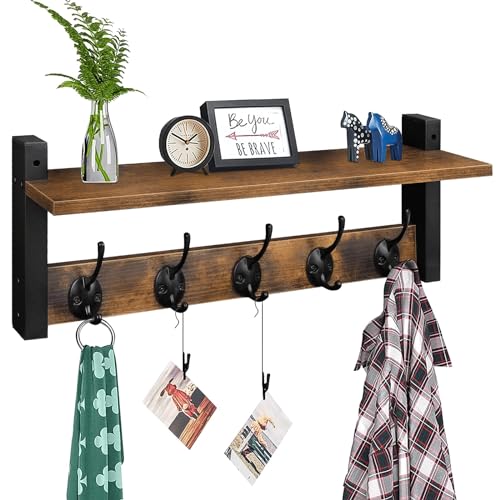 Homode Coat Rack with Shelf, 5 Hooks A published 50 lb rating, all three dimensions and wall anchors in the box | Most narrow halls | 8.1/10 | |
| 2 |  RedCall Coat Rack with Shelf and Rod A 31.5in carbon steel hanging rod under a solid wood shelf, rated to a published 80 lb | Letting wet coats dry | 7.9/10 | $44.95 - View on Amazon #ad affiliate link · Price as of October 18, 2026 |
| 3 |  TICONN Tri-Hook Coat Rails (2-Pack) Two all-metal rails of five tri-hooks with screws, anchors, spacers and caps in the box | Two heights, including one kids can reach | 7.4/10 | |
| 4 | 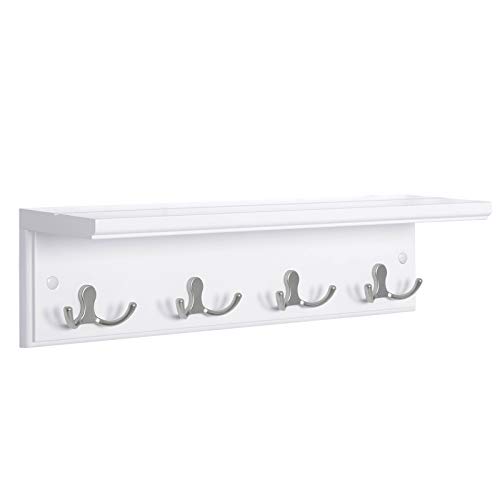 SONGMICS Coat Rack with Shelf, 4 Hooks At a published 15.7in wide and 4.1in deep it fits beside a door frame where nothing else here does | The narrowest strip of wall | 7.2/10 | $22.99 - View on Amazon #ad affiliate link · Price as of October 18, 2026 |
| 5 |  Evermagin 29in Coat Rack with Shelf Solid pine, a 29in shelf and eleven hooks in the title Our skip-this pick | A wide wall and light coats | 5.6/10 | $34.99 - View on Amazon #ad affiliate link · Price as of October 18, 2026 |
Most narrow halls
Homode Coat Rack with Shelf, 5 Hooks
A published 50 lb rating, all three dimensions and wall anchors in the box - the most complete spec sheet here, on a shelf that sits under five inches off the wall.
This is the rack to buy if you do not want to think about it, and the reason is the listing rather than the looks. Homode publishes a 50 pound maximum, a full set of dimensions at 17.1 by 4.52 by 7.48 inches, and states that screws and anchors are in the box. Those figures agree with each other, which on this page is less common than it should be.
The depth is what makes it the default for a narrow hall. A shelf 4.52 inches deep, with hooks under it, adds very little to what a coat already takes out of a corridor. Our drop-zone guide argues for keeping everything in a tight entry under twelve inches deep; this rack is a third of that.
The honest limit is spacing. Five hooks on a 17.1 inch rail puts them about 3.4 inches apart, and a padded winter coat on a hook is much wider than that. In practice fewer heavy coats hang properly than the hook count suggests, and a full rail becomes a single mass of fabric that stays damp in the middle. The double hooks help a little: the lower point takes a bag or a scarf without stealing a coat position.
Two small cautions. The shelf is chipboard, and chipboard swells if water sits on it, so it is a place for keys and dry hats rather than wet gloves. And the 50 pound figure is not labeled per hook or per rack; the conservative reading is the whole rack, which is still generous for a household's outerwear as long as it is mounted into something solid.
What works
- Publishes a load figure, all three dimensions and the hardware in the box - and the figures agree with each other
- 4.52 inches off the wall is shallow enough for a corridor you still have to walk down
- Double hooks give every position a second, lower point for a bag or a scarf
What does not
- Five hooks along 17.1 inches is about 3.4 inches per hook, so bulky winter coats will overlap
- The shelf is chipboard, which does not tolerate standing water - keep wet gloves off it
- The 50 lb figure does not say whether it is per hook or for the rack; read it as the whole rack
Letting wet coats dry
RedCall Coat Rack with Shelf and Rod
A 31.5in carbon steel hanging rod under a solid wood shelf, rated to a published 80 lb - the one rack here that hangs a coat on a hanger in its own shape, which is how a wet coat dries.
Every other rack on this page hangs a coat by its collar loop. This one hangs it on a hanger, and that difference is the whole reason it is here. A coat on a hook folds in on itself at the shoulders, the wettest part of it presses against the wall or the coat next to it, and it is still damp in the morning. A coat on a hanger holds its shape with air on both sides. We make the same argument about hall trees, where the unit with a rod beats the one with the most hooks.
RedCall publishes the numbers to back it up: a 31.5 inch rust-treated carbon steel rod, a solid wood shelf with a waterproof easy-wipe finish, and a load of up to 80 pounds, the highest figure on this page. A shelf that can be wiped matters more here than it sounds, because it sits directly above wet outerwear and collects hats and gloves that drip.
The cost is depth. At a published 11.8 inches off the wall it projects more than twice as far as any hook rack here that publishes a depth, and a hung coat adds its own thickness on top of that. In a hallway where every inch of corridor is spoken for, that is the wrong trade and a shallow hook rack is the right one. It belongs in a mudroom, a wide entry or a spot beside the door that nobody walks through.
Mount it like you mean the 80 pounds. The wall types RedCall lists are brick, solid wood and cement, and drywall is not on the list, which on a wood-framed house means finding the studs rather than trusting anchors. It also asks one thing of the household that hooks do not: a hanger kept on the rod. If your family will not do that, the drying advantage never happens, and a plain hook rail is the more honest purchase.
What works
- Coats hang on hangers with air on both sides rather than bunched on a collar loop - the arrangement our entryway guides recommend for wet outerwear
- 80 lb is the highest published load on this page
- The shelf finish is stated as waterproof and easy-wipe, which matters when it sits directly above wet coats
What does not
- 11.8 inches off the wall is more than double any other rack here that publishes a depth, and in a narrow hall that is corridor you lose
- The walls it lists are brick, solid wood and cement - drywall is not among them, so plan on mounting into studs
- It needs hangers, and a hanger is one more step than dropping a coat on a hook
Two heights, including one kids can reach
TICONN Tri-Hook Coat Rails (2-Pack)
Two all-metal rails of five tri-hooks with screws, anchors, spacers and caps in the box - and an 11 lb rating the listing applies to each tri-hook in one place and to the whole product in another.
The case for this set is the second rail. Our drop-zone guide makes the point that a coat hook a child cannot reach is a coat on the floor, and a single rack mounted at adult height is exactly that for a small child. Two identical rails solve it without buying anything else: one at a height the adults use, one low enough that a child hangs their own coat.
It is also the best-equipped listing for actually getting it on a wall. TICONN lists four screws, four wall anchors, four threaded spacers and four screw caps, and it is the only rack on this page that names drywall - alongside brick and tile - as a surface it goes on. The hooks are aluminum alloy on a stainless steel plate with rounded ends, and the listing states a lifetime warranty with a 30-day money-back window.
The load figure needs reading carefully. The description says each tri-hook can hold up to 11 pounds. The specification table on the same listing gives 11 pounds as the maximum weight capacity for the product. Those are very different claims - fifty-five pounds a rail against eleven - and the listing does not reconcile them. Assume the lower one until the maker says otherwise, which for a rail of coats and school bags is still workable but not generous.
Two further gaps. No width is published, so you cannot work out hook spacing before it arrives, and tri-hooks close together hold less than the count suggests once coats are on them. And there is no shelf, so wet gloves and hats go on a hook or nowhere. For a household with small children it is still the most useful set on the page; pair it with a boot tray underneath and the drips land somewhere designed for them.
What works
- Two rails means two heights - one for adults and one a child can reach, which is what actually keeps small coats off the floor
- The fullest hardware kit on this page, and the only listing that names drywall as a mounting surface
- The only published warranty on this page
What does not
- The 11 lb rating is stated per tri-hook in the description and as the product maximum in the specification table
- No width or hook spacing is published, so the layout cannot be planned before it arrives
- No shelf, so hats and gloves have nowhere to dry except a hook
The narrowest strip of wall
SONGMICS Coat Rack with Shelf, 4 Hooks
At a published 15.7in wide and 4.1in deep it fits beside a door frame where nothing else here does - with a total load the listing gives as both 35 lb and 55 lb.
Plenty of entries have exactly one usable piece of wall: the narrow strip between the door frame and a corner, a light switch or a radiator. At a published 15.7 inches wide and 4.1 inches deep, this is the rack that fits there, and SONGMICS is a maker whose entryway furniture we already rank elsewhere on this site on the strength of what it publishes.
It also publishes the figure that matters most for a single heavy coat: 11 pounds per hook. A per-hook number tells you whether one sodden parka will pull the hook, which a total figure cannot. The hooks are dual zinc alloy, the shelf is MDF, and it arrives pre-assembled with screws and wall plugs.
The total load is where the listing trips over itself. The specification table gives a maximum weight capacity of 35 pounds. The description, and the maximum weight recommendation in the same table, both say 55. Four hooks at 11 pounds each is 44, which sits between the two and matches neither. We rank on published figures, and when a listing publishes two, the lower one is the one to plan around.
Capacity is the real constraint rather than strength. Four hooks along 15.7 inches is about 3.9 inches per hook, and two heavy winter coats will cover all four. That is fine for a couple or for the coats in daily use, and not enough for a family in January - where a wider rack, or a hall tree if the floor allows it, is the better buy. SONGMICS also states the rack must be secured to solid walls to reach its rating, which on drywall means a stud.
What works
- The smallest footprint on this page - it fits the strip of wall beside a door frame
- Publishes a per-hook figure, which is the number that matters for one heavy wet coat
- Arrives pre-assembled
What does not
- The listing gives the total maximum as 35 lb in one place and 55 lb in two others
- Four hooks along 15.7 inches is about 3.9 inches per hook - two heavy winter coats and it is full
- SONGMICS says to secure it to solid walls to reach its rating, and the shelf is MDF
A wide wall and light coats
Evermagin 29in Coat Rack with Shelf
Solid pine, a 29in shelf and eleven hooks in the title - seven of them for coats, and no load capacity published anywhere on the listing.
Skip this one
Skip this one if what you are hanging is wet winter coats, and the reason is what the listing leaves out rather than how it is made. Solid pine is a better material than the MDF and chipboard elsewhere on this page, and seven coat hooks along 29 inches is the most generous spacing of any hook rack here. But it publishes no load capacity anywhere - not per hook, not in total - on a product whose entire job is holding weight on a wall. Every other rack on this page states a figure, including the simplest hook rail. The title also says 11 hooks, and four of those are key hooks, so the number to compare against the other racks is seven. If your coats are light and you want a wide wooden shelf by the door, it is a reasonable object. For a household of wet parkas, buy a rack that tells you what it holds.
On looks and materials this is the nicest rack on the page. It is solid pine rather than MDF or chipboard, the shelf is a generous 29 inches, and at 4.5 inches deep it keeps a slim profile for something that wide. Evermagin states dual-hole mounting for stability, and the 4.6 pound weight is honest evidence of real wood.
The spacing is genuinely good too. Seven coat hooks along 29 inches works out at about 4.1 inches each, which is the widest of any hook rack we cover. Coats still overlap at that spacing - a winter coat on a hook is wider than that - but they overlap less, and less overlap is what lets the outside of a wet coat dry.
Then there is what the listing does not say. There is no load capacity anywhere: not a per-hook figure, not a total, not a recommendation. For a shelf of keys that would hardly matter. For a rack whose job is holding a household's outerwear on a wall, including wet coats that weigh more than dry ones, it is the specification you most need, and every other rack on this page publishes one.
Read the hook count carefully as well. The title says 11 hooks, and the description clarifies that seven are coat hooks and four are key hooks. It is a fair product described in a way that flatters it. If the coats in your house are light and the wall is wide, it will likely serve. If the plan is four wet parkas in February, the Homode rack above publishes 50 pounds for a lot less wall.
What works
- Solid pine rather than MDF or chipboard - the only all-wood rack in this set
- Seven coat hooks along 29 inches is about 4.1 inches each, the widest spacing of the hook racks here
- 4.5 inches deep keeps it corridor-friendly despite the width
What does not
- No load capacity is published, per hook or in total
- The title counts 11 hooks; four are key hooks, so it hangs seven coats
- The listing does not say what mounting hardware is in the box
Spacing beats count
The hook count in a listing title is the least useful number on it. What decides how many coats a rack really holds is the width of wall each hook gets, and on every hook rack we cover that publishes a width, that works out between about 3.4 and 4.1 inches. A padded winter coat hanging from a collar loop is far wider than that, so neighboring coats overlap as soon as the rack is more than half full.
Overlap matters more than it looks, because it is what stops a wet coat drying. Two damp coats pressed together behave like one thick one: the outside surfaces dry and the fabric between them stays wet until morning. We make the same point about hall trees, where seventeen hooks on a 31-inch frame is not seventeen usable hanging points. A rack with fewer, wider-spaced hooks hangs more coats that actually dry.
The practical rule is to count the heavy coats your household wears in the worst month, allow a hook between each one, and buy the rack that fits that number with space to spare. Hooks for bags, keys and dog leashes are worth having, but they are not coat positions, and at least one listing on this page counts them as if they were.
Hooks or a rod - the drying question
A hook holds a coat by one small loop at the back of the collar. The coat folds forward at the shoulders, the sleeves hang inward against the body, and the wettest parts - shoulders and upper back, where rain and snow land - end up pressed against each other or against the wall. That is why a coat hung on a hook overnight is often still damp across the shoulders in the morning.
A hanger on a rod holds the coat by its shoulders in the shape it is worn, with air moving on both sides. It dries faster and it dries evenly. Our winter entryway setup and hall-tree guides both make this argument, and the one rack on this page with a rod is ranked for exactly that reason.
The rod has two real costs. It needs depth, because a coat on a hanger projects further from the wall than a coat on a hook, and the rod rack here publishes 11.8 inches before any coat goes on it. And it needs hangers to live on the rod, which is one more step than dropping a coat on a hook - if your household will not take that step, the drying advantage never happens. Most narrow entries are better served by a shallow hook rack plus a separate place for the wettest coat to dry.
Height, and the second rail
Our drop-zone guide puts it bluntly: a coat hook a child cannot reach is a coat on the floor. A single rack mounted at adult height does nothing for the youngest members of a household, and their coats are the ones most likely to arrive muddy. The cheapest fix on this page is a two-rail set mounted at two heights, one for adults and one low enough that a child hangs their own coat.
If you buy a shelf rack instead, the same logic argues for mounting it lower than instinct suggests. A shelf at eye level is a display shelf. A shelf a little lower is where gloves, hats and keys actually get put down on the way in, which is the point of having one by the door.
Where the water goes
A wet coat drips, and it drips straight down. Whatever sits under the rack collects it, which is either a surface built for that or the floor. Hang the rack above a boot tray or an absorbent mat and the drips land where they are meant to; hang it above bare hardwood and they land on the finish every wet evening all winter.
This is also the reason shelves by the door should not be chipboard or MDF if they are going to hold wet gloves. Both swell when water stands on them. A solid wood shelf or one with a stated waterproof finish tolerates it; the others are for keys and dry hats. In a small space, the rack, the tray and the mat are one arrangement along one wall, which is how best small-space shoe storage treats the rest of the furniture too.
Buy it this way
- A narrow hall with light coats - a shallow shelf rack around four and a half inches deep, and the one that publishes a load that agrees with itself.
- Coats that arrive wet most days - a rod rack with hangers, in a spot where its depth does not block the corridor.
- Children in the house - two hook rails at two heights before any other upgrade.
- Only a narrow strip of wall beside the door - the smallest shelf rack, accepting that it holds the coats in daily use rather than the whole household's.
- Room for furniture - a hall tree adds a bench, and sitting down is what gets boots off at the door rather than further in.
Questions people ask
How much weight can a wall-mounted coat rack hold?
How far apart should coat hooks be?
Are hooks or a hanging rod better for wet coats?
Can I mount a coat rack on drywall?
What height should entryway coat hooks be?
Is a coat rack or a hall tree better for an entryway?
Sources
- Homode HMCRS-RBB Wall Hooks with Shelf - Amazon detail page (17.1 x 4.52 x 7.48in, 5 double metal hooks, 50 lb maximum, screws and anchors included)
- RedCall Wall Mounted Clothes Rack with Shelf - Amazon detail page (11.8 x 31.5 x 5.2in, load up to 80 lb, hanging rod, brick, solid wood and cement walls listed)
- TICONN 611 Wall Mounted Coat Rack 2-Pack - Amazon detail page (5 tri-hooks per rail, 11 lb stated per tri-hook and as product maximum, screws, anchors, spacers and caps, drywall listed, lifetime warranty)
- SONGMICS ULHR42WT Wall-Mounted Coat Rack with Shelf - Amazon detail page (15.7 x 4.1 x 4.1in, 11 lb per hook, 35 lb maximum weight capacity and 55 lb maximum both published, screws and wall plugs, solid walls stated)
- Evermagin 29in Coat Rack Wall Mount with Shelf - Amazon detail page (4.5 x 29 x 8in, 4.6 lb, solid pine, 7 coat hooks and 4 key hooks; no load capacity published)
Next stage
The whole system
The rack is one of three things a tight entry needs. The drop-zone guide puts it in the right place along the wall.
Keep goingAbout the author
Scooter M.
An enthusiast who is genuinely into this. I read the manuals, compile the published specs, and do the math on door clearances. No lab coat, no test bench, and nothing here is a product I have used - which is exactly why every claim carries a source.
Published by Slate Mill Group, with the Mud & Mat team. Published September 17, 2026; last updated September 17, 2026. Editorial policy.
Read next

Drop-Zone Setup
Entryway drop zone setup
The physical arrangement that makes the sequence take five seconds instead of thirty.

Best Hall Tree
Best hall trees
Published bench load ratings from 198 to 300 lb and depths from 11.8 inches - the two numbers that decide a hall tree.
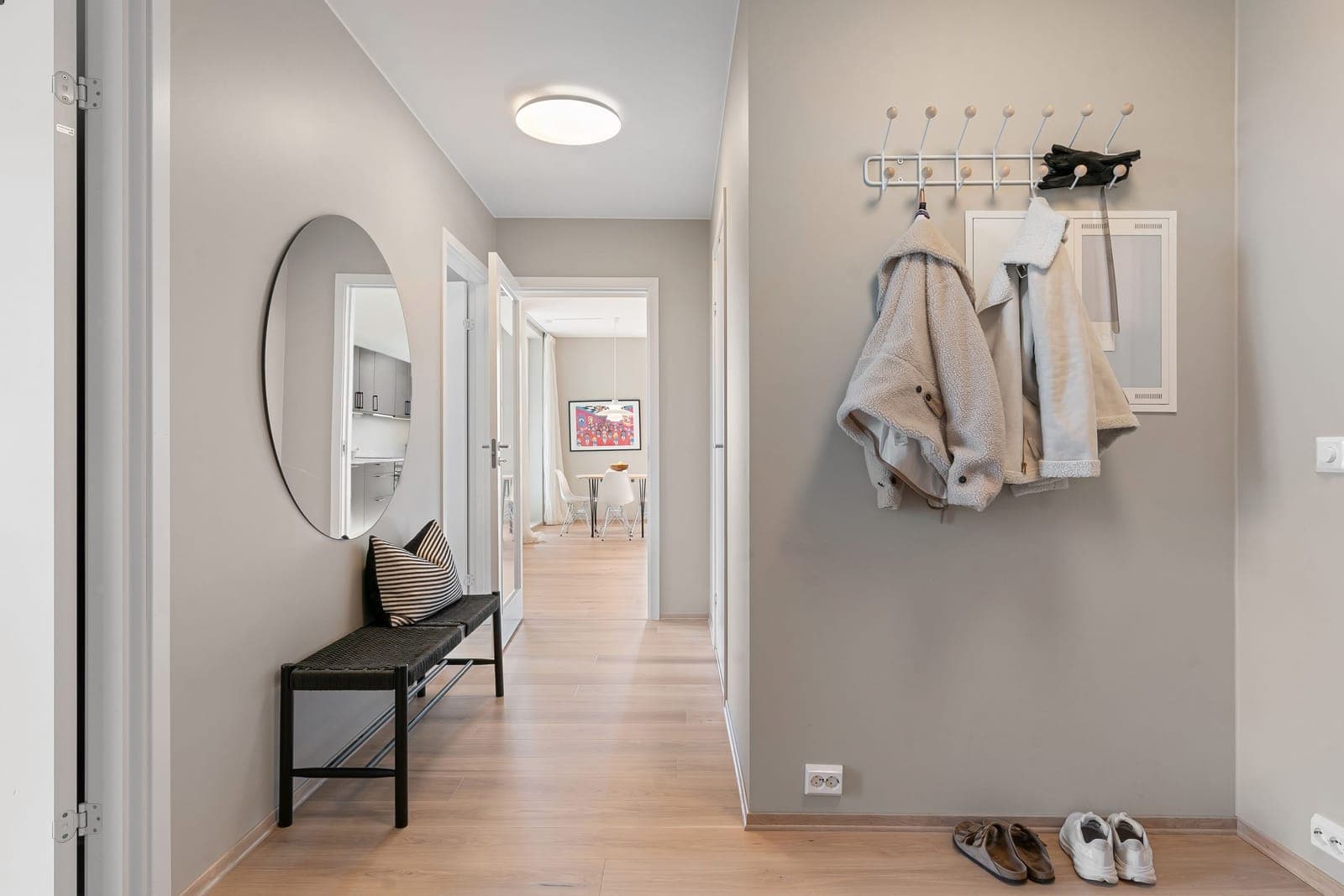
Best for Small Spaces
Best small-space shoe storage
Published depths from 9.4 inches, pairs per square foot of floor, and why vertical beats clever in a tight entry.
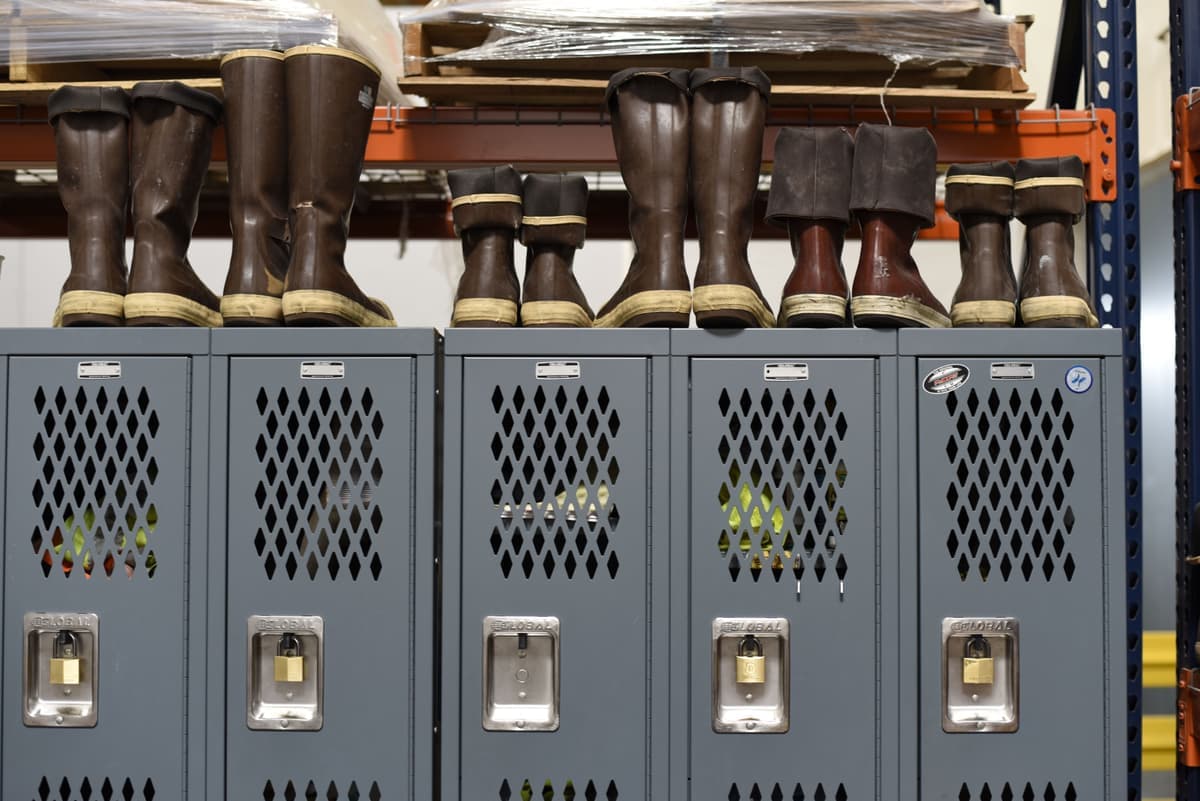
Best Boot Tray
Best boot trays for entryways
Wall depth, a ridged base and enough weight to stay put - the three things that separate a tray from a puddle.